Canary Broom
Genista canariensis · Accepted scientific name
Scientific literature: Very Sparse (1 studies) · ★☆☆☆☆
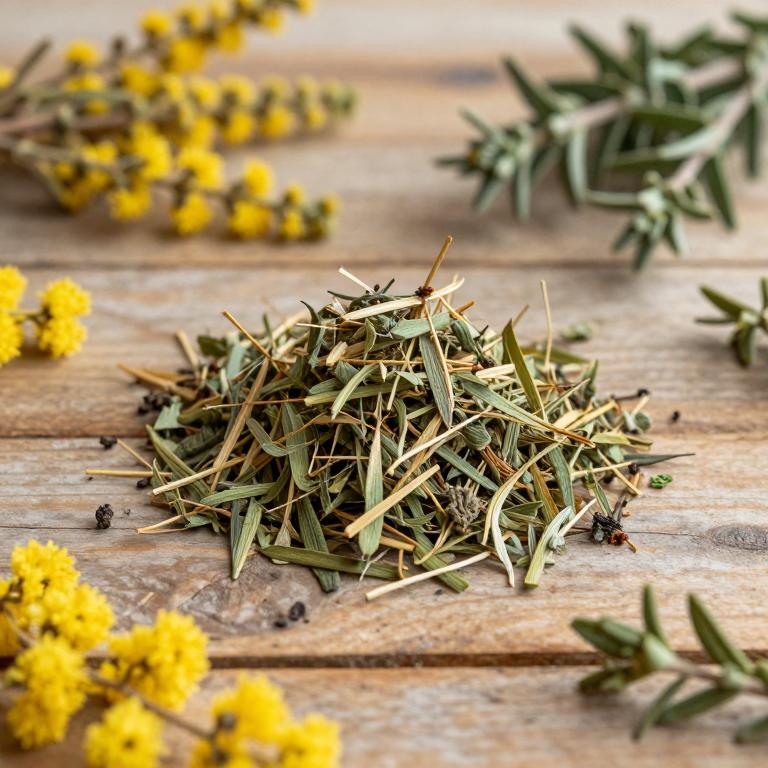
Canary Broom, scientifically known as Genista canarienis, is a resilient, evergreen shrub endemic to the Canary Islands. Characterized by its vibrant yellow blossoms and woody stems, this botanical gem is valued in traditional medicine for its bioactive compounds, offering potential therapeutic properties in treating various inflammatory and metabolic conditions.
Names and Synonyms
Common Names
- Canary Broom
- Canary Islands Broom
- Florist’s Genista
- Canary Island broom
- Cape Broom
Scientific Names
Accepted name
Genista canariensisSynonyms
- Telinaria canariensis
- Teline ramosissima
- Teline hillebrandii
- Teline canariensis var. ramosissima
- Teline canariensis
- Avornela canariensis
- Cytisus canariensis
- Cytisus hillebrandtii
- Cytisus rhodopnoa
- Genista ramosissima var. discolor
- Cytisus canariensis var. ramosissimus
- Genista paniculata
- Genista rhodopnoa
- Genista discolor
- Cytisus paniculatus
- Cytisus philippii
- Telinaria ramosissima
- Teline canariensis var. lanuginosa
- Spartium terminale
- Spartium albicans
- Genista candicans var. subspicata
- Genista hillebrandii
- Genista philippii
Regional and Traditional Names
Spanish:
- Cytisus canariensis
- Retamón canario
- Cytisus hillebrandii
- Teline canariensis
- Cytisus ramosissimus
- Genista hillebrandii
- Retamon canario
- Retama de monte
- Retamón canario
German:
- Kanaren-Ginster
- Kanaren-Teline
Sources: Wikidata, Catalogue of Life
Taxonomical Classification
This plant belongs to the kingdom Plantae and the phylum Streptophyta, placing it within the class Equisetopsida and subclass Magnoliidae. It is further classified under the order Fabales and the family Fabaceae, which is characteristic of the legume group. Within this hierarchy, it is specifically identified under the genus Genista.
| Rank | Classification |
|---|---|
| Kingdom | Plantae |
| Phylum | Streptophyta |
| Class | Equisetopsida |
| Subclass | Magnoliidae |
| Order | Fabales |
| Family | Fabaceae |
| Genus | Genista |
Sources: The World Checklist of Vascular Plants (WCVP)
Distribution
This plant exhibits a highly diverse and fragmented geographical distribution across several distant regions of the world. Within the Macaronesia archipelago, it can be found growing in the Canary Islands. Its presence extends significantly into the Indian Subcontinent, specifically spanning across India and Sri Lanka. Furthermore, the species has established itself in the Northwestern United States. In this particular American region, it is documented to inhabit both Oregon and Washington.
| Region | Area |
|---|---|
| Macaronesia | Canary Is. |
| Indian Subcontinent | India |
| Indian Subcontinent | Sri Lanka |
| Northwestern U.S.A. | Oregon |
| Northwestern U.S.A. | Washington |
| Southwestern U.S.A. | California |
Sources: The World Checklist of Vascular Plants (WCVP)
Botanical Identification
Ecology
The ecology of Genista canariensis is characterized by its adaptation to specific altitudinal gradients within its native habitats, primarily occupying mountainous terrains. This species thrives within a defined elevational range, typically found at altitudes starting from a minimum of 500 m AMSL and extending up to a maximum of 1500 m AMSL. This distribution suggests an affinity for mid-to-high altitude ecosystems where it can navigate varying climatic conditions and soil compositions typical of these elevations. Its presence across this vertical span indicates a level of ecological plasticity that allows it to persist in diverse microclimates, ranging from lower montane zones to higher, potentially more temperate or mist-influenced environments.
- Elevational range max:
- 1500 m AMSL
- Elevational range min:
- 500 m AMSL
Life history
The life history of Genista canariensis is characterized by its status as a perennial species, allowing it to persist in its ecosystem over multiple growing seasons. As a long-lived woody shrub, it follows a developmental trajectory that moves from initial seedling establishment through several years of vegetative growth before reaching reproductive maturity. Throughout its life cycle, the plant focuses on building a robust structural framework to support its flowering phases, which occur periodically rather than in a single seasonal burst. This perennial nature enables the plant to withstand environmental fluctuations and maintain a continuous presence in its native habitat, ensuring long-term survival and the ability to contribute to the local seed bank through repeated reproductive cycles.
- Lifecycle :
- perennial
Morphology
The morphology of Genista canariensis is characterized by its growth form as a woody shrub, functioning as a self-supporting plant that does not require climbing structures. This species is strictly terrestrial in its habitat, rather than aquatic or semiaquatic, and maintains an independent existence as a non-parasitic organism. In terms of stature, the plant typically reaches a height ranging from a minimum of 1 meter to a maximum of 3 meters, exhibiting a robust, shrubby structure throughout its development.
- Aquatic :
- terrestrial
- Climber :
- self-supporting
- Growth form :
- shrub
- Parasite :
- independent
- Plant height max:
- 3 m
- Plant height min:
- 1 m
- Woodiness :
- woody
Physiology
The physiology of Genista canarienis is characterized by a specific photosynthetic strategy and distinct foliar morphology. This plant utilizes the C3 photosynthetic pathway, a common metabolic process for carbon fixation in many temperate and subtropical species. Its leaves exhibit an elliptic form, providing a structured surface area for light interception. The dimensions of these leaves are relatively small, with individual leaf lengths ranging from a minimum of 0.3 cm to a maximum of 1 cm.
- Leaf form :
- elliptic
- Leaf length max:
- 1 cm
- Leaf length min:
- 0.3 cm
- Photosynthetic pathway :
- C3
Reproduction
The reproduction of Genista canarienis is characterized by a flowering period that typically begins in January and concludes in July, though the timing can be variable. During this reproductive phase, the plant produces yellow flowers arranged in a raceme inflorescence. Following successful pollination, the plant develops fruit in the form of a pod, which reaches a maximum length of 3 cm and a maximum width of 0.5 cm. These pods are black in color and are dehiscence-type, meaning they split open to release the seeds. Each fruit typically contains a seed count ranging from 1 to 10 seeds, with each individual seed maintaining a consistent mass of approximately 0.0053 g.
- Dehiscence :
- dehiscent
- Flower colour :
- yellow
- Flowering time :
- Jan
- Flowering time :
- Jul
- Fruit colour :
- black
- Fruit length max:
- 3 cm
- Fruit type :
- pod
- Fruit width max:
- 0.5 cm
- Inflorescence :
- raceme
- Seed mass mean:
- 0.0053 g
- Seeds_per_fruit :
- 1-10
Sources: Global Inventory of Floras and Traits (GIFT)
Chemicals
Genista canariensis has 1 reported phytochemicals identified across 0 scientific publications and several other databases. The most consistently reported chemicals include TNF alpha.
| Chemical | Supporting sources | Consensus |
|---|---|---|
| TNF alpha | 1 supporting sources | ★☆☆☆☆ |
TNF alpha
- Journal of ethnopharmacology