Genipap
Genipa americana · Accepted scientific name
Scientific literature: Very Extensive (383 studies) · ★★★★★
Genipap, scientifically known as Genipa americana, is a versatile tropical fruit tree native to Central and South America. Renowned for its medicinal properties, the plant provides bioactive compounds used to treat inflammation and skin conditions. Its unique juice also serves as a natural, long-lasting pigment for traditional body art.
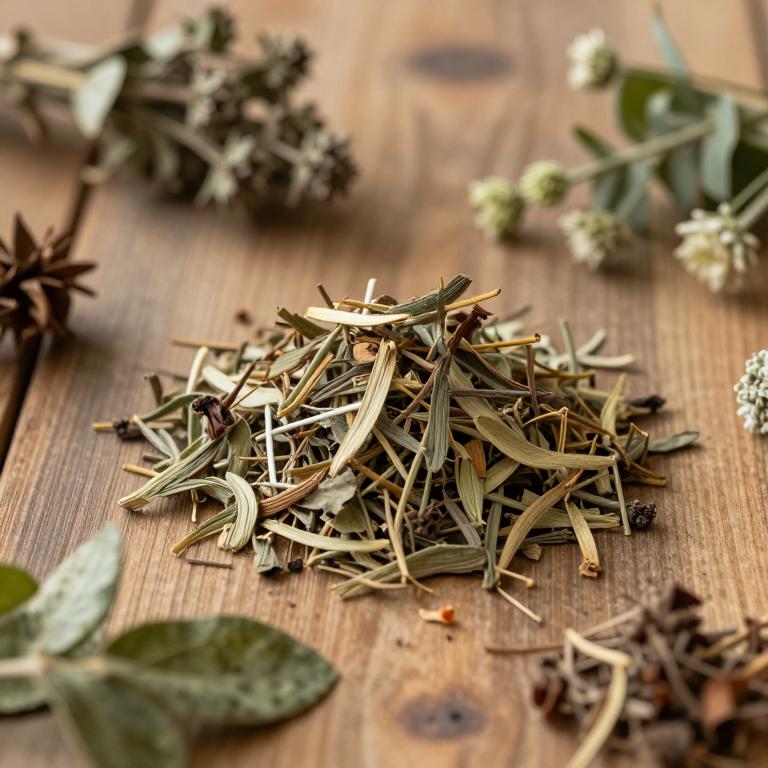
Names and Synonyms
Common Names
- Genipap
- Marmalade
- Marmalade box
- genip
- marmalade-box
- Genipap Tree
- genip tree
Scientific Names
Accepted name
Genipa americanaSynonyms
- Genipa brasiliensis
- Genipa humilis
- Genipa venosa
- Genipa americana var. riobranquensis
- Genipa caruto
- Genipa barbata
- Genipa brasiliana
- Gardenia brasiliensis
- Genipa americana var. caruto
- Genipa americana f. grandifolia
- Genipa americana f. jorgensenii
- Genipa americana f. parvifolia
- Genipa pubescens
- Genipa oblongifolia
- Genipa oleosa
- Genipa excelsa
- Genipa codonocalyx
- Gardenia oblongifolia
- Gardenia hexandra
Regional and Traditional Names
Spanish:
- Bi
- Bi-nané
- Caporán
- Genipa
- Guaitil
- Jenipapo
- caruto
- huito
- irayol
- yagua
French:
- confiture de singe
- génipa
- Génipayer
- Jénipa
Sources: Catalogue of Life
Taxonomical Classification
This plant belongs to the kingdom Plantae and is classified under the phylum Streptophyta within the class Equisetopsida. It is further organized into the subclass Magnoliidae and the order Gentianales, falling under the family Rubiaceae. Finally, its specific taxonomic identity is established within the genus Genipa.
| Rank | Classification |
|---|---|
| Kingdom | Plantae |
| Phylum | Streptophyta |
| Class | Equisetopsida |
| Subclass | Magnoliidae |
| Order | Gentianales |
| Family | Rubiaceae |
| Genus | Genipa |
Sources: The World Checklist of Vascular Plants (WCVP)
Distribution
This plant exhibits a wide distribution across several regions of North and Central America. In Mexico, its range extends from the Gulf coast to the Southwest and the Southeast regions. Moving south into Central America, the species can be found within the borders of Belize. Additionally, the plant's presence is well-documented in Costa Rica. These diverse locations highlight its ability to thrive in various tropical environments.
| Region | Area |
|---|---|
| Mexico | Mexico Gulf |
| Mexico | Mexico Southwest |
| Mexico | Mexico Southeast |
| Central America | Belize |
| Central America | Costa Rica |
| Central America | El Salvador |
| Central America | Guatemala |
| Central America | Honduras |
| Central America | Nicaragua |
| Central America | Panamá |
Sources: The World Checklist of Vascular Plants (WCVP)
Botanical Identification
Ecology
The ecology of Genipa americana is characterized by its broad adaptability across diverse tropical environments and a wide altitudinal distribution. It thrives in a variety of habitats, ranging from anthropized areas (Área Antrópica) to complex forest systems, including riparian forests (Floresta Ciliar ou Galeria), seasonally flooded forests (Floresta de Igapó and Floresta de Várzea), and seasonal forest types such as Deciduous (Floresta Estacional Decidual), Perennial (Floresta Estacional Perenifólia), and Semi-deciduous (Floresta Estacional Semidecidual). Furthermore, it is a common component of Ombrophilous (Rainforest) ecosystems. This species occupies a significant vertical gradient in the landscape, with an elevational range extending from sea level (0 m AMSL) up to a maximum altitude of 1850 m AMSL.
- Elevational range max:
- 1850 m AMSL
- Elevational range min:
- 0 m AMSL
- Habitat :
- Área Antrópica, Floresta Ciliar ou Galeria, Floresta de Igapó, Floresta de Várzea, Floresta Estacional Decidual, Floresta Estacional Perenifólia, Floresta Estacional Semidecidual, Floresta Ombrófila (= Floresta Pluvial)
Life history
The life history of Genipa americana is characterized by its status as a perennial organism, ensuring its long-term presence within its tropical ecosystem. As a phanerophyte, the plant maintains its photosynthetic organs well above the ground, developing into a substantial woody structure that defines its growth habit. It functions as an evergreen species, retaining its foliage throughout the year rather than undergoing seasonal shedding, which allows for continuous metabolic activity. This robust life strategy, categorized under both phanerophyte classifications, enables the species to establish a stable and enduring biological presence in its natural habitat.
- Deciduousness :
- evergreen
- Life form :
- phanerophyte
- Lifecycle :
- perennial
Morphology
The morphology of Genipa americana is characterized by its growth form as a woody tree, typically reaching an average height of 17.5 m, though it can attain a maximum height of up to 25 m. It is a terrestrial species that functions as an independent organism rather than a parasite. In terms of its structural habit, the plant is self-supporting, exhibiting neither liana nor vine-like climbing characteristics, and it does not function as an epiphyte.
- Aquatic :
- terrestrial
- Climber :
- self-supporting
- Epiphyte :
- terrestrial
- Growth form :
- tree
- Parasite :
- independent
- Plant height max:
- 25 m
- Plant height mean:
- 17.5 m
- Woodiness :
- woody
Physiology
The physiology of Genipa americana is characterized by a C3 photosynthetic pathway, which dictates its carbon fixation processes and metabolic efficiency. The leaf morphology and resource investment strategies are reflected in its specific leaf area (SLA), which averages 273.305 cm²/g, indicating a specific leaf thickness and density profile. Furthermore, the plant exhibits a consistent leaf dry matter content (LDMC) of 331.1 mg/g, representing both the mean, minimum, and maximum recorded values for this trait. In terms of nutrient cycling and symbiotic associations, Genipa americana does not function as a nitrogen fixer, meaning it relies on the availability of soil nitrogen rather than biological nitrogen fixation through symbiotic bacteria.
- Leaf dry matter content (LDMC) mean:
- 331.1 mg/g
- Nitrogen fixer :
- no
- Photosynthetic pathway :
- C3
- Specific Leaf Area (SLA) mean:
- 273.305 cm²/g
Reproduction
The reproduction of Genipa americana is characterized by a biotic pollination syndrome, primarily driven by insects and specifically facilitated by bees. Following successful fertilization, the plant produces fleshy fruits that support a zoochorous dispersal syndrome, relying on animals to spread its seeds. The seeds themselves exhibit significant morphological variation, with volumes ranging from a minimum of 150 mm³ to a maximum of 900 mm³, maintaining a mean seed volume of approximately 346.67 mm³. In terms of mass, the seeds are relatively small, with a minimum weight of 0.03616 g, a maximum of 0.20408 g, and an average seed mass of 0.1087675 g. Furthermore, the seed dimensions show notable diversity, featuring a minimum length of 6 mm and a maximum length of up to 30 mm.
- Dispersal syndrome :
- zoochorous
- Fruit dryness :
- fleshy
- Pollination syndrome :
- insect
- Pollination syndrome :
- bee
- Pollination syndrome :
- biotic
- Seed length max:
- 30 mm
- Seed length min:
- 6 mm
- Seed mass max:
- 0.20408 g
- Seed mass mean:
- 0.1087675 g
- Seed mass min:
- 0.03616 g
- Seed volume max:
- 900 mm³
- Seed volume mean:
- 346.666666666667 mm³
- Seed volume min:
- 150 mm³
Sources: Global Inventory of Floras and Traits (GIFT)
Plant Parts
Genipa americana has 2 reported plant parts identified across 2 scientific publications and several other databases that are studied for medicinal purposes. The most consistently reported plant part include fruit, leaf.
| Plant part | Supporting sources | Consensus |
|---|---|---|
| Fruit | 1 supporting sources | ★☆☆☆☆ |
| Leaf | 1 supporting sources | ★☆☆☆☆ |
Fruit
- Molecules (Basel, Switzerland)
Leaf
- Molecules (Basel, Switzerland)
Chemicals
Genipa americana has 36 reported phytochemicals identified across 2 scientific publications and several other databases. The most consistently reported chemicals include ALUMINUM, Ash, BORON, CALCIUM, COPPER.
| Chemical | Supporting sources | Consensus |
|---|---|---|
| ALUMINUM | 1 supporting sources | ★☆☆☆☆ |
| Ash | 1 supporting sources | ★☆☆☆☆ |
| BORON | 1 supporting sources | ★☆☆☆☆ |
| CALCIUM | 1 supporting sources | ★☆☆☆☆ |
| COPPER | 1 supporting sources | ★☆☆☆☆ |
| Cryptolepine | 1 supporting sources | ★☆☆☆☆ |
| D-mannitol | 1 supporting sources | ★☆☆☆☆ |
| FAT | 1 supporting sources | ★☆☆☆☆ |
| Genipic acid | 1 supporting sources | ★☆☆☆☆ |
| Genipin | 1 supporting sources | ★☆☆☆☆ |
ALUMINUM
- Dr. Duke
Ash
- Dr. Duke
BORON
- Dr. Duke
CALCIUM
- Dr. Duke
COPPER
- Dr. Duke
Cryptolepine
- Journal of natural products
D-mannitol
- Dr. Duke
FAT
- Dr. Duke
Genipic acid
- Dr. Duke
Genipin
- Dr. Duke
Activities
Genipa americana has 327 reported activities identified across 2 scientific publications and several other databases. The most consistently reported activities include Antibacterial, Antioxidant, Insecticide, (+)-Inotropic, ACE-Inhibitor.
| Activity | Supporting sources | Consensus |
|---|---|---|
| Antibacterial | 2 supporting sources | ★☆☆☆☆ |
| Antioxidant | 2 supporting sources | ★☆☆☆☆ |
| Insecticide | 2 supporting sources | ★☆☆☆☆ |
| (+)-Inotropic | 1 supporting sources | ★☆☆☆☆ |
| ACE-Inhibitor | 1 supporting sources | ★☆☆☆☆ |
| Acarifuge | 1 supporting sources | ★☆☆☆☆ |
| Acidulant | 1 supporting sources | ★☆☆☆☆ |
| Adenosine-Antagonist | 1 supporting sources | ★☆☆☆☆ |
| Aldose-Reductase-Inhibitor | 1 supporting sources | ★☆☆☆☆ |
| Algistat | 1 supporting sources | ★☆☆☆☆ |
Antibacterial
- Dr. Duke
- Brazilian journal of biology = Revista brasleira de biologia
Antioxidant
- Dr. Duke
- Brazilian journal of biology = Revista brasleira de biologia
Insecticide
- Dr. Duke
- Brazilian journal of biology = Revista brasleira de biologia
(+)-Inotropic
- Dr. Duke
ACE-Inhibitor
- Dr. Duke
Acarifuge
- Dr. Duke
Acidulant
- Dr. Duke
Adenosine-Antagonist
- Dr. Duke
Aldose-Reductase-Inhibitor
- Dr. Duke
Algistat
- Dr. Duke
Conditions
Genipa americana has 2 reported investigations on conditions identified across 2 scientific publications and several other databases. The most consistently reported conditions include anemias, antidiarrheal.
| Condition | Supporting sources | Consensus |
|---|---|---|
| Anemias | 1 supporting sources | ★☆☆☆☆ |
| Antidiarrheal | 1 supporting sources | ★☆☆☆☆ |
Anemias
- Molecules (Basel, Switzerland)
Antidiarrheal
- Molecules (Basel, Switzerland)
Preparations
Genipa americana has 2 reported preparations identified across 2 scientific publications and several other databases. The most consistently reported preparations include extract of a mixture of Microphilis guyanensis and Genipa americana, powdered leaves.
| Preparation | Supporting sources | Consensus |
|---|---|---|
| Extract of a mixture of microphilis guyanensis and genipa americana | 1 supporting sources | ★☆☆☆☆ |
| Powdered leaves | 1 supporting sources | ★☆☆☆☆ |
Extract of a mixture of microphilis guyanensis and genipa americana
- Journal of natural products
Powdered leaves
- Molecules (Basel, Switzerland)