Wilga
Geijera parviflora · Accepted scientific name
Scientific literature: Very Sparse (10 studies) · ★☆☆☆☆
Wilga, scientifically known as Geijera parviflora, is a distinctive medicinal shrub native to parts of Asia. Renowned for its therapeutic properties, it is traditionally utilized in various folk remedies to treat skin conditions and inflammatory ailments. This resilient plant offers valuable insights into natural pharmacology and traditional healing practices.
- Family
- Rutaceae
- Native range
- Australasia
- Parts used
- Not available
- Common names
- Wilga · Lavender-Bush · 1 more
- Scientific synonyms
- Zanthoxylum Australasicum · Geijera Pendula
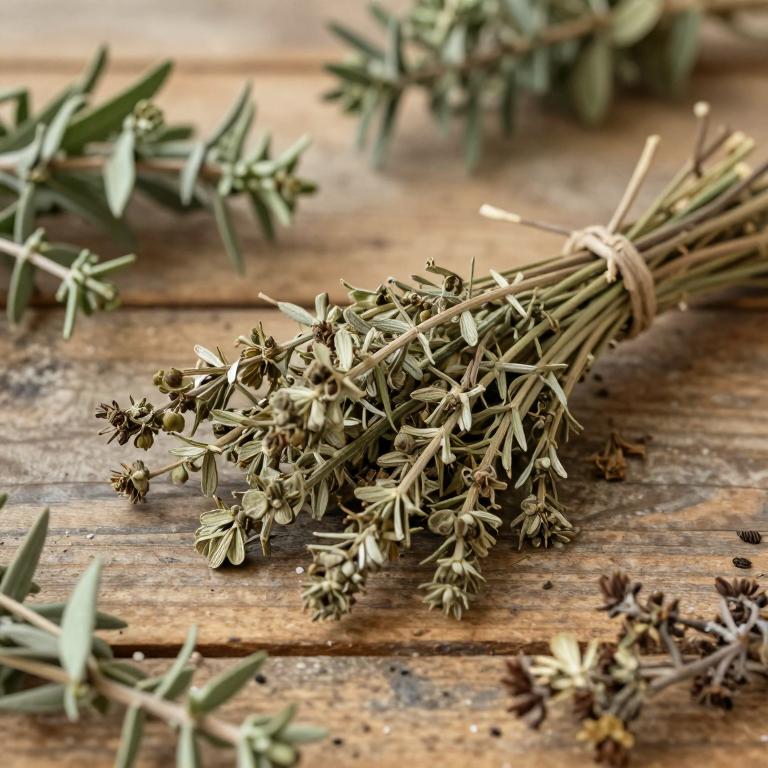
Names and Synonyms
Common Names
- Wilga
- lavender-bush
- tree wilga
Scientific Names
Accepted name
Geijera parvifloraSynonyms
- Zanthoxylum australasicum
- Geijera pendula
Sources: Wikidata, Catalogue of Life
Taxonomical Classification
This plant belongs to the kingdom Plantae within the phylum Streptophyta and is classified under the class Equisetopsida. Following the subclass Magnoliidae, it is organized into the order Sapindales and the family Rutaceae. Ultimately, it is identified by the genus Geijera and the specific species name Geijera parviflora.
| Rank | Classification |
|---|---|
| Kingdom | Plantae |
| Phylum | Streptophyta |
| Class | Equisetopsida |
| Subclass | Magnoliidae |
| Order | Sapindales |
| Family | Rutaceae |
| Genus | Geijera |
Sources: The World Checklist of Vascular Plants (WCVP)
Distribution
This plant, Geijera parviflora, is native to several different regions across the Australian continent. Its geographical distribution primarily encompasses the eastern and southern parts of the country. Specifically, it can be found growing within the state of New South Wales. The species also extends its range northward into the coastal and inland areas of Queensland. Finally, its presence is documented throughout the southern territories of South Australia and Victoria.
| Region | Area |
|---|---|
| Australia | New South Wales |
| Australia | Queensland |
| Australia | South Australia |
| Australia | Victoria |
Sources: The World Checklist of Vascular Plants (WCVP)
Botanical Identification
Life history
The life history of Geijera parviflora is characterized by its nature as a perennial species, allowing the plant to persist through multiple growing seasons and establish a long-term presence within its ecosystem. As a perennial, it avoids the rapid turnover associated with annuals or biennials, instead focusing on sustained vegetative growth and periodic reproductive cycles that contribute to its long-term survival and stability in its natural habitat.
- Lifecycle :
- perennial
Morphology
The morphology of Geijera parviflora is characterized by its growth form as a woody tree, reaching a maximum plant height of approximately 10 meters. It is a terrestrial species that grows independently, neither acting as a parasite nor functioning as an epiphyte. Unlike climbing plants, it is self-supporting in its structural development.
- Aquatic :
- terrestrial
- Climber :
- self-supporting
- Epiphyte :
- terrestrial
- Growth form :
- tree
- Parasite :
- independent
- Plant height max:
- 10 m
- Woodiness :
- woody
Physiology
The physiology of Geijerera parviflora is characterized by a distinct leaf morphology and a specific metabolic carbon fixation strategy. The plant utilizes the C3 photosynthetic pathway, which governs its carbon assimilation processes and gas exchange patterns. Its foliage exhibits significant morphological variation in dimensions, with leaf lengths ranging from a minimum of 3.5 cm to a maximum of 18 cm. Complementing this longitudinal variation, the leaf width is relatively narrow, fluctuating between a minimum of 0.4 cm and a maximum of 1 cm, contributing to the overall structural profile of the plant's photosynthetic organs.
- Leaf length max:
- 18 cm
- Leaf length min:
- 3.5 cm
- Leaf width max:
- 1 cm
- Leaf width min:
- 0.4 cm
- Photosynthetic pathway :
- C3
Reproduction
The reproduction of Geijerera parviflora is characterized by a prolonged flowering period that begins in June and extends through November, though the timing can be variable depending on environmental conditions. During this reproductive cycle, the plant produces seeds with specific physical properties, exhibiting a mean seed mass of approximately 0.022145 g. The individual seed mass shows a narrow range of variation, with recorded minimum values of 0.02013 g and maximum values reaching up to 0.02416 g.
- Flowering time :
- Jun
- Flowering time :
- Nov
- Seed mass max:
- 0.02416 g
- Seed mass mean:
- 0.022145 g
- Seed mass min:
- 0.02013 g
Sources: Global Inventory of Floras and Traits (GIFT)
Chemicals
Geijera parviflora has 6 reported phytochemicals identified across 0 scientific publications and several other databases. The most consistently reported chemicals include 1,8-Cineol, Bicyclogermacrene, ISOPSORALEN, Linalool, Osthole.
| Chemical | Supporting sources | Consensus |
|---|---|---|
| 1,8-Cineol | 1 supporting sources | ★☆☆☆☆ |
| Bicyclogermacrene | 1 supporting sources | ★☆☆☆☆ |
| ISOPSORALEN | 1 supporting sources | ★☆☆☆☆ |
| Linalool | 1 supporting sources | ★☆☆☆☆ |
| Osthole | 1 supporting sources | ★☆☆☆☆ |
| Xanthyletine | 1 supporting sources | ★☆☆☆☆ |
1,8-Cineol
- Phytochemistry
Bicyclogermacrene
- Phytochemistry
ISOPSORALEN
- Phytochemistry
Linalool
- Phytochemistry
Osthole
- Phytochemistry
Xanthyletine
- Phytochemistry
Activities
Geijera parviflora has 4 reported activities identified across 0 scientific publications and several other databases. The most consistently reported activities include Antibacterial, Antifungal, Antimicrobial, Free-Radical Scavenging.
| Activity | Supporting sources | Consensus |
|---|---|---|
| Antibacterial | 1 supporting sources | ★☆☆☆☆ |
| Antifungal | 1 supporting sources | ★☆☆☆☆ |
| Antimicrobial | 1 supporting sources | ★☆☆☆☆ |
| Free-Radical Scavenging | 1 supporting sources | ★☆☆☆☆ |
Antibacterial
- Phytochemistry
Antifungal
- Phytochemistry
Antimicrobial
- Phytochemistry
Free-Radical Scavenging
- Phytochemistry
Preparations
Geijera parviflora has 1 reported preparations identified across 0 scientific publications and several other databases. The most consistently reported preparations include oils.
| Preparation | Supporting sources | Consensus |
|---|---|---|
| Oils | 1 supporting sources | ★☆☆☆☆ |
Oils
- Phytochemistry