Himalayan snowberry
Gaultheria trichophylla · Accepted scientific name
Scientific literature: Very Sparse (18 studies) · ★☆☆☆☆
Himalayan snowberry, scientifically known as Gaultheria trichophylla, is a resilient evergreen shrub native to high-altitude Himalayan regions. Renowned for its striking white berries and leathery foliage, this plant holds significant ethnobotanical value. It is traditionally utilized in folk medicine for its potential anti-inflammatory and analgesic therapeutic properties.
- Family
- Ericaceae
- Native range
- Asia-Temperate
- Parts used
- Not available
- Common names
- Himalayan Snowberry
- Scientific synonyms
- Gaultheria Trichophylla Var. Ovata · Brossaea Trichophylla · 1 more
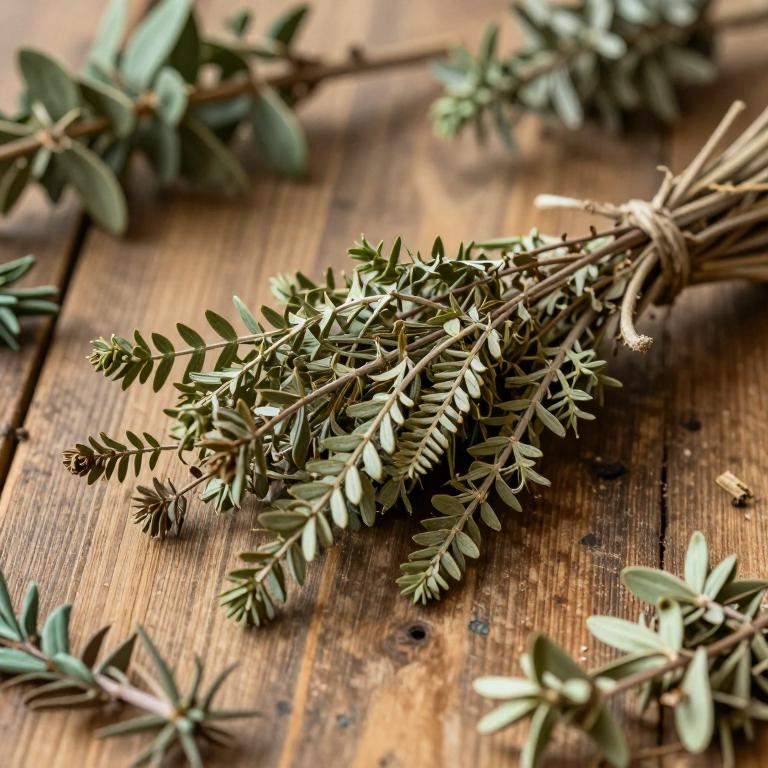
Names and Synonyms
Common Names
- Himalayan snowberry
Scientific Names
Accepted name
Gaultheria trichophyllaSynonyms
- Gaultheria trichophylla var. ovata
- Brossaea trichophylla
- Gaultheria nana
Sources: Wikidata, Catalogue of Life
Taxonomical Classification
This plant, Gaultheria trichophylla, belongs to the kingdom Plantae and the phylum Streptophyta. Within the class Equisetopsida and subclass Magnoliidae, it is classified under the order Ericales and the family Ericaceae. Finally, it is placed within the genus Gaultheria.
| Rank | Classification |
|---|---|
| Kingdom | Plantae |
| Phylum | Streptophyta |
| Class | Equisetopsida |
| Subclass | Magnoliidae |
| Order | Ericales |
| Family | Ericaceae |
| Genus | Gaultheria |
Sources: The World Checklist of Vascular Plants (WCVP)
Distribution
This plant exhibits a specific geographical range spanning parts of East Asia and the Indian subcontinent. In China, its distribution is concentrated within the South-Central regions as well as the high-altitude areas of Tibet. Moving into the Indian subcontinent, it can be found growing in the lush landscapes of Assam. The species also inhabits the rugged terrain of the East Himalaya. Additionally, its presence extends across the mountainous country of Nepal.
| Region | Area |
|---|---|
| China | China South-Central |
| China | Tibet |
| Indian Subcontinent | Assam |
| Indian Subcontinent | East Himalaya |
| Indian Subcontinent | Nepal |
| Indian Subcontinent | Pakistan |
| Indian Subcontinent | West Himalaya |
| Indo-China | Myanmar |
Sources: The World Checklist of Vascular Plants (WCVP)
Botanical Identification
Ecology
The ecology of Gaultheria trichophylla is characterized by its specialized distribution within high-altitude montane environments, where it occupies a specific vertical niche. This species is typically found across a substantial altitudinal gradient, ranging from a minimum elevation of 2700 m AMSL to a maximum of 4300 m AMSL. Throughout its habitat, the plant maintains a mean elevational presence of approximately 3150 m AMSL, suggesting a preference for the subalpine and alpine zones where it must adapt to the unique climatic conditions, such as lower temperatures and varying levels of solar radiation, inherent to these high-elevation ecosystems.
- Elevational range max:
- 4300 m AMSL
- Elevational range mean:
- 3150 m AMSL
- Elevational range min:
- 2700 m AMSL
Life history
The life history of Gaultheria trichophylla is characterized by its status as a perennial plant, allowing it to persist through multiple growing seasons rather than completing its cycle within a single year. Throughout its existence, the plant maintains an evergreen habit, ensuring that its foliage remains functional and present across different seasonal transitions rather than shedding all leaves in a deciduous manner.
- Deciduousness :
- evergreen
- Lifecycle :
- perennial
Morphology
The morphology of Gaultheria trichophylla is characterized by a low-growing, shrubby growth form, typically reaching a mean plant height of approximately 0.1 m. It is a woody plant that functions as a self-supporting species rather than a climber, maintaining its structure without the need for external support. As an independent organism, it does not exhibit parasitic behavior, and it follows a terrestrial life strategy rather than being epiphytic.
- Climber :
- self-supporting
- Epiphyte :
- terrestrial
- Growth form :
- shrub
- Parasite :
- independent
- Plant height mean:
- 0.1 m
- Woodiness :
- woody
Physiology
The physiology of Gaultheria trichophylla is characterized by highly specialized leaf morphology, reflecting a compact and efficient structural design. The leaf dimensions exhibit specific variations that suggest a controlled growth pattern, with leaf lengths ranging from a minimum of 0.5 cm to a maximum of 0.95 cm, maintaining an average length of 0.725 cm. Complementing this longitudinal development is a corresponding width profile, where the leaf width fluctuates between a minimum of 0.45 cm and a maximum of 0.9 cm. These precise morphological measurements indicate a streamlined surface area, likely optimized for specific photosynthetic requirements and moisture retention within its ecological niche.
- Leaf length max:
- 0.95 cm
- Leaf length mean:
- 0.725 cm
- Leaf length min:
- 0.5 cm
- Leaf width max:
- 0.9 cm
- Leaf width min:
- 0.45 cm
Reproduction
The reproduction of Gaultheria trichophylla is characterized by a specific seasonal flowering cycle and the production of small, uniform fruit. The flowering period typically commences in August and extends through September, though the timing can be variable across different months. Following pollination, the plant develops fruits that exhibit highly consistent morphological dimensions; the fruit length and width are uniform, with a mean, maximum, and minimum value of 0.5 cm, as well as a minimum fruit length of 0.5 cm and a minimum fruit width of 0.5 cm, resulting in small, spherical reproductive structures.
- Flowering time :
- Aug
- Flowering time :
- Sep
- Fruit length max:
- 0.5 cm
- Fruit width max:
- 0.5 cm
Sources: Global Inventory of Floras and Traits (GIFT)
Chemicals
Gaultheria trichophylla has 10 reported phytochemicals identified across 0 scientific publications and several other databases. The most consistently reported chemicals include Anthraquinones, Condensed Tannins, Flavonoids, Gallic acid, Gaultherin.
| Chemical | Supporting sources | Consensus |
|---|---|---|
| Anthraquinones | 1 supporting sources | ★☆☆☆☆ |
| Condensed Tannins | 1 supporting sources | ★☆☆☆☆ |
| Flavonoids | 1 supporting sources | ★☆☆☆☆ |
| Gallic acid | 1 supporting sources | ★☆☆☆☆ |
| Gaultherin | 1 supporting sources | ★☆☆☆☆ |
| RUTIN | 1 supporting sources | ★☆☆☆☆ |
| Salicylates | 1 supporting sources | ★☆☆☆☆ |
| Saponins | 1 supporting sources | ★☆☆☆☆ |
| Terpenoids | 1 supporting sources | ★☆☆☆☆ |
| quercetin | 1 supporting sources | ★☆☆☆☆ |
Anthraquinones
- Pakistan journal of pharmaceutical sciences
Condensed Tannins
- Pakistan journal of pharmaceutical sciences
Flavonoids
- Pakistan journal of pharmaceutical sciences
Gallic acid
- Pharmaceutical biology
Gaultherin
- Journal of ethnopharmacology
RUTIN
- Pharmaceutical biology
Salicylates
- Journal of ethnopharmacology
Saponins
- Pakistan journal of pharmaceutical sciences
Terpenoids
- Pakistan journal of pharmaceutical sciences
quercetin
- Pharmaceutical biology
Activities
Gaultheria trichophylla has 2 reported activities identified across 0 scientific publications and several other databases. The most consistently reported activities include Analgesic, Antipyretic.
| Activity | Supporting sources | Consensus |
|---|---|---|
| Analgesic | 1 supporting sources | ★☆☆☆☆ |
| Antipyretic | 1 supporting sources | ★☆☆☆☆ |
Analgesic
- Journal of ethnopharmacology
Antipyretic
- Journal of ethnopharmacology
Conditions
Gaultheria trichophylla has 4 reported investigations on conditions identified across 0 scientific publications and several other databases. The most consistently reported conditions include inflammation, pain, pyrexia, writing.
| Condition | Supporting sources | Consensus |
|---|---|---|
| Inflammation | 2 supporting sources | ★☆☆☆☆ |
| Pain | 2 supporting sources | ★☆☆☆☆ |
| Pyrexia | 1 supporting sources | ★☆☆☆☆ |
| Writing | 1 supporting sources | ★☆☆☆☆ |
Inflammation
- Journal of ethnopharmacology
- Pharmaceutical biology
Pain
- Journal of ethnopharmacology
- Pharmaceutical biology
Pyrexia
- Journal of ethnopharmacology
Writing
- Journal of ethnopharmacology
Preparations
Gaultheria trichophylla has 3 reported preparations identified across 0 scientific publications and several other databases. The most consistently reported preparations include chloroform extract, methanol extract, n-hexane extract.
| Preparation | Supporting sources | Consensus |
|---|---|---|
| Chloroform extract | 1 supporting sources | ★☆☆☆☆ |
| Methanol extract | 1 supporting sources | ★☆☆☆☆ |
| N-hexane extract | 1 supporting sources | ★☆☆☆☆ |
Chloroform extract
- Pakistan journal of pharmaceutical sciences
Methanol extract
- Pakistan journal of pharmaceutical sciences
N-hexane extract
- Pakistan journal of pharmaceutical sciences