cancer wintergreen
Gaultheria hispidula · Accepted scientific name
Scientific literature: Very Sparse (1 studies) · ★☆☆☆☆
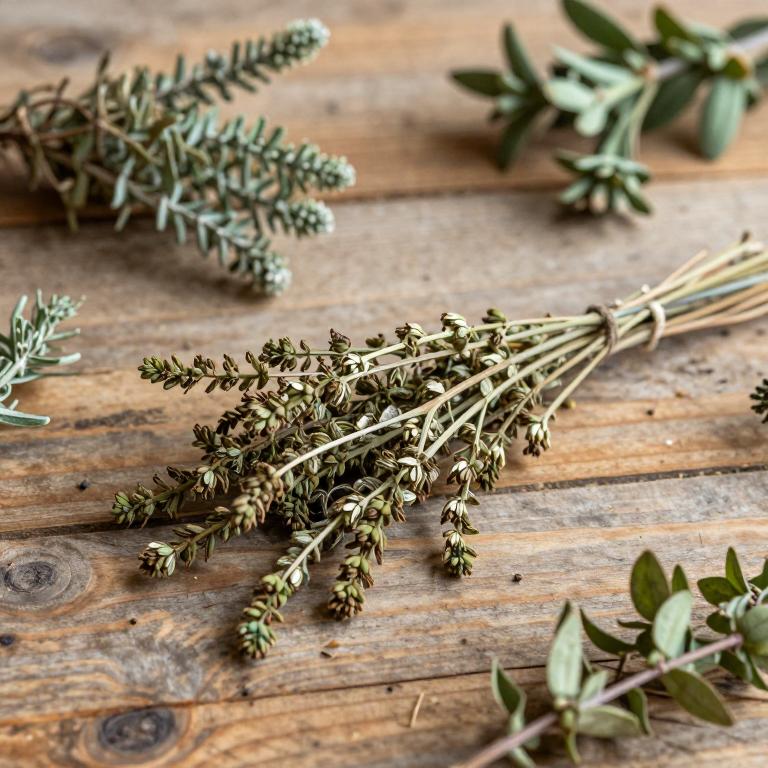
Cancer wintergreen, scientifically known as Gaultheria hispidula, is a versatile evergreen shrub native to various regions. Renowned for its aromatic leaves and vibrant berries, this medicinal plant contains methyl salicylate. It is traditionally utilized in herbal remedies to alleviate inflammation, soothe muscle aches, and provide natural analgesic relief.
Names and Synonyms
Common Names
- cancer wintergreen
- maidenhair berry
- moxieplum
- snowberry
- creeping-snowberry
- Hairy false-wintergreen
Scientific Names
Accepted name
Gaultheria hispidulaSynonyms
- Oxycoccus hispidulus
- Phalerocarpus hispidulus
- Phalerocarpus serpyllifolia
- Schollera hispidula
- Lasierpa hispidula
- Glyciphylla hispidula
- Arbutus filiformis
- Arbutus thymifolia
- Vaccinium hispidulum
- Chiogenes hispidula
- Chiogenes serpyllifolia
Regional and Traditional Names
French:
- chiogène hispide
- gaulthérie hispide
- oeufs de perdrix
- petit thé
Sources: Wikidata, Catalogue of Life
Taxonomical Classification
This plant belongs to the kingdom Plantae and the phylum Streptophyta. Within the class Equisetopsida and subclass Magnoliidae, it is classified under the order Ericales and the family Ericaceae. Finally, it is identified by the genus Gaultheria.
| Rank | Classification |
|---|---|
| Kingdom | Plantae |
| Phylum | Streptophyta |
| Class | Equisetopsida |
| Subclass | Magnoliidae |
| Order | Ericales |
| Family | Ericaceae |
| Genus | Gaultheria |
Sources: The World Checklist of Vascular Plants (WCVP)
Distribution
This plant exhibits a wide geographical distribution across several prominent regions of North America. In the northernmost reaches, it can be found within the territory of Nunavut in Subarctic America. Its presence extends significantly through Western Canada, spanning across the provinces of Alberta and British Columbia. Additionally, the species is established within the prairie provinces of Manitoba and Saskatchewan. Together, these locations highlight the diverse habitats where the species thrives.
| Region | Area |
|---|---|
| Subarctic America | Nunavut |
| Western Canada | Alberta |
| Western Canada | British Columbia |
| Western Canada | Manitoba |
| Western Canada | Saskatchewan |
| Eastern Canada | Labrador |
| Eastern Canada | New Brunswick |
| Eastern Canada | Newfoundland |
| Eastern Canada | Nova Scotia |
| Eastern Canada | Ontario |
Sources: The World Checklist of Vascular Plants (WCVP)
Botanical Identification
Life history
The life history of Gaultheria hispidula is characterized by its status as a perennial plant, meaning it persists through multiple growing seasons rather than completing its life cycle in a single year. As a long-lived species within its ecosystem, it maintains a continuous presence, often spreading through rhizomatous growth or seedling establishment to form stable populations. Its developmental stages involve a recurring vegetative growth phase followed by seasonal reproductive cycles, allowing it to adapt to its environment over many years. This perennial nature ensures that the plant can survive periods of unfavorable conditions, rebuilding its biomass and preparing for subsequent flowering and fruiting stages in successive years.
- Lifecycle :
- perennial
Morphology
The morphology of Gaultheria hispidula is characterized by its growth form as a woody shrub, exhibiting a self-supporting structure that does not require climbing mechanisms. The plant typically reaches a mean height of approximately 0.15 m, maintaining a compact stature. It is a terrestrial species, functioning as an independent organism rather than acting as a parasite or an epiphyte. Its physical development is defined by its woodiness, which supports its classification as a small, sturdy shrub within its natural habitat.
- Aquatic :
- terrestrial
- Climber :
- self-supporting
- Epiphyte :
- terrestrial
- Growth form :
- shrub
- Parasite :
- independent
- Plant height mean:
- 0.15 m
- Woodiness :
- woody
Physiology
The physiology of Gaultheria hispidula is characterized by its metabolic efficiency within temperate and montane forest understories, where it utilizes a C3 photosynthetic pathway. This carbon fixation strategy involves the direct carboxylation of ribulose-1,5-bisphosphate (RuBP) by the enzyme RuBisCO, a process that is highly efficient under the cool, moist, and shaded conditions typical of its natural habitat. Because it lacks the specialized CO2-concentrating mechanisms found in C4 or CAM plants, its physiological performance is closely tied to light availability and moisture levels, relying on its ability to manage photorespiration during periods of varying light intensity. The plant's metabolic processes are further supported by its capacity for nutrient uptake and water regulation, which are optimized to sustain growth in the acidic, organic-rich soils of its ecosystem.
- Photosynthetic pathway :
- C3
Reproduction
The reproduction of Gaultheria hispidula is characterized by a specialized seed dispersal mechanism and specific seed morphology. The plant utilizes a zoochorous dispersal syndrome, relying on animals to facilitate the movement of its seeds to new locations. The seeds produced are exceptionally fine, with a mean seed mass of 0.00014985 g. This mass exhibits very little variation, ranging from a minimum of 0.000147 g to a maximum of 0.00015 g, ensuring a highly consistent physical profile for its reproductive units.
- Dispersal syndrome :
- zoochorous
- Seed mass max:
- 0.00015 g
- Seed mass mean:
- 0.00014985 g
- Seed mass min:
- 0.000147 g
Sources: Global Inventory of Floras and Traits (GIFT)
Activities
Gaultheria hispidula has 1 reported activities identified across 0 scientific publications and several other databases. The most consistently reported activities include Cytoprotective.
| Activity | Supporting sources | Consensus |
|---|---|---|
| Cytoprotective | 1 supporting sources | ★☆☆☆☆ |
Cytoprotective
- BMC complementary and alternative medicine