Gasteria obliqua
Gasteria obliqua · Accepted scientific name
Scientific literature: Very Sparse (12 studies) · ★☆☆☆☆
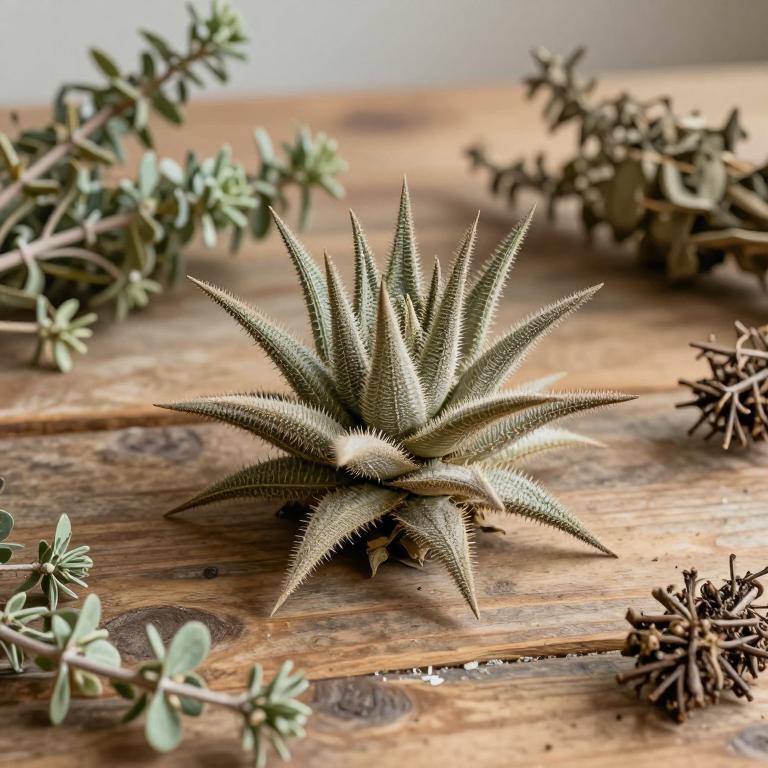
Gasteria obliqua, scientifically known as Gasteria obliqua, is a distinctive succulent plant prized for its unique, sculptural form. Often found in arid landscapes, this species is valued in traditional medicine and ornamental horticulture alike. Its resilient nature and specialized adaptations make it a fascinating subject for botanical study.
- Family
- Asphodelaceae
- Native range
- Europe
- Parts used
- Leaf
- Common names
- Not available
- Scientific synonyms
- Aloe Bicolor · Aloe Formosa · 38 more
Names and Synonyms
Scientific Names
Accepted name
Gasteria obliquaSynonyms
- Aloe bicolor
- Aloe formosa
- Gasteria planifolia
- Aloe macchiata
- Gasteria bicolor var. liliputana
- Aloe maculata var. obliqua
- Aloe marmorata
- Aloe nigricans var. fasciata
- Aloe zeyheri
- Aloe guttata
- Aloe boureana
- Aloe vittata
- Gasteria salmdyckiana
- Gasteria bicolor var. fallax
- Gasteria spiralis
- Gasteria retata
- Gasteria picta
- Gasteria variolosa
- Gasteria zeyheri
- Gasteria marmorata
- Aloe dictyodes
- Gasteria multiplex
- Gasteria maculata
- Gasteria loeriensis
- Gasteria longiana
- Gasteria longibracteata
- Gasteria liliputana
- Gasteria kirsteana
- Gasteria herreana
- Gasteria fasciata
- Gasteria formosa
- Gasteria colubrina
- Gasteria chamaegigas
- Gasteria caespitosa
- Gasteria bicolor
- Gasteria biformis
- Gasteria spiralis var. tortulata
- Gasteria maculata var. fallax
- Gasteria maculata var. dregeana
- Gasteria nigricans var. fasciata
Sources: Wikidata, Catalogue of Life
Taxonomical Classification
This plant belongs to the kingdom Plantae and the phylum Streptophyta, falling under the class Equisetopsida and subclass Magnoliidae. Within the order Asparagales, it is classified under the family Asphodelaceae. Finally, it is identified by the genus Gasteria, with the specific species being Gasteria obliqua.
| Rank | Classification |
|---|---|
| Kingdom | Plantae |
| Phylum | Streptophyta |
| Class | Equisetopsida |
| Subclass | Magnoliidae |
| Order | Asparagales |
| Family | Asphodelaceae |
| Genus | Gasteria |
Sources: The World Checklist of Vascular Plants (WCVP)
Distribution
This plant exhibits a diverse geographical distribution spanning several continents. In Europe, its presence is specifically noted within the borders of Spain in the southwestern region. Moving to the Southern Hemisphere, it can be found inhabiting the Cape Provinces of Southern Africa. The species also has a significant presence in Mexico, where it is distributed across the central territories. Finally, its range extends to the northeast and southwest regions of Mexico, completing its broad global footprint.
| Region | Area |
|---|---|
| Southwestern Europe | Spain |
| Southern Africa | Cape Provinces |
| Mexico | Mexico Central |
| Mexico | Mexico Northeast |
| Mexico | Mexico Southwest |
Sources: The World Checklist of Vascular Plants (WCVP)
Botanical Identification
Ecology
The ecology of Gastaria obliqua is defined by its ability to inhabit a diverse altitudinal gradient, allowing it to persist across varied topographical landscapes. This species is found within an elevational range that begins at a low-altitude minimum of 18 m AMSL and extends to a maximum elevation of 1000 m AMSL. Such a broad vertical distribution suggests an adaptability to fluctuating environmental pressures, ranging from lowland tropical or subtropical conditions to more temperate mid-elevation zones. This range implies that the plant can navigate varying levels of humidity, temperature shifts, and atmospheric pressure, establishing itself in distinct ecological niches throughout its vertical habitat.
- Elevational range max:
- 1000 m AMSL
- Elevational range min:
- 18 m AMSL
Life history
The life history of Gasteria obliqua is characterized by a perennial lifecycle, allowing the plant to persist through multiple growing seasons. In terms of its structural growth strategy, the species functions as a hemicryptophyte, a life form where the perennating buds are located at the soil surface, protected by leaf litter or surface debris. This classification as a hemicryptophyte is consistent across its morphological development, ensuring its survival and ability to re-emerge following seasonal environmental shifts.
- Life form :
- hemicryptophyte
- Lifecycle :
- perennial
Morphology
The morphology of Gastaria obliqua is characterized by a small, non-woody growth form, specifically classified as a herb. This species exhibits a low stature, with a plant height ranging from a minimum of 0.01 m to a maximum of 0.21 m. It functions as a self-supporting plant rather than a climber, maintaining an independent life cycle without acting as a parasite. In terms of its ecological habit, the plant is terrestrial rather than epiphytic, and its moisture preference is categorized within the spectrum of aquatic, semiaquatic, and terrestrial environments.
- Aquatic :
- terrestrial
- Climber :
- self-supporting
- Epiphyte :
- terrestrial
- Growth form :
- herb
- Parasite :
- independent
- Plant height max:
- 0.21 m
- Plant height min:
- 0.01 m
- Woodiness :
- non-woody
Reproduction
The reproduction of Gastaria obliqua is characterized by the production of specialized seeds that exhibit a highly consistent physical profile. The reproductive output of this species is defined by a uniform seed mass, with the mean, maximum, and minimum values all recorded at 8e-04 g. This lack of variance in seed mass suggests a highly stabilized reproductive strategy, where each individual seed is produced with a precise and standardized weight of 0.0008 grams, ensuring predictable energy allocation for offspring development and dispersal.
- Seed mass mean:
- 8e-04 g
Sources: Global Inventory of Floras and Traits (GIFT)
Plant Parts
Gasteria obliqua has 1 reported plant parts identified across 1 scientific publications and several other databases that are studied for medicinal purposes. The most consistently reported plant part include leaf.
| Plant part | Supporting sources | Consensus |
|---|---|---|
| Leaf | 1 supporting sources | ★☆☆☆☆ |
Leaf
- BMC complementary and alternative medicine
Chemicals
Gasteria obliqua has 6 reported phytochemicals identified across 1 scientific publications and several other databases. The most consistently reported chemicals include ALUMINUM, CALCIUM OXALATE, Flavonoid, Proanthocyanidins, Silica.
| Chemical | Supporting sources | Consensus |
|---|---|---|
| ALUMINUM | 1 supporting sources | ★☆☆☆☆ |
| CALCIUM OXALATE | 1 supporting sources | ★☆☆☆☆ |
| Flavonoid | 1 supporting sources | ★☆☆☆☆ |
| Proanthocyanidins | 1 supporting sources | ★☆☆☆☆ |
| Silica | 1 supporting sources | ★☆☆☆☆ |
| calcium sulphate | 1 supporting sources | ★☆☆☆☆ |
ALUMINUM
- African journal of traditional, complementary, and alternative medicines : AJTCAM
CALCIUM OXALATE
- African journal of traditional, complementary, and alternative medicines : AJTCAM
Flavonoid
- BMC complementary and alternative medicine
Proanthocyanidins
- BMC complementary and alternative medicine
Silica
- African journal of traditional, complementary, and alternative medicines : AJTCAM
calcium sulphate
- African journal of traditional, complementary, and alternative medicines : AJTCAM
Preparations
Gasteria obliqua has 4 reported preparations identified across 1 scientific publications and several other databases. The most consistently reported preparations include acetone extracts, hexane and acetone extracts, leaves and bark extracts, leaves and stem extracts.
| Preparation | Supporting sources | Consensus |
|---|---|---|
| Acetone extracts | 1 supporting sources | ★☆☆☆☆ |
| Hexane and acetone extracts | 1 supporting sources | ★☆☆☆☆ |
| Leaves and bark extracts | 1 supporting sources | ★☆☆☆☆ |
| Leaves and stem extracts | 1 supporting sources | ★☆☆☆☆ |
Acetone extracts
- BMC complementary and alternative medicine
Hexane and acetone extracts
- African journal of traditional, complementary, and alternative medicines : AJTCAM
Leaves and bark extracts
- BMC complementary and alternative medicine
Leaves and stem extracts
- BMC complementary and alternative medicine