Gasteria croucheri
Gasteria croucheri · Accepted scientific name
Scientific literature: Very Sparse (0 studies) · ★☆☆☆☆
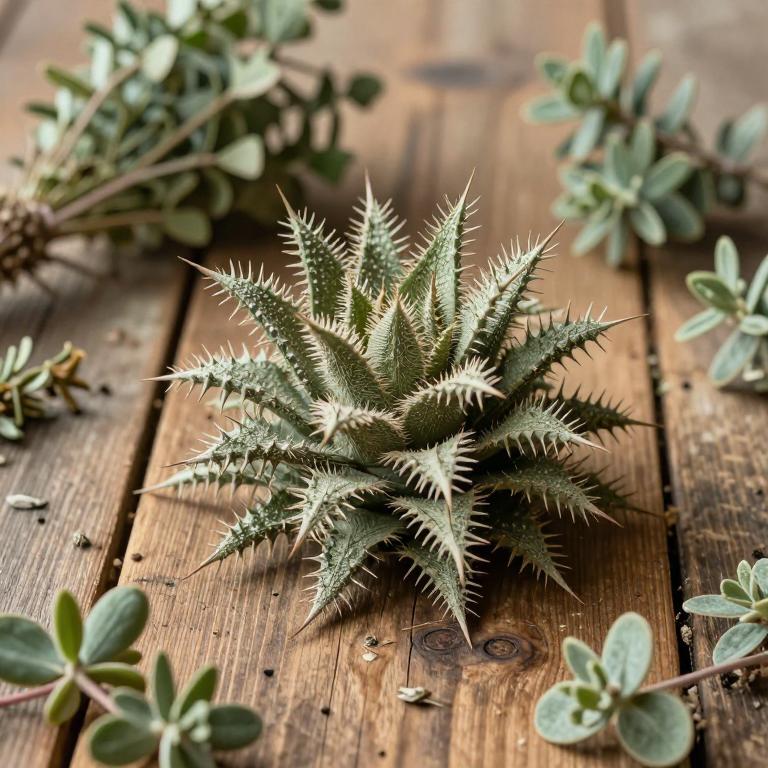
Gasteria croucheri is a distinctive succulent species known for its unique leaf structure and resilience in specialized environments. Recent scientific investigations have focused on the plant's biochemical potential through the development of various extracts. These preparations are being rigorously tested to evaluate their interaction with specific biological pathways. Current research specifically examines how these botanical compounds influence MAO-B activity within cellular models. Understanding this relationship may unlock new therapeutic possibilities derived from this unique succulent.
- Synonyms
- Aloe Croucheri
- Common names
- Not available
- Family
- Asphodelaceae
- Distribution
- Not available
- Plant Parts
- Not available
Classification
Common Names
Gasteria croucheri is a unique succulent known by several distinct regional names. In certain areas, it is commonly referred to as Impendle or Impundu. It also carries the descriptive moniker of Natal Oxtongue, highlighting its specific botanical identity. Additionally, some local communities recognize this plant as bosaalwyn. These diverse names reflect the rich cultural and linguistic variety associated with the species.
Sources: Catalogue of Life (COL)
Synonyms
Gasteria croucheri is a fascinating succulent that is often identified in botanical literature by its alternative name, Aloe croucheri. This taxonomic synonym highlights the historical shifts in how scientists have classified various species within the Aloe and Gasteria families. While the names may differ depending on the source, they both refer to the same unique botanical entity. Understanding these overlapping designations is essential for collectors and researchers looking to accurately document the plant's lineage. Recognizing such relationships ensures clarity when navigating the complex world of plant nomenclature.
Sources: The World Checklist of Vascular Plants (WCVP)
Taxonomy
Gasteria croucheri is a distinctive member of the kingdom Plantae. Within this vast biological realm, the species belongs to the class Equisetopsida. It is further classified under the order Asparagales, showcasing its specific evolutionary lineage. This plant is a notable representative of the family Asphodelaceae. Finally, it is defined by its placement within the unique genus Gasteria.
| Rank | Classification |
|---|---|
| Kingdom | Plantae |
| Phylum | Streptophyta |
| Class | Equisetopsida |
| Subclass | Magnoliidae |
| Order | Asparagales |
| Family | Asphodelaceae |
| Genus | Gasteria |
Sources: The World Checklist of Vascular Plants (WCVP)
Distribution
Geographic Regions
Gasteria croucheri is a specialized succulent native to the diverse landscapes of Africa. Its primary distribution is centered within the southern reaches of the continent, specifically throughout the Cape Provinces. In addition to these coastal regions, the species can be found thriving in the subtropical environment of KwaZulu-Natal. These specific geographic pockets provide the unique ecological conditions necessary for the plant to flourish. Understanding these localized habitats is essential for anyone studying the regional flora of Southern Africa.
Sources: The World Checklist of Vascular Plants (WCVP)
Identification
Morphology
Gasteria croucheri is a distinctive herb characterized by its self-supporting growth form. This compact plant typically maintains a modest stature within its natural environment. Depending on its maturity, the height of the species generally ranges from a minimum of 0.1 m to a maximum of 0.6 m. Such small dimensions make it a subtle yet resilient addition to any botanical collection.
Sources: Global Inventory of Floras and Traits (GIFT)
Biological Activities
Compounds
Conditions
Gasteria croucheri is identified as one of the specific plants capable of inhibiting MAO-B. This inhibitory activity was discovered during investigations into plants used in traditional South African medicine for their effects on the central nervous system. Along with Mentha aquatica, Ruta graveolens, and Scotia brachypetala, it demonstrates this particular biochemical interaction. Such findings contribute to the scientific understanding of how certain botanical extracts may influence mental health conditions. The ability of Gasteria croucheri to treat MAO-B highlights its potential pharmacological significance.
Preparations
Gasteria croucheri is prepared as extracts to be used in the treatment of mental conditions. These specific extracts have been found to inhibit MAO-B activity. This biochemical action contributes to the plant's role within traditional South African medicine. Scientific investigations highlight how such extracts interact with the central nervous system. Consequently, the preparation of Gasteria croucheri as an extract serves a clear medicinal purpose.