Bushveld Gardenia
Gardenia volkensii · Accepted scientific name
Scientific literature: Very Sparse (12 studies) · ★☆☆☆☆
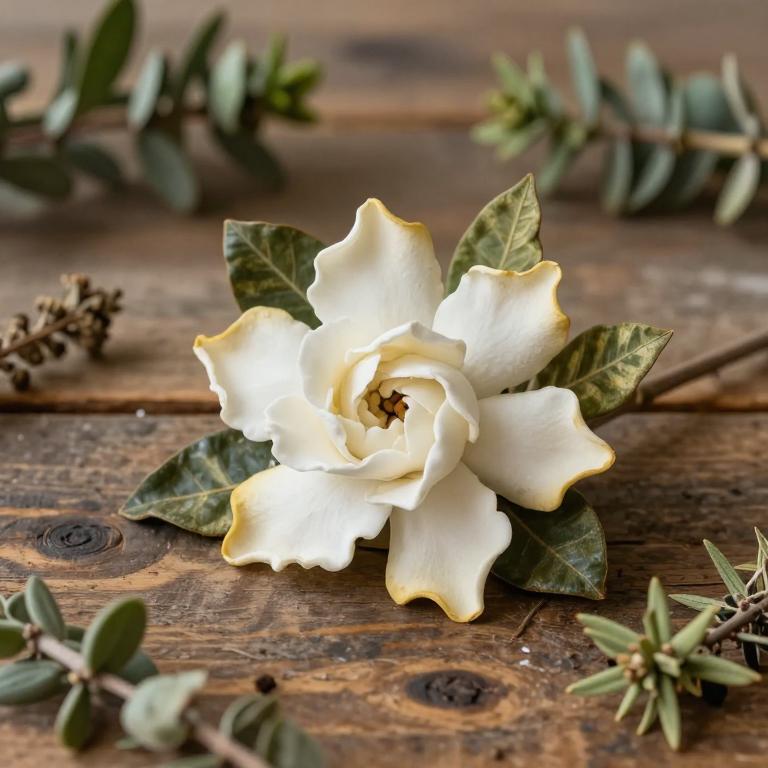
Bushveld Gardenia, scientifically known as Gardenia volkensii, is a resilient, evergreen shrub native to the African savannah. Renowned for its fragrant, creamy-white blossoms, this medicinal plant is highly valued in traditional healing. It is frequently utilized to treat various ailments, ranging from skin infections to gastrointestinal distress and inflammation.
- Family
- Rubiaceae
- Native range
- Africa
- Parts used
- Leaf
- Common names
- Bushveld Gardenia · Savanna Gardenia · 1 more
- Scientific synonyms
- Not available
Names and Synonyms
Common Names
- Bushveld Gardenia
- Savanna Gardenia
- Transvaal gardenia
Scientific Names
Accepted name
Gardenia volkensiiSources: Wikidata, Catalogue of Life
Taxonomical Classification
This plant belongs to the kingdom Plantae and is classified under the phylum Streptophyta within the class Equisetopsida. As a member of the subclass Magnoliidae and the order Gentianales, it is further categorized into the family Rubiaceae. Finally, its specific taxonomic placement is within the genus Gardenia.
| Rank | Classification |
|---|---|
| Kingdom | Plantae |
| Phylum | Streptophyta |
| Class | Equisetopsida |
| Subclass | Magnoliidae |
| Order | Gentianales |
| Family | Rubiaceae |
| Genus | Gardenia |
Sources: The World Checklist of Vascular Plants (WCVP)
Distribution
This plant is primarily distributed across several key regions within the African continent. In Northeast Tropical Africa, its presence is recorded in both Ethiopia and Somalia. Moving toward East Tropical Africa, the species is also found within the borders of Kenya and Tanzania. Additionally, the plant extends its range into Uganda to complete its regional coverage. Collectively, these locations define the specific geographical footprint of Gardenia volkensii.
| Region | Area |
|---|---|
| Northeast Tropical Africa | Ethiopia |
| Northeast Tropical Africa | Somalia |
| East Tropical Africa | Kenya |
| East Tropical Africa | Tanzania |
| East Tropical Africa | Uganda |
| South Tropical Africa | Angola |
| South Tropical Africa | Malawi |
| South Tropical Africa | Mozambique |
| South Tropical Africa | Zambia |
| South Tropical Africa | Zimbabwe |
Sources: The World Checklist of Vascular Plants (WCVP)
Botanical Identification
Ecology
The ecology of Gardenia volkensii is defined by its adaptability to diverse landscapes, ranging from coastal environments to inland terrains. It is commonly found inhabiting riverine woodlands and wooded grasslands, and when situated along the coast, it thrives within bushland or thickets in close proximity to the sea. This species occupies a broad altitudinal gradient, establishing itself at elevations as low as 30 m AMSL and extending up to a maximum of 1540 m AMSL.
- Elevational range max:
- 1540 m AMSL
- Elevational range min:
- 30 m AMSL
- Habitat :
- riverine woodland, wooded grassland, on the coast also in bushland or thicket near the sea
Life history
The life history of Gardenia volkensii is characterized by its long-term survival strategy as a perennial species, allowing it to persist in its habitat through multiple growing seasons. In terms of its structural growth and ecological positioning, the plant exhibits characteristics of phanerophyte life forms, maintaining its woody stems above the ground level. Furthermore, its developmental architecture can be classified under the nanophanerophyte category, reflecting its specific growth habit and the height at which its reproductive and vegetative buds are situated.
- Life form :
- nanophanerophyte
- Life form :
- phanerophyte
- Lifecycle :
- perennial
Morphology
The morphology of Gardenia volkensii is characterized by its growth form as a woody tree, exhibiting a self-supporting structure that does not require climbing support. As a terrestrial plant, it functions as an independent organism rather than a parasite or an epiphyte. The physical stature of the species varies significantly, with plant heights ranging from a minimum of 2 meters to a maximum of 7 meters, though it can reach a mean height of approximately 10 meters in certain environments.
- Aquatic :
- terrestrial
- Climber :
- self-supporting
- Epiphyte :
- terrestrial
- Growth form :
- tree
- Parasite :
- independent
- Plant height max:
- 7 m
- Plant height mean:
- 10 m
- Plant height min:
- 2 m
- Woodiness :
- woody
Physiology
The physiology of Gardenia volkensii is primarily characterized by its metabolic efficiency and adaptation to its specific ecological niche, most notably through its photosynthetic pathway. This species utilizes the C3 photosynthetic pathway, a mechanism where carbon dioxide is fixed directly into a three-carbon compound during the first stage of the Calvin cycle. This C3 process involves the enzyme RuBisCO, which facilitates the fixation of atmospheric $\text{CO}_2$ within the mesophyll cells. To support this metabolic framework, the plant exhibits specialized physiological adaptations for water management and nutrient uptake, which are essential for maintaining turgor pressure and driving the enzymatic reactions necessary for growth. The reliance on the C3 pathway dictates the plant's transpiration rates and its sensitivity to photorespiration, influencing how it manages gas exchange and light interception in its native environment.
- Photosynthetic pathway :
- C3
Reproduction
The reproduction of Gardenia volkensii is characterized by the production of seeds that exhibit specific morphological variations in weight. The seed mass within a population fluctuates significantly, ranging from a minimum of 0.01449 g to a maximum of 0.03605 g. On average, the seeds possess a mass of 0.02454625 g, a metric that reflects the biological investment in individual propagules during the plant's reproductive cycle.
- Seed mass max:
- 0.03605 g
- Seed mass mean:
- 0.02454625 g
- Seed mass min:
- 0.01449 g
Sources: Global Inventory of Floras and Traits (GIFT)
Plant Parts
Gardenia volkensii has 1 reported plant parts identified across 1 scientific publications and several other databases that are studied for medicinal purposes. The most consistently reported plant part include leaf.
| Plant part | Supporting sources | Consensus |
|---|---|---|
| Leaf | 1 supporting sources | ★☆☆☆☆ |
Leaf
- Evidence-based complementary and alternative medicine : eCAM
Chemicals
Gardenia volkensii has 1 reported phytochemicals identified across 1 scientific publications and several other databases. The most consistently reported chemicals include cochalate.
| Chemical | Supporting sources | Consensus |
|---|---|---|
| cochalate | 1 supporting sources | ★☆☆☆☆ |
cochalate
- Evidence-based complementary and alternative medicine : eCAM
Activities
Gardenia volkensii has 4 reported activities identified across 1 scientific publications and several other databases. The most consistently reported activities include Antibacterial, Antioxidant, Cytotoxic, Genotoxic.
| Activity | Supporting sources | Consensus |
|---|---|---|
| Antibacterial | 2 supporting sources | ★☆☆☆☆ |
| Antioxidant | 2 supporting sources | ★☆☆☆☆ |
| Cytotoxic | 1 supporting sources | ★☆☆☆☆ |
| Genotoxic | 1 supporting sources | ★☆☆☆☆ |
Antibacterial
- Evidence-based complementary and alternative medicine : eCAM
- Letters in applied microbiology
Antioxidant
- Evidence-based complementary and alternative medicine : eCAM
- Letters in applied microbiology
Cytotoxic
- Evidence-based complementary and alternative medicine : eCAM
Genotoxic
- Toxicology in vitro : an international journal published in association with BIBRA
Conditions
Gardenia volkensii has 4 reported investigations on conditions identified across 1 scientific publications and several other databases. The most consistently reported conditions include Enterococcus faecalis, Escherichia coli, Klebsiella pneumoniae, Staphylococcus aureus.
| Condition | Supporting sources | Consensus |
|---|---|---|
| Enterococcus faecalis | 1 supporting sources | ★☆☆☆☆ |
| Escherichia coli | 1 supporting sources | ★☆☆☆☆ |
| Klebsiella pneumoniae | 1 supporting sources | ★☆☆☆☆ |
| Staphylococcus aureus | 1 supporting sources | ★☆☆☆☆ |
Enterococcus faecalis
- Letters in applied microbiology
Escherichia coli
- Letters in applied microbiology
Klebsiella pneumoniae
- Letters in applied microbiology
Staphylococcus aureus
- Letters in applied microbiology
Preparations
Gardenia volkensii has 4 reported preparations identified across 1 scientific publications and several other databases. The most consistently reported preparations include Dichloromethane extracts from different parts, Dried leaves, acetone extracts, plant extracts.
| Preparation | Supporting sources | Consensus |
|---|---|---|
| Dichloromethane extracts from different parts | 1 supporting sources | ★☆☆☆☆ |
| Dried leaves | 1 supporting sources | ★☆☆☆☆ |
| Acetone extracts | 1 supporting sources | ★☆☆☆☆ |
| Plant extracts | 1 supporting sources | ★☆☆☆☆ |
Dichloromethane extracts from different parts
- Toxicology in vitro : an international journal published in association with BIBRA
Dried leaves
- Evidence-based complementary and alternative medicine : eCAM
Acetone extracts
- Letters in applied microbiology
Plant extracts
- BMC complementary medicine and therapies