Gardenia sokotensis
Gardenia sokotensis · Accepted scientific name
Scientific literature: Very Sparse (6 studies) · ★☆☆☆☆
Gardenia sokotenensis, scientifically known as Gardenia sokotenensis, is a medicinal shrub native to East Asia. Renowned in traditional medicine, its fragrant flowers and fruits are utilized for their anti-inflammatory, antioxidant, and sedative properties. This botanical species offers significant therapeutic potential in treating skin conditions and promoting overall neurological wellness.
- Family
- Rubiaceae
- Native range
- Africa
- Parts used
- Leaf
- Common names
- Not available
- Scientific synonyms
- Not available
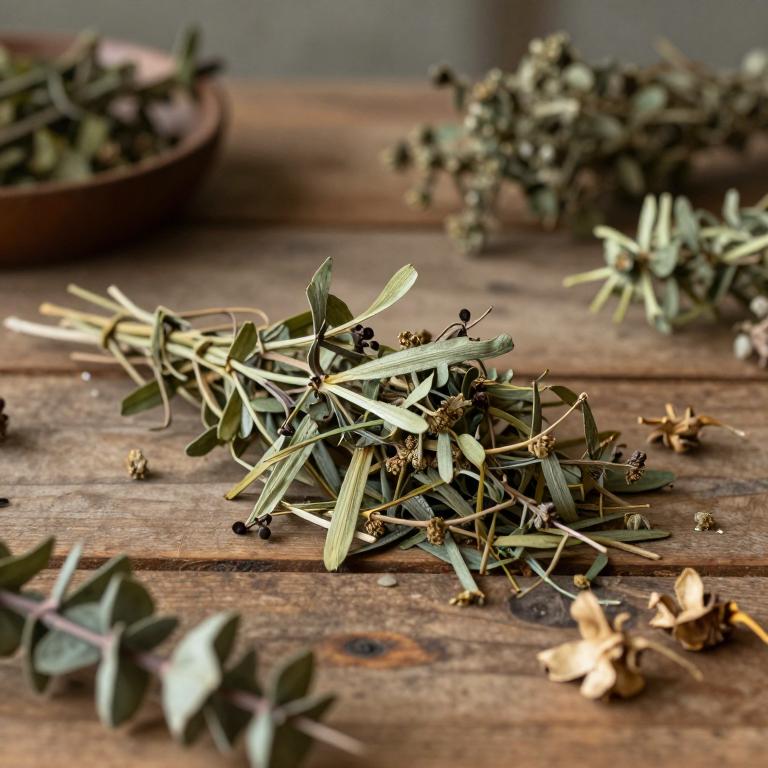
Names and Synonyms
Scientific Names
Accepted name
Gardenia sokotensisSources: Wikidata, Catalogue of Life
Taxonomical Classification
This plant belongs to the kingdom Plantae and the phylum Streptophyta, falling under the class Equisetopsida and subclass Magnoliidae. Within the order Gentianales, it is classified under the family Rubiaceae. Finally, it is identified by the genus Gardenia, with its specific species designation being sokotenis.
| Rank | Classification |
|---|---|
| Kingdom | Plantae |
| Phylum | Streptophyta |
| Class | Equisetopsida |
| Subclass | Magnoliidae |
| Order | Gentianales |
| Family | Rubiaceae |
| Genus | Gardenia |
Sources: The World Checklist of Vascular Plants (WCVP)
Distribution
This plant is native to the diverse landscapes of West Tropical Africa. Its geographical range extends through several specific countries within this lush region. Specifically, it can be found growing in the territories of Benin and Burkina. The species is also documented to inhabit parts of Ghana and Guinea-Bissau. Furthermore, its natural distribution includes the country of Guinea.
| Region | Area |
|---|---|
| West Tropical Africa | Benin |
| West Tropical Africa | Burkina |
| West Tropical Africa | Ghana |
| West Tropical Africa | Guinea-Bissau |
| West Tropical Africa | Guinea |
| West Tropical Africa | Ivory Coast |
| West Tropical Africa | Mali |
| West Tropical Africa | Nigeria |
| West Tropical Africa | Senegal |
| West Tropical Africa | Togo |
Sources: The World Checklist of Vascular Plants (WCVP)
Botanical Identification
Life history
The life history of Gardenia sokotenis is characterized by its status as a perennial plant, meaning it persists through multiple growing seasons rather than completing its cycle in a single year. In terms of its structural growth and survival strategies, the species exhibits dual life form classifications depending on its developmental stage or environmental context; it is identified as a phanerophyte, possessing significant above-ground woody stems that allow it to reach substantial heights, while it can also be categorized as a nanophanerophyte, reflecting a growth habit where the branches are relatively short and remain close to the ground.
- Life form :
- nanophanerophyte
- Life form :
- phanerophyte
- Lifecycle :
- perennial
Morphology
The morphology of Gardenia sokotenis is characterized by a woody growth form, specifically manifesting as a self-supporting shrub. It is a terrestrial species that does not exhibit aquatic or semiaquatic tendencies, nor does it function as an epiphyte or a parasite, growing instead as an independent organism. In terms of stature, the plant reaches a minimum height of 1 meter and can grow to a maximum height of 2.5 meters.
- Aquatic :
- terrestrial
- Climber :
- self-supporting
- Epiphyte :
- terrestrial
- Growth form :
- shrub
- Parasite :
- independent
- Plant height max:
- 2.5 m
- Plant height min:
- 1 m
- Woodiness :
- woody
Reproduction
The reproduction of Gardenia sokotenis is characterized by the production of seeds that exhibit a high degree of uniformity in terms of physical dimensions. Based on morphological data, the reproductive output yields seeds with a highly consistent mass, showing no variation across the observed samples. Specifically, the seed mass is recorded at a mean value of 0.0027 g, which is identical to both the maximum and minimum recorded values of 0.0027 g. This lack of variance suggests a highly stabilized seed development process within the species, ensuring that each individual seed produced maintains a precise and consistent mass of 0.0027 g.
- Seed mass mean:
- 0.0027 g
Sources: Global Inventory of Floras and Traits (GIFT)
Plant Parts
Gardenia sokotensis has 1 reported plant parts identified across 1 scientific publications and several other databases that are studied for medicinal purposes. The most consistently reported plant part include leaf.
| Plant part | Supporting sources | Consensus |
|---|---|---|
| Leaf | 1 supporting sources | ★☆☆☆☆ |
Leaf
- Journal of ethnopharmacology
Chemicals
Gardenia sokotensis has 3 reported phytochemicals identified across 1 scientific publications and several other databases. The most consistently reported chemicals include Flavonoids, Tannins, Terpenoids.
| Chemical | Supporting sources | Consensus |
|---|---|---|
| Flavonoids | 1 supporting sources | ★☆☆☆☆ |
| Tannins | 1 supporting sources | ★☆☆☆☆ |
| Terpenoids | 1 supporting sources | ★☆☆☆☆ |
Flavonoids
- Toxicology reports
Tannins
- Toxicology reports
Terpenoids
- Toxicology reports
Conditions
Gardenia sokotensis has 2 reported investigations on conditions identified across 1 scientific publications and several other databases. The most consistently reported conditions include mental disorders, osteoporosis.
| Condition | Supporting sources | Consensus |
|---|---|---|
| Mental disorders | 1 supporting sources | ★☆☆☆☆ |
| Osteoporosis | 1 supporting sources | ★☆☆☆☆ |
Mental disorders
- Medicines (Basel, Switzerland)
Osteoporosis
- Toxicology reports
Preparations
Gardenia sokotensis has 2 reported preparations identified across 1 scientific publications and several other databases. The most consistently reported preparations include aqueous extracts, leaves.
| Preparation | Supporting sources | Consensus |
|---|---|---|
| Aqueous extracts | 1 supporting sources | ★☆☆☆☆ |
| Leaves | 1 supporting sources | ★☆☆☆☆ |
Aqueous extracts
- Toxicology reports
Leaves
- Journal of ethnopharmacology