Gardenia oudiepe
Gardenia oudiepe · Accepted scientific name
Scientific literature: Very Sparse (4 studies) · ★☆☆☆☆
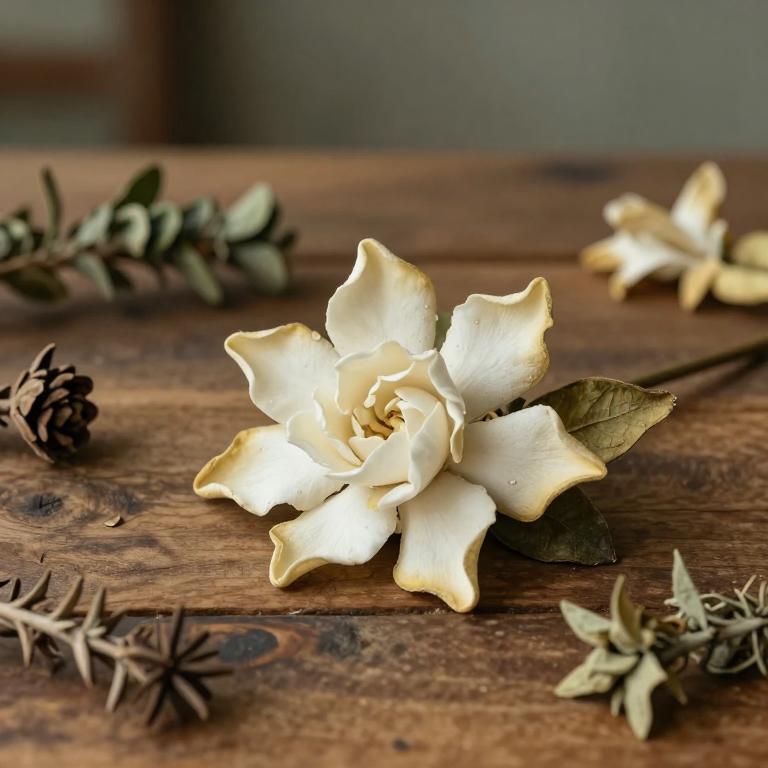
, scientifically known as Gardenia oudiepe, is a resilient shrub prized for its fragrant, creamy white blossoms and diverse therapeutic properties. Native to tropical regions, this medicinal plant is traditionally used to treat skin ailments and inflammatory conditions, offering a unique blend of ornamental beauty and significant ethnobotanical value.
- Family
- Rubiaceae
- Native range
- Pacific
- Parts used
- Not available
- Common names
- Not available
- Scientific synonyms
- Gardenia Cerifera
Names and Synonyms
Scientific Names
Accepted name
Gardenia oudiepeSynonyms
- Gardenia cerifera
Sources: Wikidata
Taxonomical Classification
This plant belongs to the kingdom Plantae and the phylum Streptophyta, falling under the class Equisetopsida and subclass Magnoliidae. Within the order Gentianaales, it is classified under the family Rubiaceae. It is further identified by the genus Gardenia, specifically as the species Gardenia oudiep.
| Rank | Classification |
|---|---|
| Kingdom | Plantae |
| Phylum | Streptophyta |
| Class | Equisetopsida |
| Subclass | Magnoliidae |
| Order | Gentianales |
| Family | Rubiaceae |
| Genus | Gardenia |
Sources: The World Checklist of Vascular Plants (WCVP)
Distribution
This plant, known scientifically as Gardenia oudiepe, possesses a very specific and limited geographical range. Its natural distribution is confined to the unique ecosystems of the Southwestern Pacific. Specifically, this medicinal species is found growing within the island territory of New Caledonia. Because it is localized to this particular region, it remains a characteristic element of the local flora. Consequently, its presence is highly dependent on the unique environmental conditions provided by this Pacific archipelago.
| Region | Area |
|---|---|
| Southwestern Pacific | New Caledonia |
Sources: The World Checklist of Vascular Plants (WCVP)
Botanical Identification
Ecology
The ecology of Gardenia oudiepe is fundamentally defined by its specialized existence within the complex, multilayered environment of the rain forest. Thriving in these high-moisture ecosystems, the plant relies on the consistent precipitation and high humidity levels characteristic of tropical or subtropical forest biomes to maintain its physiological functions. Within this habitat, it occupies specific niches where it can access filtered sunlight through the dense canopy, benefiting from the nutrient-rich organic matter provided by the rapid decomposition of leaf litter on the forest floor. The stable, warm microclimate of the rain forest provides the ideal thermal conditions for its growth, while the surrounding dense vegetation influences its competitive interactions for space and light.
- Habitat :
- rain forest
Sources: Global Inventory of Floras and Traits (GIFT)
Activities
Gardenia oudiepe has 1 reported activities identified across 0 scientific publications and several other databases. The most consistently reported activities include Analgesic.
| Activity | Supporting sources | Consensus |
|---|---|---|
| Analgesic | 1 supporting sources | ★☆☆☆☆ |
Analgesic
- Biomedicine & pharmacotherapy = Biomedecine & pharmacotherapie
Conditions
Gardenia oudiepe has 2 reported investigations on conditions identified across 0 scientific publications and several other databases. The most consistently reported conditions include inflammation, nociception.
| Condition | Supporting sources | Consensus |
|---|---|---|
| Inflammation | 1 supporting sources | ★☆☆☆☆ |
| Nociception | 1 supporting sources | ★☆☆☆☆ |
Inflammation
- Biomedicine & pharmacotherapy = Biomedecine & pharmacotherapie
Nociception
- Biomedicine & pharmacotherapy = Biomedecine & pharmacotherapie
Preparations
Gardenia oudiepe has 1 reported preparations identified across 0 scientific publications and several other databases. The most consistently reported preparations include bud exudate.
| Preparation | Supporting sources | Consensus |
|---|---|---|
| Bud exudate | 1 supporting sources | ★☆☆☆☆ |
Bud exudate
- Biomedicine & pharmacotherapy = Biomedecine & pharmacotherapie