Gardenia obtusifolia
Gardenia obtusifolia · Accepted scientific name
Scientific literature: Very Sparse (10 studies) · ★☆☆☆☆
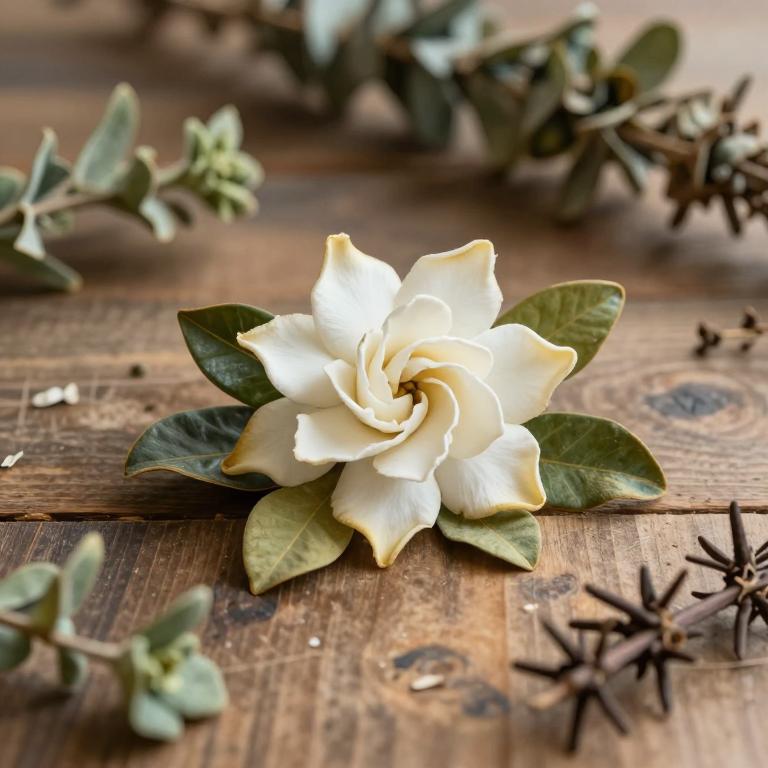
Gardenia obtusifolia, scientifically known as Gardenia obtusifolia, is a resilient evergreen shrub native to tropical regions. Renowned for its fragrant, creamy white blossoms, this plant holds significant ethnobotanical value. Traditionally used in various medicinal practices, it offers therapeutic potential, making it a subject of interest in natural pharmacology.
- Family
- Rubiaceae
- Native range
- Asia-Tropical
- Parts used
- Leaf
- Common names
- Not available
- Scientific synonyms
- Not available
Names and Synonyms
Scientific Names
Accepted name
Gardenia obtusifoliaSources: Wikidata, Catalogue of Life
Taxonomical Classification
This plant belongs to the kingdom Plantae within the phylum Streptophyta and is classified under the class Equisetopsida and subclass Magnoliidae. Following the order Gentianales, it is a member of the Rubiaceae family. It is specifically identified under the genus Gardenia as Gardenia obtusifolia.
| Rank | Classification |
|---|---|
| Kingdom | Plantae |
| Phylum | Streptophyta |
| Class | Equisetopsida |
| Subclass | Magnoliidae |
| Order | Gentianales |
| Family | Rubiaceae |
| Genus | Gardenia |
Sources: The World Checklist of Vascular Plants (WCVP)
Distribution
This plant is primarily distributed across the diverse landscapes of the Indo-China region. Within this area, its presence is documented throughout the country of Cambodia. It also grows naturally across the territories of Laos and Myanmar. Furthermore, the species can be found flourishing in the tropical environments of Thailand. Finally, its geographical range extends into the lush forests of Vietnam.
| Region | Area |
|---|---|
| Indo-China | Cambodia |
| Indo-China | Laos |
| Indo-China | Myanmar |
| Indo-China | Thailand |
| Indo-China | Vietnam |
| Malesia | Malaya |
Sources: The World Checklist of Vascular Plants (WCVP)
Botanical Identification
Life history
The life history of Gardenia obtusifolia is characterized by its classification as a phanerophyte, signifying its growth habit as a woody plant that maintains its perennating buds well above the soil surface. Within this structural framework, the species can also exhibit characteristics of a nanophanerophyte, depending on the environmental conditions and the specific height of its woody canopy. As a perennial woody shrub, its life cycle involves the establishment of a persistent stem system that supports seasonal foliage and reproductive development. The plant undergoes a continuous cycle of vegetative growth and flowering, utilizing its elevated buds to survive varying seasonal shifts, ensuring long-term survival through its robust, perennial architecture.
- Life form :
- nanophanerophyte
- Life form :
- phanerophyte
Morphology
The morphology of Gardenia obtusifolia is characterized by a woody growth form, specifically manifesting as a tree. It functions as an independent organism, neither acting as a parasite nor as an epiphyte, as it maintains a strictly terrestrial life habit. While it possesses the structural integrity of a woody plant, its growth habit is categorized as self-supporting rather than utilizing a climbing mechanism.
- Climber :
- self-supporting
- Epiphyte :
- terrestrial
- Growth form :
- tree
- Parasite :
- independent
- Woodiness :
- woody
Sources: Global Inventory of Floras and Traits (GIFT)
Plant Parts
Gardenia obtusifolia has 1 reported plant parts identified across 1 scientific publications and several other databases that are studied for medicinal purposes. The most consistently reported plant part include leaf.
| Plant part | Supporting sources | Consensus |
|---|---|---|
| Leaf | 1 supporting sources | ★☆☆☆☆ |
Leaf
- Molecular pharmacology
Chemicals
Gardenia obtusifolia has 3 reported phytochemicals identified across 1 scientific publications and several other databases. The most consistently reported chemicals include 5,3'-dihydroxy-3,6,7,8,4'-pentamethoxyflavone, Compound 2, PMF.
| Chemical | Supporting sources | Consensus |
|---|---|---|
| 5,3'-dihydroxy-3,6,7,8,4'-pentamethoxyflavone | 1 supporting sources | ★☆☆☆☆ |
| Compound 2 | 1 supporting sources | ★☆☆☆☆ |
| PMF | 1 supporting sources | ★☆☆☆☆ |
5,3'-dihydroxy-3,6,7,8,4'-pentamethoxyflavone
- Molecular pharmacology
Compound 2
- Phytochemistry
PMF
- Molecular pharmacology
Activities
Gardenia obtusifolia has 3 reported activities identified across 1 scientific publications and several other databases. The most consistently reported activities include Antibacterial, Anticancer, Cytotoxic.
| Activity | Supporting sources | Consensus |
|---|---|---|
| Antibacterial | 1 supporting sources | ★☆☆☆☆ |
| Anticancer | 1 supporting sources | ★☆☆☆☆ |
| Cytotoxic | 1 supporting sources | ★☆☆☆☆ |
Antibacterial
- Phytochemistry
Anticancer
- Molecular pharmacology
Cytotoxic
- Phytochemistry
Conditions
Gardenia obtusifolia has 3 reported investigations on conditions identified across 1 scientific publications and several other databases. The most consistently reported conditions include cancer, inflammation, tumorigenesis.
| Condition | Supporting sources | Consensus |
|---|---|---|
| Cancer | 1 supporting sources | ★☆☆☆☆ |
| Inflammation | 1 supporting sources | ★☆☆☆☆ |
| Tumorigenesis | 1 supporting sources | ★☆☆☆☆ |
Cancer
- Molecular pharmacology
Inflammation
- Molecular pharmacology
Tumorigenesis
- Molecular pharmacology