Cumbi-gum tree
Gardenia gummifera · Accepted scientific name
Scientific literature: Very Sparse (16 studies) · ★☆☆☆☆
Cumbi-gum tree, scientifically known as Gardenia gummifera, is a distinctive shrub native to the arid regions of Australia. Renowned for its fragrant white blossoms and resilient nature, this plant is highly valued in traditional medicine for its antioxidant properties and its ability to support skin health and healing.
- Family
- Rubiaceae
- Native range
- Asia-Tropical
- Parts used
- Leaf
- Common names
- Cumbi-Gum Tree · Dekamella-Gum Gardenia
- Scientific synonyms
- Genipa Gummifera · Gardenia Inermis · 3 more
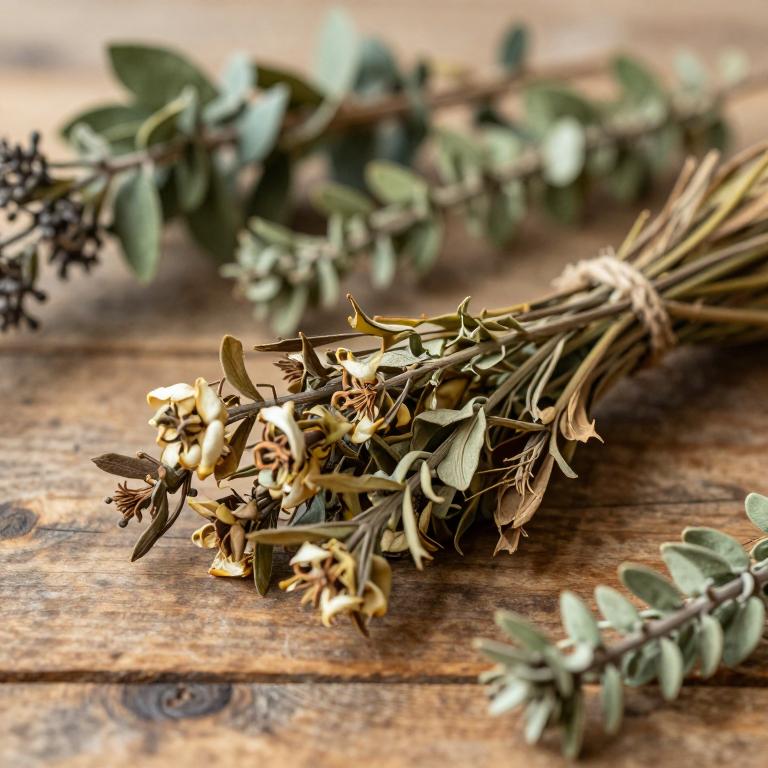
Names and Synonyms
Common Names
- Cumbi-gum tree
- Dekamella-gum gardenia
Scientific Names
Accepted name
Gardenia gummiferaSynonyms
- Genipa gummifera
- Gardenia inermis
- Gardenia gummifera var. gummiferoides
- Gardenia arborea
- Genipa arborea
Sources: Wikidata, Catalogue of Life
Taxonomical Classification
This plant, known scientifically as Gardenia gummifera, belongs to the kingdom Plantae and the phylum Streptophyta. Within the class Equisetopsida and subclass Magnoliidae, it is classified under the order Gentianales. Finally, it is a member of the Rubiaceae family and is situated within the genus Gardenia.
| Rank | Classification |
|---|---|
| Kingdom | Plantae |
| Phylum | Streptophyta |
| Class | Equisetopsida |
| Subclass | Magnoliidae |
| Order | Gentianales |
| Family | Rubiaceae |
| Genus | Gardenia |
Sources: The World Checklist of Vascular Plants (WCVP)
Distribution
This plant, known scientifically as Gardenia gummifera, possesses a very specific and limited geographical range. Its natural occurrence is strictly confined to the vast expanse of the Indian Subcontinent. Within this region, the species is documented to grow natively in India. Because its habitat is so localized, it does not appear in the wild across other continents. Consequently, understanding its distribution requires focusing specifically on the Indian landscape.
| Region | Area |
|---|---|
| Indian Subcontinent | India |
Sources: The World Checklist of Vascular Plants (WCVP)
Botanical Identification
Life history
The life history of Gardenia gummifera is characterized by its nature as a perennial plant, allowing it to persist through multiple growing seasons. Its physiological rhythm is further defined by its deciduousness, as it undergoes a seasonal shedding of leaves rather than maintaining foliage year-round.
- Deciduousness :
- deciduous
- Lifecycle :
- perennial
Morphology
The morphology of Gardenia gummifera is characterized by its distinct growth forms and structural composition. This plant primarily exhibits a growth form categorized as a tree, though it can also manifest as a shrub depending on environmental conditions and developmental stages. Structurally, the plant is consistently woody, providing a firm and durable framework. While it does not possess climbing mechanisms, its physical architecture is defined by its substantial, woodiness-driven stature rather than a self-supporting climbing habit.
- Climber :
- self-supporting
- Growth form :
- tree
- Growth form :
- shrub
- Woodiness :
- woody
Physiology
The physiology of Gardenia gummifera is characterized by complex metabolic processes geared toward survival in arid and semi-arid environments. As a woody shrub, its physiological framework relies on efficient water management and specialized photosynthetic pathways to mitigate transpirational loss during periods of high thermal stress. The plant's nutrient acquisition strategy is primarily focused on the uptake of minerals from the soil through an extensive root system, but it does not possess the symbiotic mechanisms required for atmospheric nitrogen assimilation; specifically, it is not a nitrogen fixer, as it lacks the specialized root nodules inhabited by diazotrophic bacteria. Instead, its nitrogen requirements are met through the absorption of nitrates and ammonium ions present in the substrate. The metabolic activity of the plant is closely tied to its ability to regulate osmotic potential, ensuring cellular turgidity and enzymatic stability even when soil moisture levels are suboptimal.
- Nitrogen fixer :
- no
Sources: Global Inventory of Floras and Traits (GIFT)
Plant Parts
Gardenia gummifera has 1 reported plant parts identified across 2 scientific publications and several other databases that are studied for medicinal purposes. The most consistently reported plant part include leaf.
| Plant part | Supporting sources | Consensus |
|---|---|---|
| Leaf | 2 supporting sources | ★☆☆☆☆ |
Leaf
- Scientific reports
- Biomedicine & pharmacotherapy = Biomedecine & pharmacotherapie
Chemicals
Gardenia gummifera has 4 reported phytochemicals identified across 2 scientific publications and several other databases. The most consistently reported chemicals include Cardiac Glycosides, Flavonoid, Flavonoids, ascorbic acid.
| Chemical | Supporting sources | Consensus |
|---|---|---|
| Cardiac Glycosides | 1 supporting sources | ★☆☆☆☆ |
| Flavonoid | 1 supporting sources | ★☆☆☆☆ |
| Flavonoids | 1 supporting sources | ★☆☆☆☆ |
| ascorbic acid | 1 supporting sources | ★☆☆☆☆ |
Cardiac Glycosides
- African journal of traditional, complementary, and alternative medicines : AJTCAM
Flavonoid
- BMC complementary and alternative medicine
Flavonoids
- African journal of traditional, complementary, and alternative medicines : AJTCAM
ascorbic acid
- BMC complementary and alternative medicine
Conditions
Gardenia gummifera has 10 reported investigations on conditions identified across 2 scientific publications and several other databases. The most consistently reported conditions include A549 cell line, E. coli, Escherichia coli, Klebsiella pneumoniae, Proteus vulgaris.
| Condition | Supporting sources | Consensus |
|---|---|---|
| A549 cell line | 1 supporting sources | ★☆☆☆☆ |
| E. coli | 1 supporting sources | ★☆☆☆☆ |
| Escherichia coli | 1 supporting sources | ★☆☆☆☆ |
| Klebsiella pneumoniae | 1 supporting sources | ★☆☆☆☆ |
| Proteus vulgaris | 1 supporting sources | ★☆☆☆☆ |
| Salmonella paratyphi | 1 supporting sources | ★☆☆☆☆ |
| Salmonella typhi | 1 supporting sources | ★☆☆☆☆ |
| Shigella flexneri | 1 supporting sources | ★☆☆☆☆ |
| Staphylococcus aureus | 1 supporting sources | ★☆☆☆☆ |
| Psoriasis | 1 supporting sources | ★☆☆☆☆ |
A549 cell line
- Scientific reports
E. coli
- Scientific reports
Escherichia coli
- African journal of traditional, complementary, and alternative medicines : AJTCAM
Klebsiella pneumoniae
- African journal of traditional, complementary, and alternative medicines : AJTCAM
Proteus vulgaris
- African journal of traditional, complementary, and alternative medicines : AJTCAM
Salmonella paratyphi
- African journal of traditional, complementary, and alternative medicines : AJTCAM
Salmonella typhi
- African journal of traditional, complementary, and alternative medicines : AJTCAM
Shigella flexneri
- African journal of traditional, complementary, and alternative medicines : AJTCAM
Staphylococcus aureus
- African journal of traditional, complementary, and alternative medicines : AJTCAM
Psoriasis
- Biomedicine & pharmacotherapy = Biomedecine & pharmacotherapie
Preparations
Gardenia gummifera has 6 reported preparations identified across 2 scientific publications and several other databases. The most consistently reported preparations include Methanol (50%) extracts, acetone extracts, aqueous extracts, ethanol extracts, leaf extracts.
| Preparation | Supporting sources | Consensus |
|---|---|---|
| Methanol (50%) extracts | 1 supporting sources | ★☆☆☆☆ |
| Acetone extracts | 1 supporting sources | ★☆☆☆☆ |
| Aqueous extracts | 1 supporting sources | ★☆☆☆☆ |
| Ethanol extracts | 1 supporting sources | ★☆☆☆☆ |
| Leaf extracts | 1 supporting sources | ★☆☆☆☆ |
| Methanol extracts | 1 supporting sources | ★☆☆☆☆ |
Methanol (50%) extracts
- BMC complementary and alternative medicine
Acetone extracts
- African journal of traditional, complementary, and alternative medicines : AJTCAM
Aqueous extracts
- African journal of traditional, complementary, and alternative medicines : AJTCAM
Ethanol extracts
- African journal of traditional, complementary, and alternative medicines : AJTCAM
Leaf extracts
- Scientific reports
Methanol extracts
- African journal of traditional, complementary, and alternative medicines : AJTCAM