Gardenia aubryi
Gardenia aubryi · Accepted scientific name
Scientific literature: Very Sparse (8 studies) · ★☆☆☆☆
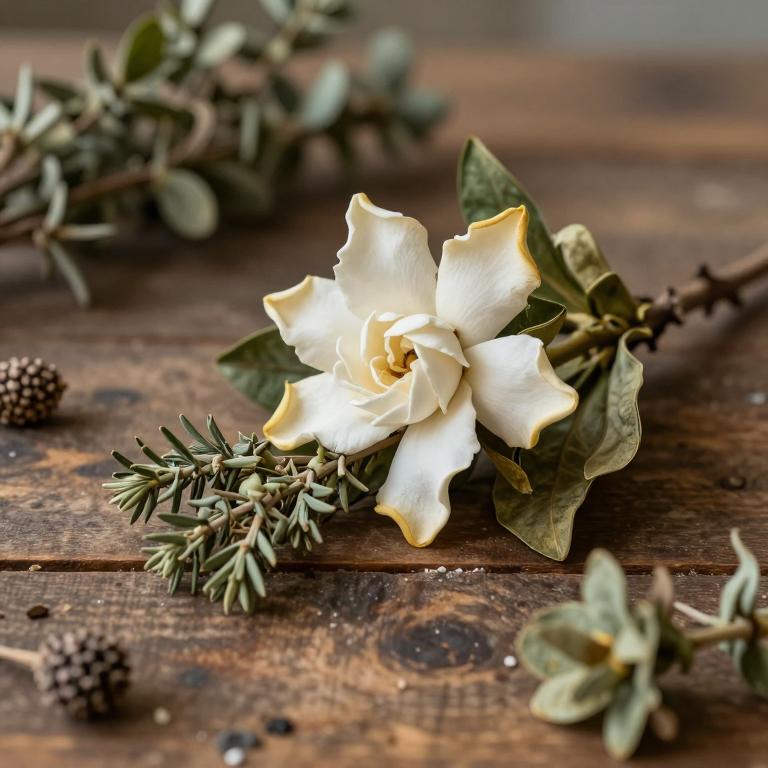
, scientifically known as Gardenia aubryi, is a captivating medicinal shrub celebrated for its fragrant white blooms and therapeutic properties. Native to specific tropical regions, this species is traditionally utilized in holistic practices to soothe inflammation and promote skin health, offering a unique blend of aesthetic beauty and botanical healing.
- Family
- Rubiaceae
- Native range
- Pacific
- Parts used
- Not available
- Common names
- Not available
- Scientific synonyms
- Not available
Names and Synonyms
Scientific Names
Accepted name
Gardenia aubryiSources: Wikidata
Taxonomical Classification
This plant belongs to the kingdom Plantae and the phylum Streptophyta, situated within the class Equisetopsida and subclass Magnoliidae. It is classified under the order Gentianales and is a member of the Rubiaceae family. Within this family, it is specifically categorized under the genus Gardenia.
| Rank | Classification |
|---|---|
| Kingdom | Plantae |
| Phylum | Streptophyta |
| Class | Equisetopsida |
| Subclass | Magnoliidae |
| Order | Gentianales |
| Family | Rubiaceae |
| Genus | Gardenia |
Sources: The World Checklist of Vascular Plants (WCVP)
Distribution
This plant is a specific botanical species with a very limited natural range. Its geographical distribution is concentrated within the Southwestern Pacific region. Specifically, it is found natively in the archipelago of New Caledonia. Because of this localized habitat, the species is considered endemic to this particular island territory. Understanding this narrow range is essential for the ongoing conservation efforts of the species.
| Region | Area |
|---|---|
| Southwestern Pacific | New Caledonia |
Sources: The World Checklist of Vascular Plants (WCVP)
Botanical Identification
Ecology
The ecology of Gardenia aubryi is defined by its adaptation to diverse and structurally complex environments, primarily thriving within the dense, humid conditions of the rain forest and the more open, resilient landscapes of the maquis, or scrubland. In the rain forest habitats, the plant benefits from high moisture availability, consistent temperatures, and the nutrient-rich organic matter found in the forest floor, which supports its growth amidst high competition for light. Conversely, its presence in the maquis indicates a remarkable ecological plasticity, allowing it to endure more seasonal water fluctuations, increased solar exposure, and the tougher, more xeric conditions characteristic of shrubby scrubland ecosystems. This ability to occupy both closed-canopy forests and more exposed, transitional scrublands suggests a broad niche breadth, enabling the species to persist across varying levels of environmental stress and moisture gradients.
- Habitat :
- rain forest, maquis (scrubland)
Morphology
The morphology of Gardenia aubryi is characterized by its distinctive growth habit as a woody climber. This plant functions as a liana or vine, exhibiting a self-supporting nature that allows it to navigate its environment through various structural means. Specifically, its climbing mechanism is classified as self-supporting, acting as a facultative climber rather than an obligatory one, which enables it to maintain structural integrity while ascending.
- Climber :
- self-supporting
Sources: Global Inventory of Floras and Traits (GIFT)
Chemicals
Gardenia aubryi has 7 reported phytochemicals identified across 0 scientific publications and several other databases. The most consistently reported chemicals include Coccinetane A, Conyzatin, Herbacetin 3,8-dimethyl ether, Hibiscetin 3,8,3',4'-tetramethyl ether, Secaubryolide.
| Chemical | Supporting sources | Consensus |
|---|---|---|
| Coccinetane A | 1 supporting sources | ★☆☆☆☆ |
| Conyzatin | 1 supporting sources | ★☆☆☆☆ |
| Herbacetin 3,8-dimethyl ether | 1 supporting sources | ★☆☆☆☆ |
| Hibiscetin 3,8,3',4'-tetramethyl ether | 1 supporting sources | ★☆☆☆☆ |
| Secaubryolide | 1 supporting sources | ★☆☆☆☆ |
| secaubryenol | 1 supporting sources | ★☆☆☆☆ |
| secaubrytriol | 1 supporting sources | ★☆☆☆☆ |
Coccinetane A
- Journal of natural products
Conyzatin
- Journal of natural products
Herbacetin 3,8-dimethyl ether
- Journal of natural products
Hibiscetin 3,8,3',4'-tetramethyl ether
- Journal of natural products
Secaubryolide
- Journal of natural products
secaubryenol
- Journal of natural products
secaubrytriol
- Journal of natural products