Gardenia aqualla
Gardenia aqualla · Accepted scientific name
Scientific literature: Very Sparse (2 studies) · ★☆☆☆☆
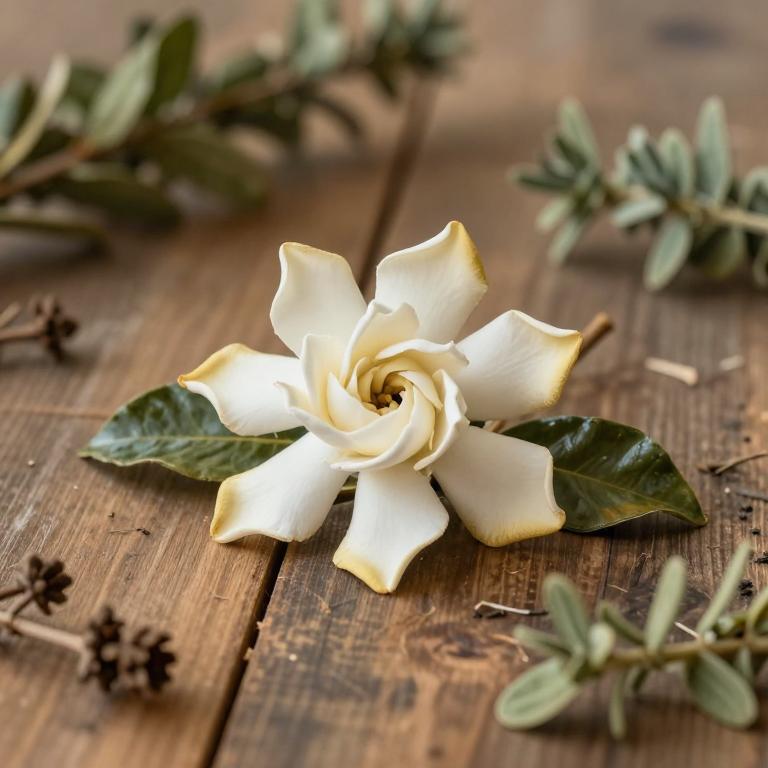
, scientifically known as Gardenia aqualla, is a versatile medicinal plant cherished in traditional healing practices. Renowned for its potent bioactive compounds, it offers therapeutic benefits ranging from skin rejuvenation to anti-inflammatory support. This fragrant shrub serves as a vital natural resource for holistic wellness and botanical pharmacology.
- Family
- Not available
- Native range
- Africa
- Parts used
- Leaf · Stem
- Common names
- Not available
- Scientific synonyms
- Not available
Names and Synonyms
Scientific Names
Accepted name
Gardenia aquallaDistribution
This plant, known as Gardenia aquatica, exhibits a specific distribution across the West Tropical Africa region. Its presence is documented in several countries, starting with its occurrence in Benin. The species also extends through the territories of Burkina Faso and Ghana. Furthermore, it can be found inhabiting the landscapes of Guinea. Finally, its geographical range includes the coastal and inland areas of the Ivory Coast.
| Region | Area |
|---|---|
| West Tropical Africa | Benin |
| West Tropical Africa | Burkina |
| West Tropical Africa | Ghana |
| West Tropical Africa | Guinea |
| West Tropical Africa | Ivory Coast |
| West Tropical Africa | Mali |
| West Tropical Africa | Nigeria |
| West Tropical Africa | Senegal |
| West Tropical Africa | Togo |
| West-Central Tropical Africa | Central African Republic |
Sources: The World Checklist of Vascular Plants (WCVP)
Botanical Identification
Life history
The life history of Gardenia aquala is characterized by its status as a perennial organism, meaning it persists through multiple growing seasons rather than completing its cycle within a single year. In terms of its structural development and growth habit, the plant exhibits dual classifications of life forms; it functions as a phanerophyte, possessing well-developed woody stems that elevate the foliage above the ground, while also exhibiting characteristics of a nanophanerophyte, where the primary reproductive and vegetative structures are maintained at a relatively low, shrub-like height. This combination of life forms allows the plant to establish a stable, long-term presence in its ecological niche through sustained seasonal growth cycles.
- Life form :
- nanophanerophyte
- Life form :
- phanerophyte
- Lifecycle :
- perennial
Morphology
The morphology of Gardenia aquatica is characterized by a woody growth form, primarily manifesting as a shrub. It functions as an independent organism, lacking parasitic tendencies, and grows as a terrestrial plant rather than an epiphyte. While it does not exhibit climbing behavior, it is classified as a self-supporting structure. In terms of physical dimensions, the plant reaches a maximum height of approximately 2.74 meters.
- Climber :
- self-supporting
- Epiphyte :
- terrestrial
- Growth form :
- shrub
- Parasite :
- independent
- Plant height max:
- 2.743233358 m
- Woodiness :
- woody
Physiology
The physiology of Gardenia aquala is characterized by a metabolic framework driven by a C3 photosynthetic pathway, meaning it utilizes the Calvin cycle to fix atmospheric carbon dioxide directly through the enzyme RuBisCO. This metabolic strategy involves the initial fixation of CO2 into a three-carbon molecule, typically 3-phosphoglycerate, which dictates the plant's water-use efficiency and gas exchange patterns. Consequently, its physiological processes are highly sensitive to environmental factors such as light intensity, temperature, and moisture availability, as the C3 pathway lacks the specialized carbon-concentrating mechanisms found in C4 or CAM plants. The plant manages its transpiration and nutrient uptake through coordinated stomatal movements that balance the necessity of carbon assimilation with the prevention of excessive water loss during periods of high evaporative demand.
- Photosynthetic pathway :
- C3
Reproduction
The reproduction of Gardenia aquala is characterized by the production of fleshy fruits that serve as the vessel for its seeds. These fruits are described as having a fleshy texture, which typically aids in seed dispersal. The seeds contained within are highly uniform in their physical dimensions, exhibiting a consistent seed volume of 19 mm³, with both the minimum and maximum recorded values reaching this exact measurement and a corresponding mean volume of 19 mm³. In terms of weight, the seeds maintain a very precise and stable mass; the recorded seed mass is constant at 0.00616 g, a value that represents the minimum, maximum, and mean mass for the species.
- Fruit dryness :
- fleshy
- Seed mass mean:
- 0.00616 g
- Seed volume max:
- 19 mm³
Sources: Global Inventory of Floras and Traits (GIFT)
Plant Parts
Gardenia aqualla has 2 reported plant parts identified across 2 scientific publications and several other databases that are studied for medicinal purposes. The most consistently reported plant part include leaf, stem.
| Plant part | Supporting sources | Consensus |
|---|---|---|
| Leaf | 1 supporting sources | ★☆☆☆☆ |
| Stem | 1 supporting sources | ★☆☆☆☆ |
Leaf
- Natural product research
Stem
- Microbial pathogenesis
Preparations
Gardenia aqualla has 1 reported preparations identified across 2 scientific publications and several other databases. The most consistently reported preparations include MeOH and EtOAc extracts of leaves.
| Preparation | Supporting sources | Consensus |
|---|---|---|
| Meoh and etoac extracts of leaves | 1 supporting sources | ★☆☆☆☆ |
Meoh and etoac extracts of leaves
- Natural product research