Garcinia intermedia
Garcinia intermedia · Accepted scientific name
Scientific literature: Very Sparse (2 studies) · ★☆☆☆☆
Garcinia intermedia, scientifically known as Garcinia intermedia, is a small, evergreen tropical tree prized for its edible, tart fruits. Often called "lemon mangosteen," this plant offers significant medicinal potential. Its fruits and leaves contain bioactive compounds with antioxidant, antimicrobial, and anti-inflammatory properties, making it a subject of interest.
- Family
- Not available
- Native range
- Northern America
- Parts used
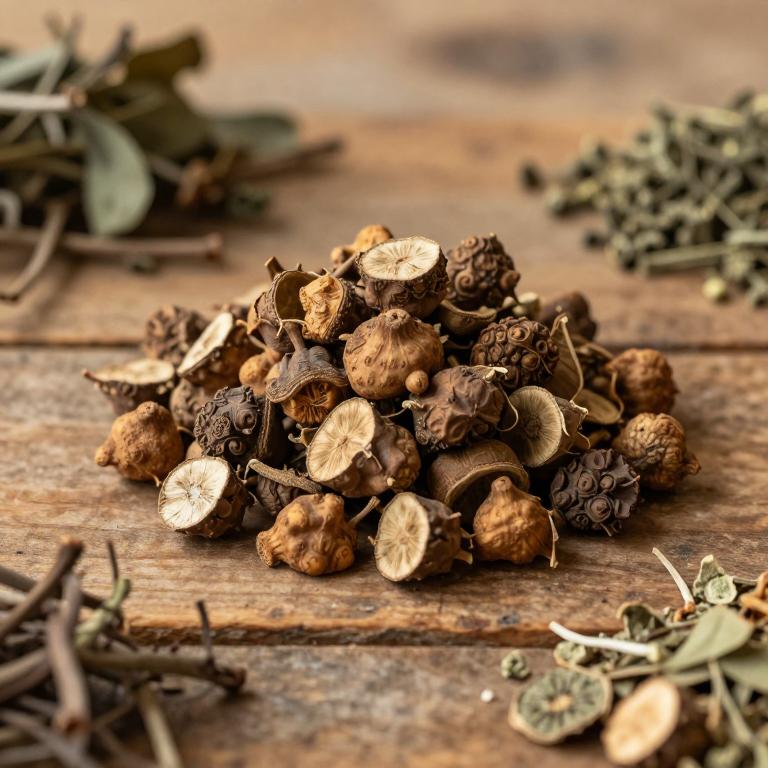
- Seed
- Common names
- Not available
- Scientific synonyms
- Not available
Names and Synonyms
Scientific Names
Accepted name
Garcinia intermediaDistribution
This plant exhibits a diverse presence across several regions within Mexico. It can be found throughout Mexico Central and within the Mexico Gulf area. Its distribution also extends into the Mexico Southwest and Mexico Southeast territories. Moving further south, the species is located within Central America. Specifically, it has a documented presence in the country of Belize.
| Region | Area |
|---|---|
| Mexico | Mexico Central |
| Mexico | Mexico Gulf |
| Mexico | Mexico Southwest |
| Mexico | Mexico Southeast |
| Central America | Belize |
| Central America | Costa Rica |
| Central America | El Salvador |
| Central America | Guatemala |
| Central America | Honduras |
| Central America | Nicaragua |
Sources: The World Checklist of Vascular Plants (WCVP)
Botanical Identification
Ecology
The ecology of Garcinia intermedia is characterized by its ability to thrive across a diverse altitudinal gradient, ranging from sea level up to an elevation of 2000 m AMSL. This wide elevational range suggests a high degree of adaptability to varying climatic conditions and atmospheric pressures found within tropical and subtropical forest ecosystems. Typically situated in humid, shaded environments, the species plays a role in the understory or mid-canopy layers of moist forests, where it benefits from consistent moisture availability and organic-rich soils. Its distribution across such a significant vertical span—from 0 to 2000 m AMSL—indicates that it can tolerate both the heat and humidity of lowland coastal regions as well as the cooler, more temperate conditions of higher montane zones.
- Elevational range max:
- 2000 m AMSL
- Elevational range min:
- 0 m AMSL
Life history
The life history of Garcinia intermedia is characterized by its nature as a perennial plant, allowing it to maintain a stable presence in its ecosystem over many years. Throughout its existence, the plant maintains a consistent foliage profile due to its evergreen status, meaning it retains its leaves year-round rather than shedding them seasonally. This combination of a long-lived perennial lifecycle and evergreen habit ensures continuous photosynthetic activity and a steady structural presence within its habitat.
- Deciduousness :
- evergreen
- Lifecycle :
- perennial
Morphology
The morphology of Garcinia intermedia is characterized by its growth form as a woody tree, reaching a mean height of 10 m and a maximum potential height of 20 m. It is a terrestrial plant that functions as a self-supporting structure, exhibiting neither climbing nor parasitic behaviors, as it remains entirely independent in its growth. It does not exhibit epiphytic characteristics, maintaining a strictly terrestrial existence.
- Aquatic :
- terrestrial
- Climber :
- self-supporting
- Epiphyte :
- terrestrial
- Growth form :
- tree
- Parasite :
- independent
- Plant height max:
- 20 m
- Plant height mean:
- 10 m
- Woodiness :
- woody
Physiology
The physiology of Garcinia intermedia is characterized by a C3 photosynthetic pathway, which dictates its carbon fixation processes and metabolic efficiency. The plant's foliar architecture is defined by a mean leaf length of 15.4 cm and a mean leaf width of 5 cm, supporting a mean leaf thickness of 0.022 mm. In terms of resource allocation and leaf tissue density, the plant exhibits a consistent Leaf Dry Matter Content (LDMC) with a mean, minimum, and maximum value of 477.9 mg/g, reflecting its structural investment in leaf tissue. Furthermore, Garcinia intermedia does not function as a nitrogen fixer, relying instead on external soil nutrient availability for its nitrogen requirements.
- Leaf dry matter content (LDMC) mean:
- 477.9 mg/g
- Leaf length mean:
- 15.4 cm
- Leaf thickness mean:
- 0.022 mm
- Leaf width mean:
- 5 cm
- Nitrogen fixer :
- no
- Photosynthetic pathway :
- C3
Reproduction
The reproduction of Garcinia intermedia is driven by a biotic pollination syndrome, primarily utilizing insects to facilitate the transfer of pollen. The species exhibits an absence of self-fertilization, suggesting a reliance on cross-pollination to maintain genetic diversity. Once fertilization occurs, the plant produces fleshy fruits, which are characteristic of a zoochorous dispersal syndrome, meaning seeds are dispersed by animals. The seeds themselves are relatively substantial, with a mean mass of 0.53505 g (ranging from a minimum of 0.289 g to a maximum of 0.7811 g) and a consistent volume of 900 mm³. Morphologically, the seeds vary in length from a minimum of 15 mm to a maximum of 30 mm, with a mean length of 20 mm. Additionally, the seeds possess a maximum width of 7.8 mm and a maximum height of 6.4 mm.
- Dispersal syndrome :
- zoochorous
- Fruit dryness :
- fleshy
- Pollination syndrome :
- insect
- Pollination syndrome :
- biotic
- Seed height max:
- 6.4 mm
- Seed length max:
- 30 mm
- Seed length mean:
- 20 mm
- Seed length min:
- 15 mm
- Seed mass max:
- 0.7811 g
- Seed mass mean:
- 0.53505 g
- Seed mass min:
- 0.289 g
- Seed volume max:
- 900 mm³
- Seed width max:
- 7.8 mm
- Self fertilization :
- absent
Sources: Global Inventory of Floras and Traits (GIFT)
Plant Parts
Garcinia intermedia has 1 reported plant parts identified across 1 scientific publications and several other databases that are studied for medicinal purposes. The most consistently reported plant part include seed.
| Plant part | Supporting sources | Consensus |
|---|---|---|
| Seed | 1 supporting sources | ★☆☆☆☆ |
Seed
- Journal of natural products