achacha
Garcinia humilis · Accepted scientific name
Scientific literature: Very Sparse (9 studies) · ★☆☆☆☆
Achacha, scientifically known as Garcinia humilis, is a versatile medicinal plant native to tropical regions. Renowned for its bioactive compounds, it is traditionally utilized in various cultures to treat ailments ranging from digestive issues to skin inflammations. Its unique phytochemical profile offers significant potential for modern pharmacological research and development.
- Family
- Clusiaceae
- Native range
- Southern America
- Parts used
- Leaf
- Common names
- Wild Mammee · Achacha
- Scientific synonyms
- Rheedia Humilis · Malpighia Mitis · 6 more
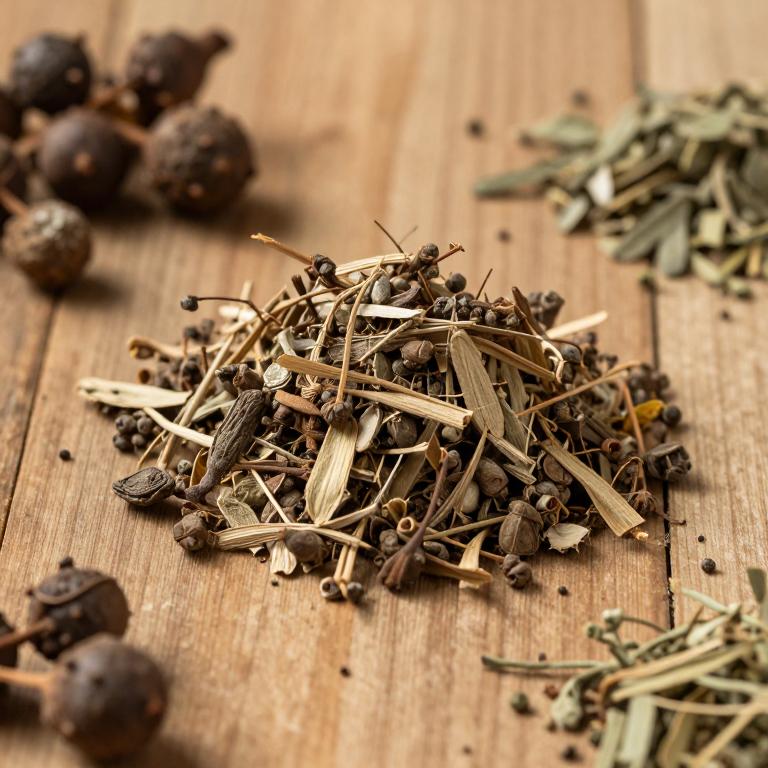
Names and Synonyms
Common Names
- Wild mammee
- Achacha
Scientific Names
Accepted name
Garcinia humilisSynonyms
- Rheedia humilis
- Malpighia mitis
- Rheedia sieberi
- Mammea humilis var. plumieri
- Mammea humilis
- Mammea lateriflora
- Rheedia americana
- Rheedia sessiliflora
Regional and Traditional Names
Spanish:
- achachairú
French:
- Bois-l'onguent
- Abricot
- Abricot de St. Domingue
- Abricotier bâtard
- Bois créole
- Bois mulâtre
Sources: Wikidata, Catalogue of Life
Taxonomical Classification
This plant belongs to the kingdom Plantae and is classified under the phylum Streptophyta and class Equisetopsida. Within the subclass Magnoliidae, it is positioned in the order Malpighiales and the family Clusiaceae. Finally, its taxonomic identity is defined by the genus Garcinia.
| Rank | Classification |
|---|---|
| Kingdom | Plantae |
| Phylum | Streptophyta |
| Class | Equisetopsida |
| Subclass | Magnoliidae |
| Order | Malpighiales |
| Family | Clusiaceae |
| Genus | Garcinia |
Sources: The World Checklist of Vascular Plants (WCVP)
Distribution
This plant exhibits a widespread presence across several regions within the Caribbean. Specifically, its geographical footprint includes the island nation of Haiti. It is also documented as growing in Jamaica and throughout the Leeward Islands. Furthermore, the species can be found within the Windward Islands. Finally, its distribution extends to the islands of Trinidad and Tobago.
| Region | Area |
|---|---|
| Caribbean | Haiti |
| Caribbean | Jamaica |
| Caribbean | Leeward Is. |
| Caribbean | Trinidad-Tobago |
| Caribbean | Windward Is. |
| Northern South America | Guyana |
Sources: The World Checklist of Vascular Plants (WCVP)
Botanical Identification
Life history
The life history of Garcinia humilis is characterized by its status as a perennial plant, allowing it to persist through multiple growing seasons and maintain a long-term presence in its natural habitat. Throughout its existence, the species maintains an evergreen habit, ensuring that its foliage remains lush and functional year-round without the need for a seasonal shedding period.
- Deciduousness :
- evergreen
- Lifecycle :
- perennial
Morphology
The morphology of Garcinia humilis is characterized by its robust growth form, primarily manifesting as a tree. This species exhibits a woody constitution, providing a sturdy structural framework. In terms of its physical dimensions, the plant can reach a significant height, with an average stature of approximately 6 m. While it possesses characteristics often associated with climbing habits, such as being classified as a liana or vine, it is specifically identified as a self-supporting plant, rather than an obligatory or facultative climber.
- Climber :
- self-supporting
- Growth form :
- tree
- Plant height mean:
- 6 m
- Woodiness :
- woody
Physiology
The physiology of Garcinia humilis is characterized by complex metabolic processes geared toward survival in tropical understory environments, though it does not possess the specialized symbiotic mechanisms required for atmospheric nitrogen sequestration. Specifically, regarding its nutrient acquisition strategies, the plant is not a nitrogen fixer, meaning it lacks the ability to convert atmospheric nitrogen into usable forms through bacterial symbiosis. Instead, its physiological reliance for nitrogen uptake is centered on the absorption of nitrates and ammonium ions from the soil via its root system. Its metabolic framework involves the synthesis of various bioactive secondary metabolites, such as xanthones and benzophenones, which serve physiological roles in chemical defense and stress response. The plant's carbon assimilation is driven by photosynthetic pathways optimized for shaded or filtered light conditions, allowing it to maintain energy homeostasis despite varying light intensities.
- Nitrogen fixer :
- no
Sources: Global Inventory of Floras and Traits (GIFT)
Plant Parts
Garcinia humilis has 1 reported plant parts identified across 1 scientific publications and several other databases that are studied for medicinal purposes. The most consistently reported plant part include leaf.
| Plant part | Supporting sources | Consensus |
|---|---|---|
| Leaf | 1 supporting sources | ★☆☆☆☆ |
Leaf
- Chemistry & biodiversity
Chemicals
Garcinia humilis has 3 reported phytochemicals identified across 1 scientific publications and several other databases. The most consistently reported chemicals include Amentoflavone, Canophyllol, Friedelin.
| Chemical | Supporting sources | Consensus |
|---|---|---|
| Amentoflavone | 1 supporting sources | ★☆☆☆☆ |
| Canophyllol | 1 supporting sources | ★☆☆☆☆ |
| Friedelin | 1 supporting sources | ★☆☆☆☆ |
Amentoflavone
- Inflammopharmacology
Canophyllol
- Inflammopharmacology
Friedelin
- Inflammopharmacology
Activities
Garcinia humilis has 3 reported activities identified across 1 scientific publications and several other databases. The most consistently reported activities include Digestive, Diuretic, Inflammatory.
| Activity | Supporting sources | Consensus |
|---|---|---|
| Digestive | 1 supporting sources | ★☆☆☆☆ |
| Diuretic | 1 supporting sources | ★☆☆☆☆ |
| Inflammatory | 1 supporting sources | ★☆☆☆☆ |
Digestive
- Inflammopharmacology
Diuretic
- Chemistry & biodiversity
Inflammatory
- Inflammopharmacology
Conditions
Garcinia humilis has 2 reported investigations on conditions identified across 1 scientific publications and several other databases. The most consistently reported conditions include diuretic effect, hypersensitivity.
| Condition | Supporting sources | Consensus |
|---|---|---|
| Diuretic effect | 1 supporting sources | ★☆☆☆☆ |
| Hypersensitivity | 1 supporting sources | ★☆☆☆☆ |
Diuretic effect
- Chemistry & biodiversity
Hypersensitivity
- Inflammopharmacology
Preparations
Garcinia humilis has 3 reported preparations identified across 1 scientific publications and several other databases. The most consistently reported preparations include dichloromethane (DCM), ethyl acetate (EtA), methanolic extract (MEGHL).
| Preparation | Supporting sources | Consensus |
|---|---|---|
| Dichloromethane (dcm) | 1 supporting sources | ★☆☆☆☆ |
| Ethyl acetate (eta) | 1 supporting sources | ★☆☆☆☆ |
| Methanolic extract (meghl) | 1 supporting sources | ★☆☆☆☆ |
Dichloromethane (dcm)
- Chemistry & biodiversity
Ethyl acetate (eta)
- Chemistry & biodiversity
Methanolic extract (meghl)
- Chemistry & biodiversity