Garcinia fusca
Garcinia fusca · Accepted scientific name
Scientific literature: Very Sparse (9 studies) · ★☆☆☆☆
Garcinia fusca, scientifically known as Garcinia fusca, is a remarkable tropical fruit tree native to the rainforests of Central and South America. Renowned for its antioxidant properties, this plant offers significant medicinal potential, particularly in managing inflammation and supporting metabolic health through its unique bioactive phytochemical compounds.
- Family
- Clusiaceae
- Native range
- Asia-Tropical
- Parts used
- Stem
- Common names
- Not available
- Scientific synonyms
- Not available
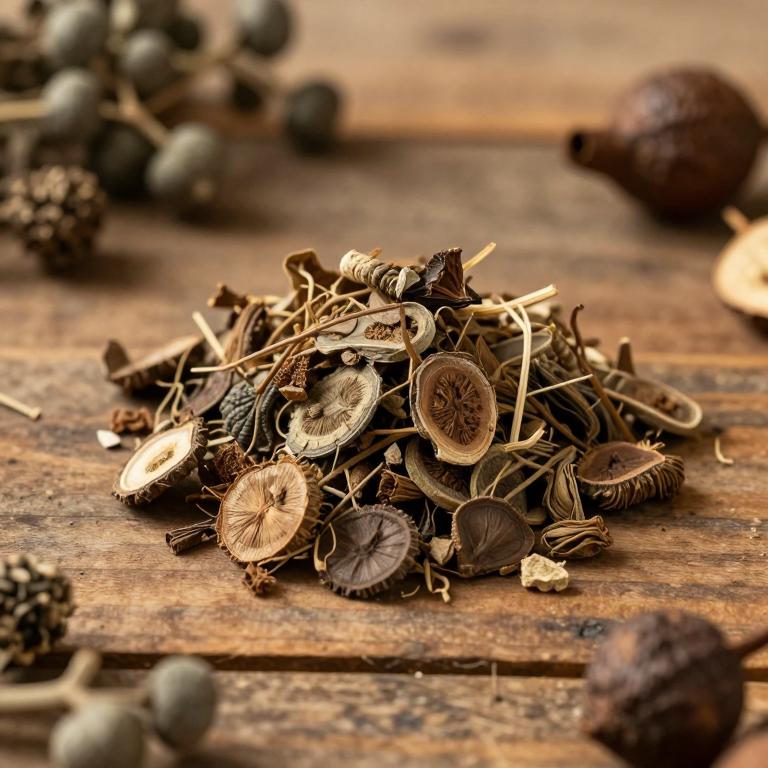
Names and Synonyms
Scientific Names
Accepted name
Garcinia fuscaSources: Wikidata
Taxonomical Classification
This plant belongs to the kingdom Plantae and is classified under the phylum Streptophyta and the class Equisetopsida. Within the subclass Magnoliidae, it is categorized under the order Malpighiales and the family Clusiaceae. Finally, it is identified by its specific genus, Garcinia.
| Rank | Classification |
|---|---|
| Kingdom | Plantae |
| Phylum | Streptophyta |
| Class | Equisetopsida |
| Subclass | Magnoliidae |
| Order | Malpighiales |
| Family | Clusiaceae |
| Genus | Garcinia |
Sources: The World Checklist of Vascular Plants (WCVP)
Distribution
This plant is primarily distributed across the diverse landscapes of the Indo-China region. Within this territory, it can be found growing in the tropical environments of Cambodia. The species also extends its range into the lush forests of Laos. Additionally, its natural habitat includes various parts of Thailand. Finally, the geographical presence of this medicinal plant is completed by its occurrence in Vietnam.
| Region | Area |
|---|---|
| Indo-China | Cambodia |
| Indo-China | Laos |
| Indo-China | Thailand |
| Indo-China | Vietnam |
Sources: The World Checklist of Vascular Plants (WCVP)
Plant Parts
Garcinia fusca has 1 reported plant parts identified across 1 scientific publications and several other databases that are studied for medicinal purposes. The most consistently reported plant part include stem.
| Plant part | Supporting sources | Consensus |
|---|---|---|
| Stem | 1 supporting sources | ★☆☆☆☆ |
Stem
- Journal of natural products
Chemicals
Garcinia fusca has 8 reported phytochemicals identified across 1 scientific publications and several other databases. The most consistently reported chemicals include Fuscaxanthone A, Fuscaxanthone B, Fuscaxanthone D, Fuscaxanthone E, Fuscaxanthone F.
| Chemical | Supporting sources | Consensus |
|---|---|---|
| Fuscaxanthone A | 1 supporting sources | ★☆☆☆☆ |
| Fuscaxanthone B | 1 supporting sources | ★☆☆☆☆ |
| Fuscaxanthone D | 1 supporting sources | ★☆☆☆☆ |
| Fuscaxanthone E | 1 supporting sources | ★☆☆☆☆ |
| Fuscaxanthone F | 1 supporting sources | ★☆☆☆☆ |
| Fuscaxanthone G | 1 supporting sources | ★☆☆☆☆ |
| Fuscaxanthone H | 1 supporting sources | ★☆☆☆☆ |
| fuscaxanthone c | 1 supporting sources | ★☆☆☆☆ |
Fuscaxanthone A
- Journal of natural products
Fuscaxanthone B
- Journal of natural products
Fuscaxanthone D
- Journal of natural products
Fuscaxanthone E
- Journal of natural products
Fuscaxanthone F
- Journal of natural products
Fuscaxanthone G
- Journal of natural products
Fuscaxanthone H
- Journal of natural products
fuscaxanthone c
- Journal of natural products
Preparations
Garcinia fusca has 1 reported preparations identified across 1 scientific publications and several other databases. The most consistently reported preparations include stem bark.
| Preparation | Supporting sources | Consensus |
|---|---|---|
| Stem bark | 1 supporting sources | ★☆☆☆☆ |
Stem bark
- Journal of natural products