Garcinia atroviridis
Garcinia atroviridis · Accepted scientific name
Scientific literature: Very Sparse (14 studies) · ★☆☆☆☆
Garcinia atroviridis, scientifically known as Garcinia atroviridis, is a remarkable medicinal plant native to tropical regions. Renowned for its diverse bioactive compounds, it offers significant therapeutic potential. This species is increasingly studied for its antioxidant, anti-inflammatory, and antimicrobial properties, making it a valuable resource in traditional and modern pharmacology.
- Family
- Clusiaceae
- Native range
- Asia-Tropical
- Parts used
- Root
- Common names
- Not available
- Scientific synonyms
- Not available
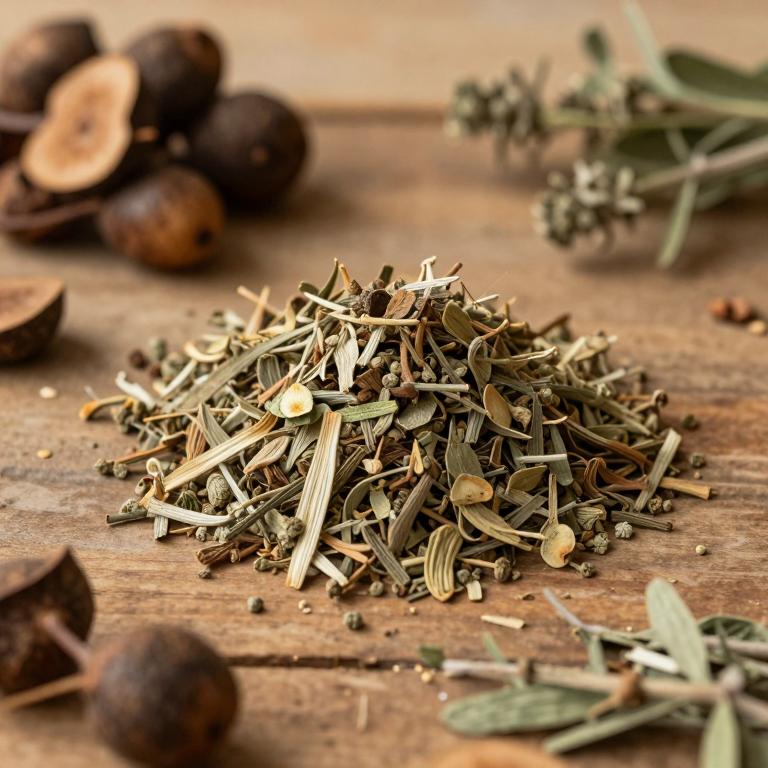
Names and Synonyms
Scientific Names
Accepted name
Garcinia atroviridisSources: Wikidata, Catalogue of Life
Taxonomical Classification
This plant belongs to the kingdom Plantae and the phylum Streptophyta, falling under the class Equisetopsida and subclass Magnoliidae. Within the order Malpighiales, it is classified under the family Clusiaceae. Finally, its taxonomic identity is defined by its placement within the genus Garcinia.
| Rank | Classification |
|---|---|
| Kingdom | Plantae |
| Phylum | Streptophyta |
| Class | Equisetopsida |
| Subclass | Magnoliidae |
| Order | Malpighiales |
| Family | Clusiaceae |
| Genus | Garcinia |
Sources: The World Checklist of Vascular Plants (WCVP)
Distribution
This plant exhibits a broad geographical distribution across several key ecological regions in Asia. Within the Indian Subcontinent, it can be found growing in the state of Assam and throughout the East Himalaya. Its presence extends into the Indo-China region, specifically inhabiting areas of Myanmar and Thailand. Additionally, the species reaches further into the Malesia zone, where it is documented on the island of Borneo. Together, these locations highlight the diverse tropical and subtropical habitats favored by the species.
| Region | Area |
|---|---|
| Indian Subcontinent | Assam |
| Indian Subcontinent | East Himalaya |
| Indo-China | Myanmar |
| Indo-China | Thailand |
| Malesia | Borneo |
| Malesia | Malaya |
| Malesia | Sumatera |
Sources: The World Checklist of Vascular Plants (WCVP)
Botanical Identification
Life history
The life history of Garcinia atroviridis is characterized by a perennial lifecycle, meaning the plant persists for many years and does not complete its biological cycle within a single growing season. As a long-lived species, it follows a developmental trajectory that moves from initial seedling establishment through an extended juvenile phase before reaching reproductive maturity. Once established, the plant maintains continuous vegetative growth, investing resources into structural longevity and the development of a robust canopy. Its perennial nature allows it to endure seasonal environmental fluctuations, ensuring that it can participate in multiple reproductive cycles over its lifespan, which is a fundamental trait for its persistence within its native ecological niche.
- Lifecycle :
- perennial
Morphology
The morphology of Garcinia atroviridis is characterized by its stature as a woody tree, typically exhibiting a self-supporting growth form. This species reaches significant dimensions, with a mean plant height of approximately 20 m and the capacity to grow up to a maximum height of 27 m. As a terrestrial organism, it does not exhibit epiphytic habits, maintaining its development directly within the soil substrate.
- Climber :
- self-supporting
- Epiphyte :
- terrestrial
- Growth form :
- tree
- Plant height max:
- 27 m
- Plant height mean:
- 20 m
- Woodiness :
- woody
Physiology
The physiology of Garcinia atroviridis is characterized by complex metabolic pathways centered around the production of bioactive xanthones and hydroxycitric acid, which drive its chemical defense mechanisms. As a tropical evergreen species, its physiological processes are heavily reliant on efficient photosynthetic activity adapted to high-humidity, low-light understory environments, utilizing specialized chlorophyll configurations to maximize light absorption. The plant exhibits robust secondary metabolism, synthesizing various polyphenolic compounds that serve both as antioxidant agents and as chemical deterrents against herbivory. Regarding its nutrient acquisition strategies, the species does not engage in symbiotic nitrogen fixation; it is not a nitrogen fixer, meaning it lacks the specialized root nodules required to convert atmospheric nitrogen into usable forms. Instead, it relies on the uptake of soil nitrates and ammonium through its extensive root system, integrating these minerals into its protein synthesis and overall growth cycles through standard mineral assimilation processes.
- Nitrogen fixer :
- no
Sources: Global Inventory of Floras and Traits (GIFT)
Plant Parts
Garcinia atroviridis has 1 reported plant parts identified across 1 scientific publications and several other databases that are studied for medicinal purposes. The most consistently reported plant part include root.
| Plant part | Supporting sources | Consensus |
|---|---|---|
| Root | 1 supporting sources | ★☆☆☆☆ |
Root
- Journal of natural products
Chemicals
Garcinia atroviridis has 6 reported phytochemicals identified across 1 scientific publications and several other databases. The most consistently reported chemicals include (-)-Hydroxycitric acid, Atroviridin, Garcinia acid, naringenin, palmitic acid.
| Chemical | Supporting sources | Consensus |
|---|---|---|
| (-)-Hydroxycitric acid | 1 supporting sources | ★☆☆☆☆ |
| Atroviridin | 1 supporting sources | ★☆☆☆☆ |
| Garcinia acid | 1 supporting sources | ★☆☆☆☆ |
| naringenin | 1 supporting sources | ★☆☆☆☆ |
| palmitic acid | 1 supporting sources | ★☆☆☆☆ |
| palmitoleic acid | 1 supporting sources | ★☆☆☆☆ |
(-)-Hydroxycitric acid
- Dr. Duke
Atroviridin
- Dr. Duke
Garcinia acid
- Molecules (Basel, Switzerland)
naringenin
- Molecules (Basel, Switzerland)
palmitic acid
- Natural product research
palmitoleic acid
- Natural product research
Conditions
Garcinia atroviridis has 5 reported investigations on conditions identified across 1 scientific publications and several other databases. The most consistently reported conditions include H1N1, MCF-7 cells, Obesity, body weight, influenza.
| Condition | Supporting sources | Consensus |
|---|---|---|
| H1n1 | 1 supporting sources | ★☆☆☆☆ |
| Mcf-7 cells | 1 supporting sources | ★☆☆☆☆ |
| Obesity | 1 supporting sources | ★☆☆☆☆ |
| Body weight | 1 supporting sources | ★☆☆☆☆ |
| Influenza | 1 supporting sources | ★☆☆☆☆ |
H1n1
- Molecules (Basel, Switzerland)
Mcf-7 cells
- Natural product research
Obesity
- Current issues in molecular biology
Body weight
- World journal of gastroenterology
Influenza
- Molecules (Basel, Switzerland)