Gallesia integrifolia
Gallesia integrifolia · Accepted scientific name
Scientific literature: Very Sparse (15 studies) · ★☆☆☆☆
Gallesia integrifolia, is a distinctive medicinal shrub native to South American landscapes. Renowned for its therapeutic properties, this plant is traditionally utilized in folk medicine to address various ailments. Its unique chemical composition offers intriguing potential for pharmacological research, highlighting its significant value in both traditional and modern healing.
- Family
- Petiveriaceae
- Native range
- Southern America
- Parts used
- Flower · Fruit
- Common names
- Not available
- Scientific synonyms
- Gallesia Gorazema · Crateva Gorarema · 4 more
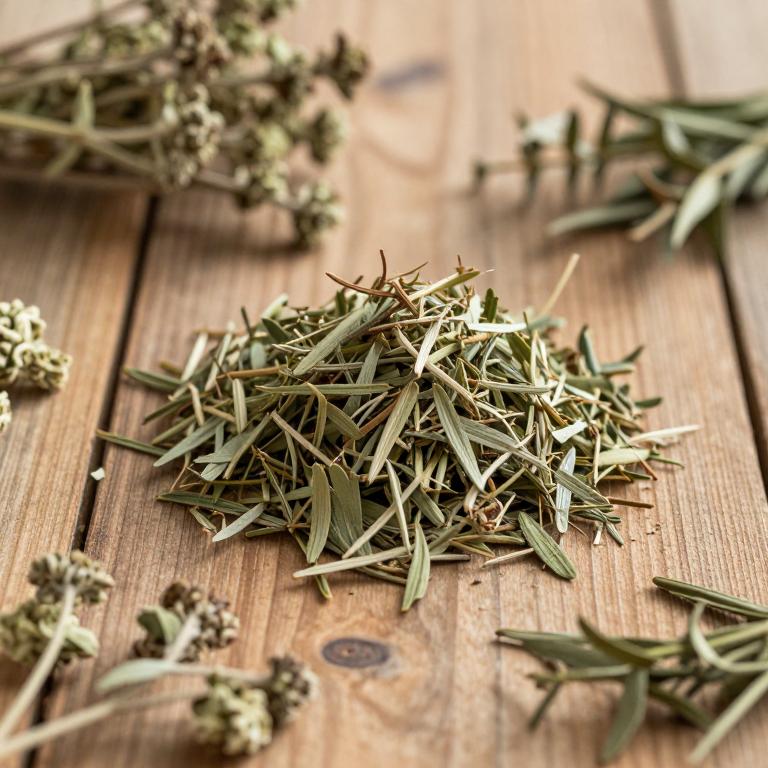
Names and Synonyms
Scientific Names
Accepted name
Gallesia integrifoliaSynonyms
- Gallesia gorazema
- Crateva gorarema
- Crateva gorazema
- Gallesia ovata
- Thouinia integrifolia
- Gallesia integrifolia var. ovata
Sources: Wikidata, Catalogue of Life
Taxonomical Classification
This plant, Gallesia integrifolia, belongs to the kingdom Plantae and is classified within the phylum Streptophyta and the class Equisetopsida. As a member of the subclass Magnoliidae, it falls under the order Caryophyllales and is a representative of the family Petiveriaceae. Its specific classification is defined by the genus Gallesia.
| Rank | Classification |
|---|---|
| Kingdom | Plantae |
| Phylum | Streptophyta |
| Class | Equisetopsida |
| Subclass | Magnoliidae |
| Order | Caryophyllales |
| Family | Petiveriaceae |
| Genus | Gallesia |
Sources: The World Checklist of Vascular Plants (WCVP)
Distribution
This plant exhibits a diverse geographical distribution spanning several regions of South America. In the western part of the continent, it can be found across Bolivia, Ecuador, and Peru. Moving toward the eastern side, the species is also well-established within the borders of Brazil. Specifically, it inhabits the West-Central region of the Brazilian territory. Additionally, its range extends into the Northeast region of Brazil.
| Region | Area |
|---|---|
| Western South America | Bolivia |
| Western South America | Ecuador |
| Western South America | Peru |
| Brazil | Brazil West-Central |
| Brazil | Brazil Northeast |
| Brazil | Brazil Southeast |
| Brazil | Brazil North |
| Brazil | Brazil South |
Sources: The World Checklist of Vascular Plants (WCVP)
Botanical Identification
Ecology
The ecology of Gallesia integrifolia is characterized by its ability to inhabit diverse and varied environmental settings, spanning multiple distinct biomes. It is found across the Caatinga (strictu sensu), the Cerrado (lato sensu), and within specialized forest types such as Floresta de Igapó and Floresta de Terra Firme. This adaptability allows the species to thrive in both seasonally dry environments and seasonally flooded or stable forest ecosystems. Furthermore, the species exhibits a broad altitudinal distribution, occupying an elevational range that begins at 10 m AMSL and extends up to a maximum of 1325 m AMSL.
- Elevational range max:
- 1325 m AMSL
- Elevational range min:
- 10 m AMSL
- Habitat :
- Caatinga (stricto sensu), Cerrado (lato sensu), Floresta de Igapó, Floresta de Terra Firme
Life history
The life history of Gallesia integrifolia is characterized by its nature as a perennial plant, allowing it to persist in its environment through multiple growing seasons. Throughout its lifespan, it maintains a consistent vegetative presence due to its evergreen deciduousness, ensuring that its foliage remains functional and present year-round rather than shedding seasonally.
- Deciduousness :
- evergreen
- Lifecycle :
- perennial
Morphology
The morphology of Gallesia integrifolia is characterized by its robust growth form as a woody tree, which is capable of reaching significant dimensions with a mean height of 25 m and a maximum height of up to 30 m. As a terrestrial species, it does not exhibit aquatic or semiaquatic tendencies, nor does it function as an epiphyte, maintaining a strictly terrestrial existence. The plant is classified as self-supporting in terms of its climbing habit, meaning it does not require external structures like vines or lianas to maintain its stature. Furthermore, it is an independent organism that does not exhibit parasitic behavior, relying on its own structural integrity and nutritional processes.
- Aquatic :
- terrestrial
- Climber :
- self-supporting
- Epiphyte :
- terrestrial
- Growth form :
- tree
- Parasite :
- independent
- Plant height max:
- 30 m
- Plant height mean:
- 25 m
- Woodiness :
- woody
Physiology
The physiology of Gallesia integrifolia is characterized by a C3 photosynthetic pathway, which dictates its carbon fixation processes and metabolic efficiency in its natural environment. This metabolic strategy involves the direct fixation of atmospheric carbon dioxide through the enzyme RuBisCO during the Calvin cycle. Furthermore, the plant does not function as a nitrogen fixer, meaning it lacks the symbiotic relationship with diazotrophic bacteria necessary to convert atmospheric nitrogen into a biologically available form, and instead relies on the uptake of nitrogenous compounds directly from the soil.
- Nitrogen fixer :
- no
- Photosynthetic pathway :
- C3
Reproduction
The reproduction of Gallesia integrifolia is characterized by specific dispersal mechanisms and seed morphologies. The plant exhibits a complex dispersal syndrome that involves anemochorous, zoochorous, autochorous, and hydrochorous strategies, indicating that its seeds are distributed through a combination of wind, animals, self-release, and water movement, rather than being limited to a single specialized method. In terms of seed physical characteristics, the species produces seeds with a highly consistent dimension; the seed length is recorded at a uniform value of 7.112 mm, with the mean, minimum, and maximum measurements all aligning at this exact measurement.
- Dispersal syndrome :
- anemochorous
- Seed length mean:
- 7.112 mm
Sources: Global Inventory of Floras and Traits (GIFT)
Plant Parts
Gallesia integrifolia has 3 reported plant parts identified across 3 scientific publications and several other databases that are studied for medicinal purposes. The most consistently reported plant part include flower, fruit, leaf.
| Plant part | Supporting sources | Consensus |
|---|---|---|
| Flower | 1 supporting sources | ★☆☆☆☆ |
| Fruit | 1 supporting sources | ★☆☆☆☆ |
| Leaf | 1 supporting sources | ★☆☆☆☆ |
Flower
- Molecules (Basel, Switzerland)
Fruit
- Molecules (Basel, Switzerland)
Leaf
- Molecules (Basel, Switzerland)
Chemicals
Gallesia integrifolia has 4 reported phytochemicals identified across 3 scientific publications and several other databases. The most consistently reported chemicals include 2,8-Dithianonane, 3,5-Dithiahexanol 5,5-dioxide, Methionine ethyl ester, Phytol.
| Chemical | Supporting sources | Consensus |
|---|---|---|
| 2,8-Dithianonane | 1 supporting sources | ★☆☆☆☆ |
| 3,5-Dithiahexanol 5,5-dioxide | 1 supporting sources | ★☆☆☆☆ |
| Methionine ethyl ester | 1 supporting sources | ★☆☆☆☆ |
| Phytol | 1 supporting sources | ★☆☆☆☆ |
2,8-Dithianonane
- Journal of ethnopharmacology
3,5-Dithiahexanol 5,5-dioxide
- Journal of ethnopharmacology
Methionine ethyl ester
- Journal of ethnopharmacology
Phytol
- Journal of ethnopharmacology
Activities
Gallesia integrifolia has 1 reported activities identified across 3 scientific publications and several other databases. The most consistently reported activities include Antiproliferative.
| Activity | Supporting sources | Consensus |
|---|---|---|
| Antiproliferative | 1 supporting sources | ★☆☆☆☆ |
Antiproliferative
- Molecules (Basel, Switzerland)
Conditions
Gallesia integrifolia has 5 reported investigations on conditions identified across 3 scientific publications and several other databases. The most consistently reported conditions include asthma, breast tumor, colorectal tumor, rheumatism, vulvovaginal candidiasis.
| Condition | Supporting sources | Consensus |
|---|---|---|
| Asthma | 1 supporting sources | ★☆☆☆☆ |
| Breast tumor | 1 supporting sources | ★☆☆☆☆ |
| Colorectal tumor | 1 supporting sources | ★☆☆☆☆ |
| Rheumatism | 1 supporting sources | ★☆☆☆☆ |
| Vulvovaginal candidiasis | 1 supporting sources | ★☆☆☆☆ |
Asthma
- Molecules (Basel, Switzerland)
Breast tumor
- Molecules (Basel, Switzerland)
Colorectal tumor
- Molecules (Basel, Switzerland)
Rheumatism
- Molecules (Basel, Switzerland)
Vulvovaginal candidiasis
- Journal of ethnopharmacology
Preparations
Gallesia integrifolia has 6 reported preparations identified across 3 scientific publications and several other databases. The most consistently reported preparations include crude extracts, decoction, essential oils, infusion, methanol extract.
| Preparation | Supporting sources | Consensus |
|---|---|---|
| Crude extracts | 1 supporting sources | ★☆☆☆☆ |
| Decoction | 1 supporting sources | ★☆☆☆☆ |
| Essential oils | 1 supporting sources | ★☆☆☆☆ |
| Infusion | 1 supporting sources | ★☆☆☆☆ |
| Methanol extract | 1 supporting sources | ★☆☆☆☆ |
| Topical preparation by crushing | 1 supporting sources | ★☆☆☆☆ |
Crude extracts
- Molecules (Basel, Switzerland)
Decoction
- Journal of ethnopharmacology
Essential oils
- Molecules (Basel, Switzerland)
Infusion
- Journal of ethnopharmacology
Methanol extract
- Natural product communications
Topical preparation by crushing
- Journal of ethnopharmacology