Galium libanoticum
Galium libanoticum · Accepted scientific name
Scientific literature: Very Sparse (5 studies) · ★☆☆☆☆
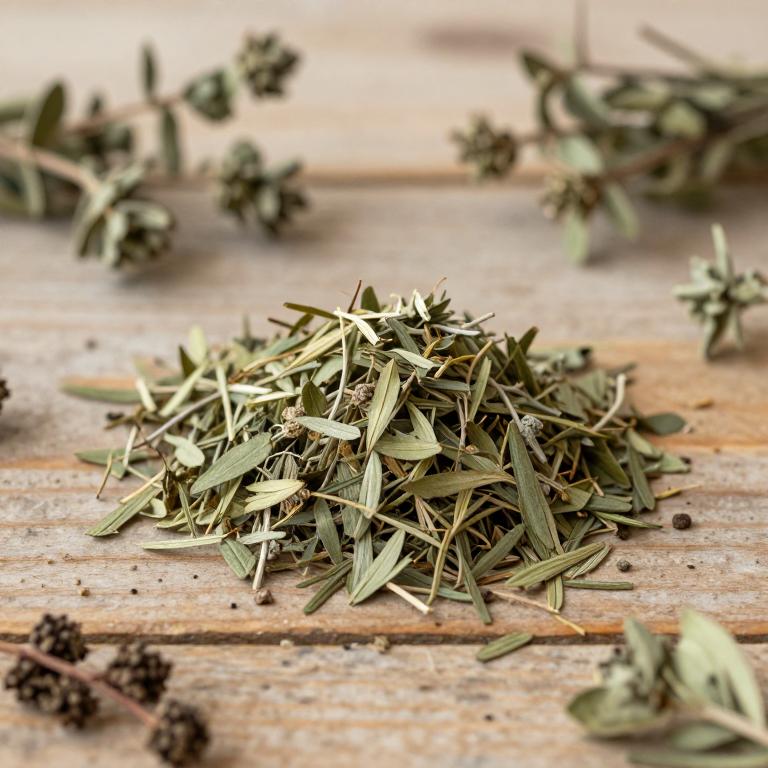
Galium libanoiticum, scientifically known as Galium libanoiticum, is a rare medicinal herb native to the rugged terrains of the Levant. Belonging to the Rubiaceae family, this plant is valued in traditional herbalism for its unique phytochemical properties, offering potential therapeutic benefits in treating various inflammatory conditions.
- Family
- Rubiaceae
- Native range
- Asia-Temperate
- Parts used
- Not available
- Common names
- Not available
- Scientific synonyms
- Not available
Names and Synonyms
Scientific Names
Accepted name
Galium libanoticumSources: Wikidata, Catalogue of Life
Taxonomical Classification
This plant belongs to the kingdom Plantae and the phylum Streptophyta, specifically categorized within the class Equisetopsida and subclass Magnoliidae. It is further classified under the order Gentianaales and the family Rubiaceae. Within this framework, its taxonomic identity is established under the genus Galium.
| Rank | Classification |
|---|---|
| Kingdom | Plantae |
| Phylum | Streptophyta |
| Class | Equisetopsida |
| Subclass | Magnoliidae |
| Order | Gentianales |
| Family | Rubiaceae |
| Genus | Galium |
Sources: The World Checklist of Vascular Plants (WCVP)
Distribution
This plant, known scientifically as Galium libanoticum, possesses a very specific and localized geographical range. It is primarily found within the region of Western Asia. Within this area, its distribution is concentrated in the countries of Lebanon and Syria. The species is native to these specific territories, reflecting its unique ecological requirements. Consequently, its occurrence is limited to these particular parts of the Levant.
| Region | Area |
|---|---|
| Western Asia | Lebanon-Syria |
Sources: The World Checklist of Vascular Plants (WCVP)
Botanical Identification
Life history
The life history of Galium libanoiticum is characterized by a perennial lifecycle, allowing the plant to persist through multiple growing seasons within its specific habitat. In terms of its structural growth strategy, it is classified as a chamaephyte, a life form where the permanent buds are located close to or just above the soil surface, providing resilience against environmental stressors. This botanical classification is consistently identified across both life form descriptors, reinforcing its status as a chamaephyte that maintains its reproductive and vegetative potential near the ground level.
- Life form :
- chamaephyte
- Lifecycle :
- perennial
Morphology
The morphology of Galium libanoticum is characterized by its growth form as a woody subshrub, exhibiting a structural development that falls between a herb and a shrub. This species is primarily terrestrial in its habitat, functioning as an independent organism rather than a parasite or an epiphyte. In terms of its physical habit, it is a self-supporting plant, lacking the climbing mechanisms found in obligatory or facultative climbers. Its development is marked by woodiness, providing the necessary structural integrity to maintain its upright, subshrubby stature in its natural environment.
- Aquatic :
- terrestrial
- Climber :
- self-supporting
- Epiphyte :
- terrestrial
- Growth form :
- shrub
- Growth form :
- subshrub
- Parasite :
- independent
- Woodiness :
- woody
Reproduction
The reproduction of Galium libanoticum is characterized by the production of specialized seeds that exhibit specific morphological and mass-related variations. The seed mass of this species is notably small, with a mean mass recorded at 0.00099 g. Within a given population, there is measurable variability in these values, ranging from a minimum seed mass of 0.00071 g to a maximum seed mass of 0.00136 g. These quantitative traits reflect the biological investment in propagules, which are essential for the dispersal and establishment of the species within its natural habitat.
- Seed mass max:
- 0.00136 g
- Seed mass mean:
- 0.00099 g
- Seed mass min:
- 0.00071 g
Sources: Global Inventory of Floras and Traits (GIFT)
Chemicals
Galium libanoticum has 2 reported phytochemicals identified across 0 scientific publications and several other databases. The most consistently reported chemicals include Asperulosidic acid, RUTIN.
| Chemical | Supporting sources | Consensus |
|---|---|---|
| Asperulosidic acid | 1 supporting sources | ★☆☆☆☆ |
| RUTIN | 1 supporting sources | ★☆☆☆☆ |
Asperulosidic acid
- Infectious disorders drug targets
RUTIN
- Infectious disorders drug targets
Activities
Galium libanoticum has 1 reported activities identified across 0 scientific publications and several other databases. The most consistently reported activities include Antibacterial.
| Activity | Supporting sources | Consensus |
|---|---|---|
| Antibacterial | 1 supporting sources | ★☆☆☆☆ |
Antibacterial
- Infectious disorders drug targets
Conditions
Galium libanoticum has 2 reported investigations on conditions identified across 0 scientific publications and several other databases. The most consistently reported conditions include antioxidant, diuretic.
| Condition | Supporting sources | Consensus |
|---|---|---|
| Antioxidant | 1 supporting sources | ★☆☆☆☆ |
| Diuretic | 1 supporting sources | ★☆☆☆☆ |
Antioxidant
- Infectious disorders drug targets
Diuretic
- Infectious disorders drug targets
Preparations
Galium libanoticum has 2 reported preparations identified across 0 scientific publications and several other databases. The most consistently reported preparations include crude extract, plant extract.
| Preparation | Supporting sources | Consensus |
|---|---|---|
| Crude extract | 1 supporting sources | ★☆☆☆☆ |
| Plant extract | 1 supporting sources | ★☆☆☆☆ |
Crude extract
- Infectious disorders drug targets
Plant extract
- Infectious disorders drug targets