Galeopsis tetrahit
Galeopsis tetrahit · Accepted scientific name
Scientific literature: Very Sparse (45 studies) · ★☆☆☆☆
Galeopsis tetrahit, scientifically known as Galeopsis tetrahit, is a perennial herb within the Lamiaceae family, commonly referred to as yellow dead-nettle. Renowned for its historical medicinal uses, this plant possesses notable anti-inflammatory and diuretic properties, traditionally employed to support digestive health and alleviate various systemic ailments in herbalism.
- Family
- Not available
- Native range
- Europe
- Parts used
- Leaf
- Common names
- Not available
- Scientific synonyms
- Not available
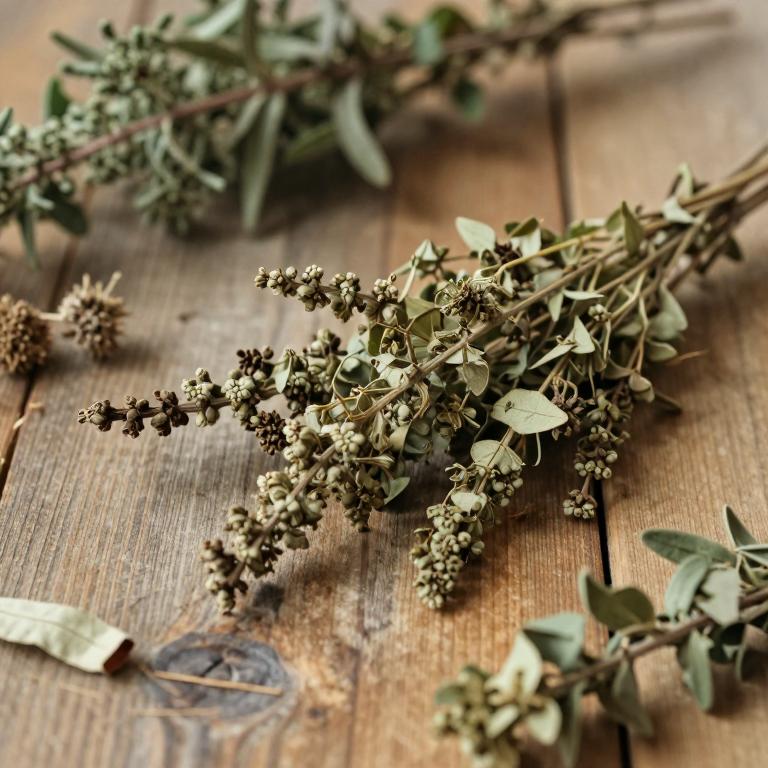
Names and Synonyms
Scientific Names
Accepted name
Galeopsis tetrahitDistribution
This plant is primarily distributed across various regions of Northern Europe. Its presence can be documented within the borders of Denmark and Finland. Additionally, it is found throughout the landscapes of Great Britain and Ireland. The species also extends its range into the territory of Norway. These specific locations highlight the northern European habitat where the plant thrives.
| Region | Area |
|---|---|
| Northern Europe | Denmark |
| Northern Europe | Finland |
| Northern Europe | Great Britain |
| Northern Europe | Ireland |
| Northern Europe | Norway |
| Northern Europe | Sweden |
| Middle Europe | Austria |
| Middle Europe | Belgium |
| Middle Europe | Czechia-Slovakia |
| Middle Europe | Germany |
Sources: The World Checklist of Vascular Plants (WCVP)
Botanical Identification
Ecology
The ecology of Galeopsis tetrahit is characterized by its preference for lowland environments, where it typically establishes itself in disturbed or nutrient-rich habitats. This species thrives within a specific vertical distribution, occupying an elevational range that begins at 0 m AMSL and extends up to a maximum of 200 m AMSL. This low-altitude preference suggests an adaptation to warmer, more stable climatic conditions found in plains and valley bottoms.
- Elevational range max:
- 200 m AMSL
- Elevational range min:
- 0 m AMSL
- Habitat :
- Lowland
Life history
The life history of Galeopsis tetrahit is characterized by an annual lifecycle, meaning the plant completes its entire developmental process from germination to seed production within a single growing season. As a therophyte, it survives the unfavorable seasons primarily in the form of seeds, which remain dormant until conditions are optimal for regrowth. This life form is further categorized by its deciduous nature, as the plant's above-ground vegetative structures die back completely at the end of its seasonal cycle.
- Deciduousness :
- deciduous
- Life form :
- therophyte
- Lifecycle :
- annual
Morphology
The morphology of Galeopsis tetrahit is characterized by its growth form as a non-woody herb and forb. As a terrestrial plant, it functions as an independent organism, neither acting as a parasite nor an epiphyte. The species is self-supporting rather than a climber, possessing a growth habit that does not require external structures for verticality. In terms of stature, the plant exhibits significant variation in height, ranging from a minimum of 0.05 m to a maximum of 0.75 m, with an average plant height of approximately 0.35 m.
- Aquatic :
- terrestrial
- Climber :
- self-supporting
- Epiphyte :
- terrestrial
- Growth form :
- herb
- Growth form :
- forb
- Parasite :
- independent
- Plant height max:
- 0.75 m
- Plant height mean:
- 0.35 m
- Plant height min:
- 0.05 m
- Woodiness :
- non-woody
Physiology
The physiology of Galeopsis tetrahit is characterized by a C3 photosynthetic pathway, which dictates its carbon fixation processes and metabolic efficiency. The plant exhibits non-carnivorous nutritional strategies, relying entirely on soil-based nutrient uptake. Its foliar morphology is defined by a mean leaf size of 23.9 cm², with leaf width maintaining a consistent measurement of 3.5 cm (representing both the minimum and maximum width recorded). The leaves reach a maximum length of 6 cm, and the plant demonstrates a mean Specific Leaf Area (SLA) of 309.93 cm²/g, indicating a specific structural investment in leaf tissue density relative to its surface area.
- Carnivory :
- non-carnivorous
- Leaf length max:
- 6 cm
- Leaf size mean:
- 23.9 cm²
- Leaf width mean:
- 3.5 cm
- Photosynthetic pathway :
- C3
- Specific Leaf Area (SLA) mean:
- 309.93 cm²/g
Reproduction
The reproduction of Galeopsis tetrahit is characterized by a sexual reproductive cycle that relies on biotic pollination and specific dispersal mechanisms. The flowering period typically begins in June and extends through August. During this time, the plant utilizes a biotic pollination syndrome, specifically mediated by insects, to facilitate fertilization. Once pollinated, the plant is capable of self-fertilization to ensure seed production. The resulting fruits are classified as dry. The seeds produced are relatively uniform in size and mass; they have a mean length of 3 mm (with a consistent range from 3 to 3 mm) and a mean volume of 3.9 mm³, which is also the minimum and maximum recorded volume. The seed mass fluctuates slightly, with a mean of approximately 0.00418 g, ranging from a minimum of 0.00317 g to a maximum of 0.00483 g. Following maturation, the plant employs a zoochorous dispersal syndrome, specifically utilizing epizoochory to spread its seeds via animals. Notably, asexual reproduction is absent in this species.
- Dispersal syndrome :
- zoochorous
- Dispersal syndrome :
- epizoochorous
- Flowering time :
- Jun
- Flowering time :
- Aug
- Fruit dryness :
- dry
- Pollination syndrome :
- insect
- Pollination syndrome :
- biotic
- Reproduction asexual :
- absent
- Seed length mean:
- 3 mm
- Seed mass max:
- 0.00483 g
- Seed mass mean:
- 0.0041838335 g
- Seed mass min:
- 0.00317 g
- Seed volume max:
- 3.9 mm³
- Self fertilization :
- present
Sources: Global Inventory of Floras and Traits (GIFT)
Plant Parts
Galeopsis tetrahit has 1 reported plant parts identified across 1 scientific publications and several other databases that are studied for medicinal purposes. The most consistently reported plant part include leaf.
| Plant part | Supporting sources | Consensus |
|---|---|---|
| Leaf | 1 supporting sources | ★☆☆☆☆ |
Leaf
- Plants (Basel, Switzerland)
Chemicals
Galeopsis tetrahit has 9 reported phytochemicals identified across 1 scientific publications and several other databases. The most consistently reported chemicals include 3-OCTANOL, Caryophyllene, Caryophyllene oxide, Copaene, EO.
| Chemical | Supporting sources | Consensus |
|---|---|---|
| 3-OCTANOL | 1 supporting sources | ★☆☆☆☆ |
| Caryophyllene | 1 supporting sources | ★☆☆☆☆ |
| Caryophyllene oxide | 1 supporting sources | ★☆☆☆☆ |
| Copaene | 1 supporting sources | ★☆☆☆☆ |
| EO | 1 supporting sources | ★☆☆☆☆ |
| Germacrene D | 1 supporting sources | ★☆☆☆☆ |
| Gluroside | 1 supporting sources | ★☆☆☆☆ |
| Linalol | 1 supporting sources | ★☆☆☆☆ |
| alpha-Humulene | 1 supporting sources | ★☆☆☆☆ |
3-OCTANOL
- Dr. Duke
Caryophyllene
- Dr. Duke
Caryophyllene oxide
- Dr. Duke
Copaene
- Dr. Duke
EO
- Dr. Duke
Germacrene D
- Dr. Duke
Gluroside
- Dr. Duke
Linalol
- Dr. Duke
alpha-Humulene
- Dr. Duke
Activities
Galeopsis tetrahit has 35 reported activities identified across 1 scientific publications and several other databases. The most consistently reported activities include Aldose-Reductase-Inhibitor, Allergenic, Analgesic, Antiacne, Antiasthmatic.
| Activity | Supporting sources | Consensus |
|---|---|---|
| Aldose-Reductase-Inhibitor | 1 supporting sources | ★☆☆☆☆ |
| Allergenic | 1 supporting sources | ★☆☆☆☆ |
| Analgesic | 1 supporting sources | ★☆☆☆☆ |
| Antiacne | 1 supporting sources | ★☆☆☆☆ |
| Antiasthmatic | 1 supporting sources | ★☆☆☆☆ |
| Antibacterial | 1 supporting sources | ★☆☆☆☆ |
| Anticariogenic | 1 supporting sources | ★☆☆☆☆ |
| Antidermatitic | 1 supporting sources | ★☆☆☆☆ |
| Antiedemic | 1 supporting sources | ★☆☆☆☆ |
| Antifeedant | 1 supporting sources | ★☆☆☆☆ |
Aldose-Reductase-Inhibitor
- Dr. Duke
Allergenic
- Dr. Duke
Analgesic
- Dr. Duke
Antiacne
- Dr. Duke
Antiasthmatic
- Dr. Duke
Antibacterial
- Dr. Duke
Anticariogenic
- Dr. Duke
Antidermatitic
- Dr. Duke
Antiedemic
- Dr. Duke
Antifeedant
- Dr. Duke
Preparations
Galeopsis tetrahit has 1 reported preparations identified across 1 scientific publications and several other databases. The most consistently reported preparations include leaf extract.
| Preparation | Supporting sources | Consensus |
|---|---|---|
| Leaf extract | 1 supporting sources | ★☆☆☆☆ |
Leaf extract
- Plants (Basel, Switzerland)