Galeopsis segetum
Galeopsis segetum · Accepted scientific name
Scientific literature: Very Sparse (16 studies) · ★☆☆☆☆
Galeopsis segetum, scientifically known as Galeopsis segetum, is a medicinal herb belonging to the Lamiaceae family. Often referred to as hedge nettle, this plant is recognized for its bioactive compounds. Traditionally, it has been utilized in various folk remedies to support digestive health and possess mild sedative properties.
- Family
- Not available
- Native range
- Europe
- Parts used
- Not available
- Common names
- Not available
- Scientific synonyms
- Not available
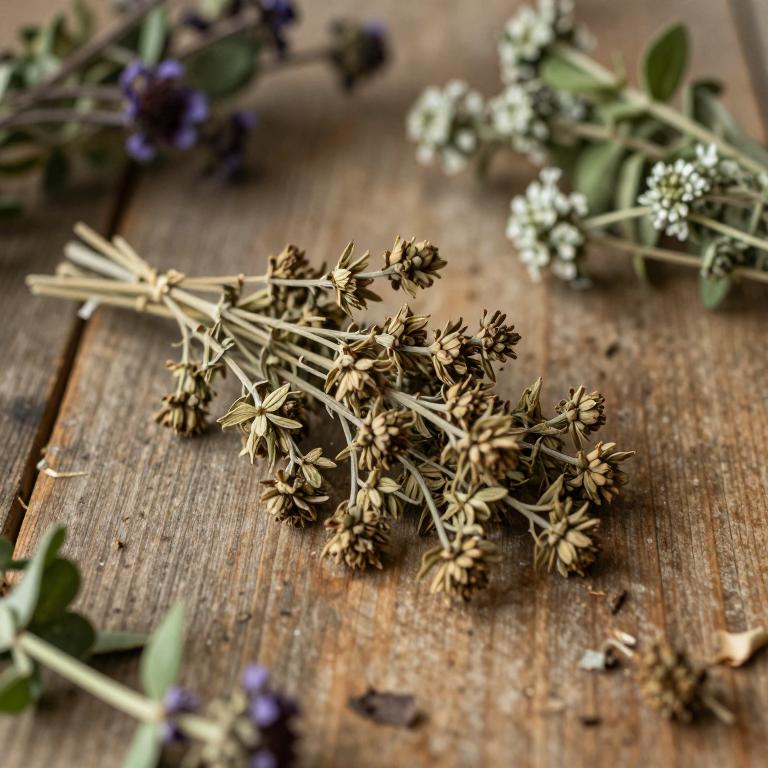
Names and Synonyms
Scientific Names
Accepted name
Galeopsis segetumDistribution
This plant exhibits a wide distribution across several regions of the European continent. In Northern Europe, its presence can be documented in both Denmark and Great Britain. Moving toward Middle Europe, the species is also found growing within the borders of Austria. The plant's range extends further into Belgium, highlighting its adaptability to various temperate climates. Finally, its geographical footprint includes the territories of Czechia and Slovakia.
| Region | Area |
|---|---|
| Northern Europe | Denmark |
| Northern Europe | Great Britain |
| Middle Europe | Austria |
| Middle Europe | Belgium |
| Middle Europe | Czechia-Slovakia |
| Middle Europe | Germany |
| Middle Europe | Hungary |
| Middle Europe | Netherlands |
| Middle Europe | Switzerland |
| Southwestern Europe | France |
Sources: The World Checklist of Vascular Plants (WCVP)
Botanical Identification
Life history
The life history of Galeopsis segetum is characterized by an annual lifecycle, meaning the plant completes its entire developmental process—from germination to seed production—within a single growing season. As a therophyte, its survival strategy relies on producing seeds that persist in the soil to endure unfavorable conditions, rather than maintaining perennial vegetative structures. The plant exhibits a deciduous nature, shedding its foliage as it completes its seasonal cycle. This combination of an annual lifespan and a therophytic life form allows the species to rapidly exploit available resources and colonize disturbed habitats before the onset of dormancy.
- Deciduousness :
- deciduous
- Life form :
- therophyte
- Lifecycle :
- annual
Morphology
The morphology of Galeopsis segetum is characterized by a non-woody, herbaceous growth form, specifically classified as a forb. This plant is a terrestrial species that functions as an independent organism rather than a parasite or epiphyte. In terms of its physical structure, it is a self-supporting plant rather than a climber, liana, or vine. The stature of the plant is relatively low, with a height that typically ranges from a minimum of 0.07 m to a maximum of 0.3 m, maintaining an average plant height of approximately 0.267 m.
- Aquatic :
- terrestrial
- Climber :
- self-supporting
- Epiphyte :
- terrestrial
- Growth form :
- herb
- Growth form :
- forb
- Parasite :
- independent
- Plant height max:
- 0.3 m
- Plant height mean:
- 0.267 m
- Plant height min:
- 0.07 m
- Woodiness :
- non-woody
Physiology
The physiology of Galeopsis segetum is characterized by a C3 photosynthetic pathway, which dictates its carbon fixation processes and environmental adaptation strategies. As a non-carnivorous species, it relies entirely on its root system and soil nutrients for mineral uptake rather than supplemental nutrient acquisition from prey. The plant exhibits a mean leaf size of approximately 11.6725 cm², a morphological trait that contributes to its overall light interception capabilities. Furthermore, it possesses a mean Specific Leaf Area (SLA) of 390.75 cm²/g, reflecting a leaf structure optimized for a specific balance between biomass investment and photosynthetic efficiency.
- Carnivory :
- non-carnivorous
- Leaf size mean:
- 11.6725 cm²
- Photosynthetic pathway :
- C3
- Specific Leaf Area (SLA) mean:
- 390.75 cm²/g
Reproduction
The reproduction of Galeopsis segetum is primarily a sexual process, as asexual reproduction is notably absent in this species. The flowering period is highly flexible and variable, with the possibility of blooming occurring in any month from January through December. The pollination mechanism is classified as a biotic syndrome, specifically relying on insects, with bees identified as a key pollinator. Furthermore, the plant is capable of self-fertilization, ensuring reproductive success through various means. Once seeds are produced, they possess a mean mass of approximately 0.001377 g. The dispersal of these seeds follows a zoochorous syndrome, specifically utilizing epizoochory, where seeds are transported by adhering to animals.
- Dispersal syndrome :
- zoochorous
- Dispersal syndrome :
- epizoochorous
- Flowering time :
- Dec
- Flowering time :
- variable
- Pollination syndrome :
- insect
- Pollination syndrome :
- bee
- Pollination syndrome :
- biotic
- Reproduction asexual :
- absent
- Seed mass mean:
- 0.001377 g
- Self fertilization :
- present
Sources: Global Inventory of Floras and Traits (GIFT)
Chemicals
Galeopsis segetum has 7 reported phytochemicals identified across 0 scientific publications and several other databases. The most consistently reported chemicals include 8-O-Acetylharpagide, Antirrhinoside, Flavonoids, Harpagide, Iridoids.
| Chemical | Supporting sources | Consensus |
|---|---|---|
| 8-O-Acetylharpagide | 1 supporting sources | ★☆☆☆☆ |
| Antirrhinoside | 1 supporting sources | ★☆☆☆☆ |
| Flavonoids | 1 supporting sources | ★☆☆☆☆ |
| Harpagide | 1 supporting sources | ★☆☆☆☆ |
| Iridoids | 1 supporting sources | ★☆☆☆☆ |
| Silica | 1 supporting sources | ★☆☆☆☆ |
| Tannins | 1 supporting sources | ★☆☆☆☆ |
8-O-Acetylharpagide
- Dr. Duke
Antirrhinoside
- Dr. Duke
Flavonoids
- Dr. Duke
Harpagide
- Dr. Duke
Iridoids
- Dr. Duke
Silica
- Dr. Duke
Tannins
- Dr. Duke
Activities
Galeopsis segetum has 9 reported activities identified across 0 scientific publications and several other databases. The most consistently reported activities include (-)-Chronotropic, (-)-Inotropic, Analgesic, Antiarthritic, Antiinflammatory.
| Activity | Supporting sources | Consensus |
|---|---|---|
| (-)-Chronotropic | 1 supporting sources | ★☆☆☆☆ |
| (-)-Inotropic | 1 supporting sources | ★☆☆☆☆ |
| Analgesic | 1 supporting sources | ★☆☆☆☆ |
| Antiarthritic | 1 supporting sources | ★☆☆☆☆ |
| Antiinflammatory | 1 supporting sources | ★☆☆☆☆ |
| Astringent | 1 supporting sources | ★☆☆☆☆ |
| Calcium-Antagonist | 1 supporting sources | ★☆☆☆☆ |
| Cytotoxic | 1 supporting sources | ★☆☆☆☆ |
| Stomachic | 1 supporting sources | ★☆☆☆☆ |
(-)-Chronotropic
- Dr. Duke
(-)-Inotropic
- Dr. Duke
Analgesic
- Dr. Duke
Antiarthritic
- Dr. Duke
Antiinflammatory
- Dr. Duke
Astringent
- Dr. Duke
Calcium-Antagonist
- Dr. Duke
Cytotoxic
- Dr. Duke
Stomachic
- Dr. Duke