Galatella tatarica
Galatella tatarica · Accepted scientific name
Scientific literature: Very Sparse (2 studies) · ★☆☆☆☆
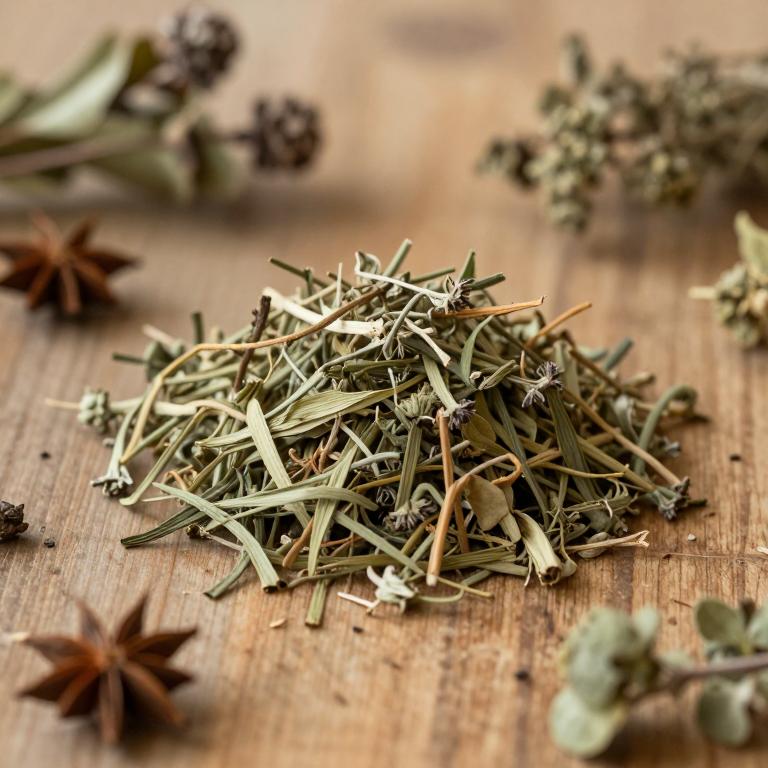
Galatella tatarica is a medicinal plant primarily utilized through the preparation of crude plant extracts derived from its potent roots and rhizomes. This species contains a diverse array of bioactive chemicals, including flavonoids such as quercetin, emodin, and Astin A. In the realm of herbal medicine, these components are studied for their various pharmacological activities, ranging from antitumor properties to potential hepatotoxic effects. Research suggests the plant may be applied to address specific health conditions such as asthma, cough, hemolysis, and infections caused by Clonorchis sinensis. Consequently, the extraction of its rhizomes remains a significant area of interest for developing new therapeutic applications.
- Synonyms
- Linosyris Tarbagatensis · Aster Tarbagatensis · 5 more
- Common names
- Not available
- Family
- Asteraceae
- Distribution
- Not available
- Plant Parts
- Root · Rhizome
Classification
Common Names
Galatella tatarica is a distinctive plant species often recognized by its common name, Солонечник татарский. This botanical subject belongs to a unique group of flora that thrives in specific ecological niches. Understanding its relationship to its local nomenclature helps enthusiasts identify it more easily in the wild. By studying its characteristics, one can better appreciate the linguistic and scientific connections that define this species. Such details are essential for anyone interested in the rich diversity of the natural world.
Sources: Catalogue of Life (COL)
Synonyms
Galatella tatarica is a botanical subject characterized by a complex web of historical nomenclature. Throughout various taxonomic studies, this species has been identified by several different names. For instance, it is frequently cited under the synonyms Aster tarbagatensis and Chrysocoma tatarica. Researchers also recognize it within the literature as Crinitaria tatarica or Crinitina tatarica. Finally, the plant is occasionally referred to as Linosyris glabrata, illustrating the diverse classification history associated with it.
Sources: The World Checklist of Vascular Plants (WCVP)
Taxonomy
Galatella tatarica belongs to the vast kingdom Plantae, marking its place among the diverse living organisms on Earth. Within this realm, the species is classified under the class Equisetopsida, showcasing its fundamental botanical structure. It further descends through the order Asterales, a lineage that defines many significant flowering plants. As a member of the family Asteraceae, it shares common characteristics with a wide array of well-known composite flowers. Ultimately, this plant is defined by its specific genus, Galatella, which distinguishes it within its biological group.
| Rank | Classification |
|---|---|
| Kingdom | Plantae |
| Phylum | Streptophyta |
| Class | Equisetopsida |
| Subclass | Magnoliidae |
| Order | Asterales |
| Family | Asteraceae |
| Genus | Galatella |
Sources: The World Checklist of Vascular Plants (WCVP)
Distribution
Geographic Regions
Galatella tatarica is a resilient species with a broad geographical reach across the temperate regions of Asia and Europe. In Asia, its presence is firmly established throughout Central Asia, specifically within the borders of Kazakhstan. The plant also thrives in the Xinjiang region of China and extends northward into the diverse landscapes of Siberia, including the Altay and West Siberia regions. Beyond its Asian stronghold, the species stretches into Europe, finding suitable habitats across Eastern Europe and Central European Russia. This wide distribution highlights the plant's ability to adapt to various temperate climates across the continent.
Sources: The World Checklist of Vascular Plants (WCVP)
Identification
Morphology
Galatella tatarica is characterized by its distinct herb growth form. This plant is entirely self-supporting, allowing it to maintain its structure without external aid. Regarding its physical stature, the species typically reaches a minimum height of 0.1 m. Most specimens grow slightly larger, often establishing a minimum height of 0.2 m. Ultimately, the plant reaches a maximum height of approximately 0.35 m.
Sources: Global Inventory of Floras and Traits (GIFT)
Biological Activities
Galatella tatarica, also known as Aster tataricus, is a medicinal plant that contains a unique class of macrocyclic peptides known as astins. These compounds are highly valued for their promising antitumor activities, which are produced through a complex symbiotic relationship with fungal endophytes. However, research has also revealed significant safety concerns regarding the plant's chemical profile. Specifically, certain components like astin B have been identified as being primarily responsible for the hepatotoxic effects observed in the herb. Consequently, while the plant offers valuable therapeutic potential, its tendency to induce hepatic injury through apoptosis must be carefully managed.
Compounds
Galatella tatarica, also known as Aster tataricus, is a medicinal herb renowned for its complex phytochemical profile and diverse pharmacological activities. Research indicates that the plant contains a rich variety of flavonoids, which serve as its primary medicinal components. Among its many identified constituents, the plant contains quercetin and emodin, both of which contribute to its significant antioxidant properties. Furthermore, specific compounds such as aurantiamide acetate have been found to inhibit the generation of superoxide radicals. The plant also contains the cyclopeptide Astin C, a unique molecule that has been identified for its ability to inhibit cGAS-STING signaling.
Conditions
Galatella tatarica, also known as Aster tataricus, is traditionally utilized to treat respiratory conditions such as asthma and cough. Research indicates that certain components from this plant, such as astin D, can inhibit the CYP3A4 enzyme, which is a significant factor in drug-drug interactions. Additionally, extracts from the radix of this species have demonstrated effective wormicidal activity against Clonorchis sinensis. Regarding oxidative stress, some compounds from the plant exhibit pro-oxidant activity that affects Fe-bleomycin-induced DNA damage.
Preparations
Galatella tatarica is prepared as crude plant extracts for the analysis of various glycosides through specialized mass spectrometry techniques. This plant is also prepared as an extraction to recover specific metabolites like astin C. Furthermore, Galatella tatarica is prepared as a herbal medicine, though research has identified potential hepatotoxic effects within its components. The biological compounds of the species are frequently prepared as rhizomes and roots to isolate new triterpenes such as astershionones A-F.
Parts used
Galatella tatarica, also frequently identified in scientific literature as Aster tataricus, contains highly valuable medicinal components within its biological structures. Research indicates that the plant possesses both a root and a rhizome which serve as primary sources for diverse chemical compounds. Specifically, the roots and rhizomes have yielded astershionones, which demonstrate significant inhibitory activity against HBV DNA replication. Furthermore, various phenolic compounds and antineoplastic cyclic astins have been successfully isolated from these specific plant parts. These findings highlight the importance of the root and rhizome in utilizing the plant for treating conditions such as tumors, inflammation, and respiratory ailments.