Galactia jussiaeana
Galactia jussiaeana · Accepted scientific name
Scientific literature: Sparse (74 studies) · ★★☆☆☆
Galactia jussiaeana, scientifically known as Galactia jussiaeana, is a remarkable medicinal plant valued in traditional herbalism. Renowned for its diverse therapeutic properties, it is frequently utilized to treat various ailments, including inflammation and digestive issues. Understanding its phytochemical profile is essential for exploring its potential in modern pharmacology.
- Family
- Not available
- Native range
- Northern America
- Parts used
- Not available
- Common names
- Not available
- Scientific synonyms
- Not available
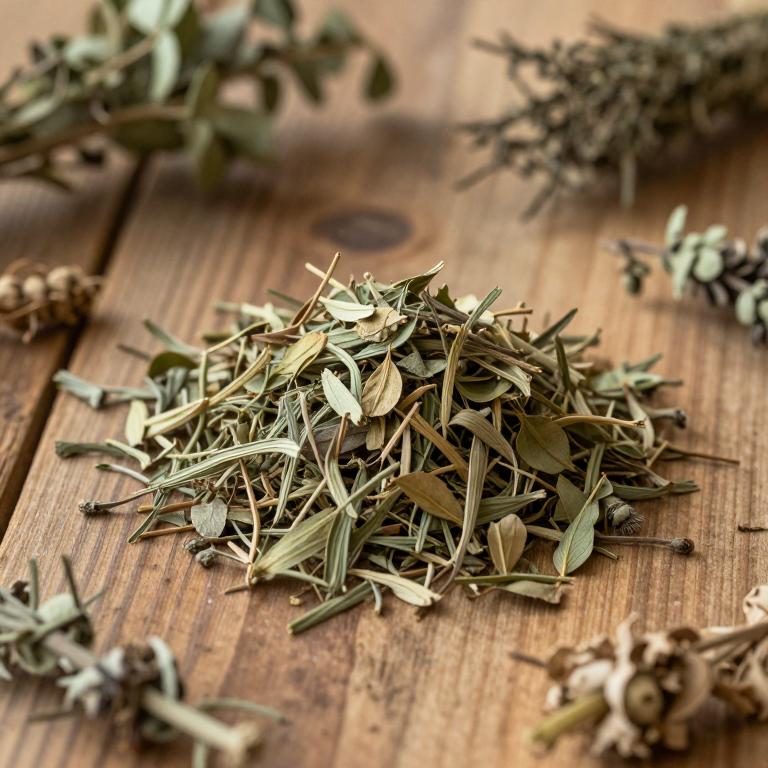
Names and Synonyms
Scientific Names
Accepted name
Galactia jussiaeanaDistribution
This plant exhibits a diverse geographical range extending from North America through the Caribbean. In Mexico, its presence is specifically noted within the southeastern regions of the country. Its distribution continues through Central America, where it can be found in Guatemala, Honduras, and Nicaragua. Furthermore, the species reaches the Caribbean islands, specifically inhabiting Cuba. Together, these locations highlight a significant tropical and subtropical footprint for Galactia jussiaeana.
| Region | Area |
|---|---|
| Mexico | Mexico Southeast |
| Central America | Guatemala |
| Central America | Honduras |
| Central America | Nicaragua |
| Caribbean | Cuba |
| Caribbean | Dominican Republic |
| Caribbean | Trinidad-Tobago |
| Northern South America | Guyana |
| Northern South America | Suriname |
| Northern South America | Venezuela |
Sources: The World Checklist of Vascular Plants (WCVP)
Botanical Identification
Ecology
The ecology of Galactia jussiaeanana is defined by its broad altitudinal distribution, spanning a vast vertical gradient that allows it to inhabit diverse environmental niches. The species exhibits remarkable adaptability, occupying habitats starting from low-lying coastal or lowland areas at a minimum elevation of 35 m AMSL. As the terrain ascends, the plant persists through various climatic zones, reaching a mean elevation of approximately 1800 m AMSL, where it likely interfaces with different moisture and temperature regimes. While its ecological footprint extends significantly into higher mountainous regions, its documented presence reaches an upper elevation limit of 450 m AMSL in specific localized contexts, though the wide gap between its minimum and mean elevation suggests a highly plastic ecological strategy capable of thriving across diverse topographic landscapes.
- Elevational range max:
- 450 m AMSL
- Elevational range mean:
- 1800 m AMSL
- Elevational range min:
- 35 m AMSL
Morphology
The morphology of Galactia jussiaeana is characterized by a woody growth form, specifically manifesting as a self-supporting herb. Although it possesses the structural integrity of a woody plant, it does not function as a climber, liana, or vine, nor does it exhibit obligatory or facultative climbing habits. The plant is strictly terrestrial in its ecological habit, lacking any aquatic, semiaquatic, or epiphytic characteristics; it is neither a holoepiphyte, hemiepiphyte, nor a facultative epiphyte. Furthermore, it is an independent organism that does not exhibit parasitic behavior, maintaining a self-sufficient life cycle without being an obligatory or facultative parasite.
- Aquatic :
- terrestrial
- Climber :
- self-supporting
- Epiphyte :
- terrestrial
- Growth form :
- herb
- Parasite :
- independent
- Woodiness :
- woody
Physiology
The physiology of Galaxia jussiaeanarum is characterized by a metabolic framework governed by a C3 photosynthetic pathway. In this process, the plant utilizes the enzyme Rubisco to fix atmospheric carbon dioxide directly into three-carbon compounds during the Calvin cycle. This metabolic strategy implies that the plant relies on the standard carbon fixation mechanism typical of most temperate and subtropical vegetation, where stomatal conductance plays a critical role in balancing gas exchange and transpiration. As a C3 plant, its physiological efficiency is highly dependent on environmental conditions such as light intensity, temperature, and water availability, as it lacks the specialized anatomical adaptations found in C4 or CAM species to minimize photorespiration under high-heat or arid stress.
- Photosynthetic pathway :
- C3
Reproduction
The reproduction of Galactia jussiaeana is characterized by the production of seeds that exhibit high levels of uniformity in their physical dimensions. Based on morphological data, the seeds produced by this species maintain a consistent mass with no observed variation between the minimum, maximum, and mean values. Specifically, the seed mass is recorded at a constant 0.01829 g, indicating a highly standardized reproductive output in terms of individual seed weight. This precise measurement of 0.01829 g for the mean, minimum, and maximum values suggests a stable development process during the seed maturation phase.
- Seed mass mean:
- 0.01829 g
Sources: Global Inventory of Floras and Traits (GIFT)
Chemicals
Galactia jussiaeana has 2 reported phytochemicals identified across 0 scientific publications and several other databases. The most consistently reported chemicals include genistein, hydroxygenistein.
| Chemical | Supporting sources | Consensus |
|---|---|---|
| genistein | 1 supporting sources | ★☆☆☆☆ |
| hydroxygenistein | 1 supporting sources | ★☆☆☆☆ |
genistein
- Dr. Duke
hydroxygenistein
- Dr. Duke
Activities
Galactia jussiaeana has 72 reported activities identified across 0 scientific publications and several other databases. The most consistently reported activities include Abortifacient, Aldose-Reductase-Inhibitor, Alpha-Reductase-Inhibitor, Antiaggregant, Antiangiogenic.
| Activity | Supporting sources | Consensus |
|---|---|---|
| Abortifacient | 1 supporting sources | ★☆☆☆☆ |
| Aldose-Reductase-Inhibitor | 1 supporting sources | ★☆☆☆☆ |
| Alpha-Reductase-Inhibitor | 1 supporting sources | ★☆☆☆☆ |
| Antiaggregant | 1 supporting sources | ★☆☆☆☆ |
| Antiangiogenic | 1 supporting sources | ★☆☆☆☆ |
| Antiatherosclerotic | 1 supporting sources | ★☆☆☆☆ |
| Anticancer (Breast) | 1 supporting sources | ★☆☆☆☆ |
| Anticarcinomic (Breast) | 1 supporting sources | ★☆☆☆☆ |
| Anticlimacteric | 1 supporting sources | ★☆☆☆☆ |
| Antiendoccytotic | 1 supporting sources | ★☆☆☆☆ |
Abortifacient
- Dr. Duke
Aldose-Reductase-Inhibitor
- Dr. Duke
Alpha-Reductase-Inhibitor
- Dr. Duke
Antiaggregant
- Dr. Duke
Antiangiogenic
- Dr. Duke
Antiatherosclerotic
- Dr. Duke
Anticancer (Breast)
- Dr. Duke
Anticarcinomic (Breast)
- Dr. Duke
Anticlimacteric
- Dr. Duke
Antiendoccytotic
- Dr. Duke