Few-flower fumitory, Earthsmoke
Fumaria vaillantii · Accepted scientific name
Scientific literature: Very Sparse (2 studies) · ★☆☆☆☆
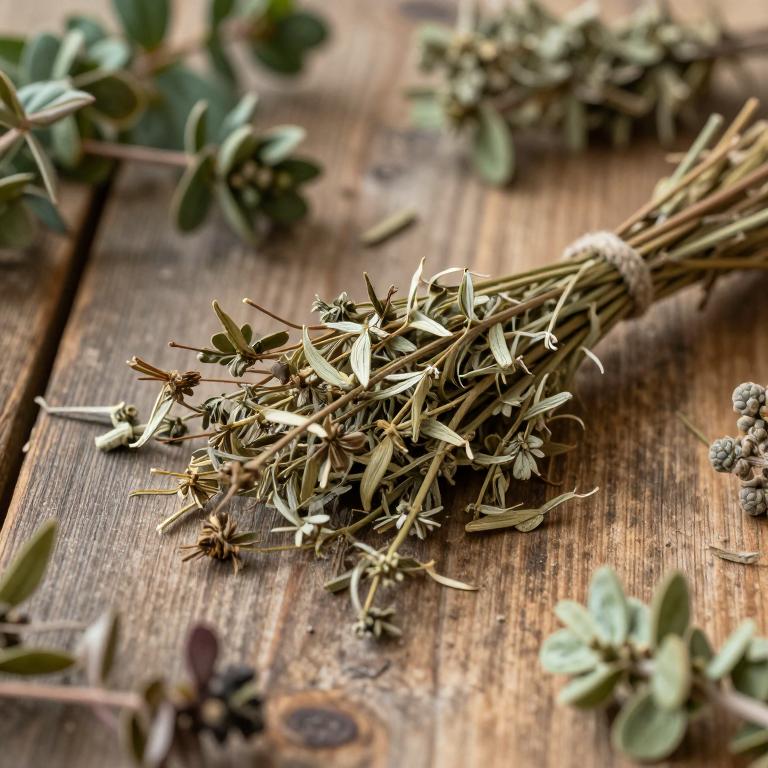
Few-flower fumitory, Earthsmoke, scientifically known as Fumaria vaillantii, is a delicate, annual herb belonging to the Papaveraceae family. Typically found in rocky or disturbed habitats, this subtle plant is characterized by its small, pale flowers and fine foliage, playing a unique role within its specific ecological niche.
- Family
- Papaveraceae
- Native range
- Europe
- Parts used
- Not available
- Common names
- Few-Flowered Fumitory · Few-Flower Fumitory · 1 more
- Scientific synonyms
- Fumaria Parviflora Subsp. Vaillantii
Names and Synonyms
Common Names
- Few-Flowered Fumitory
- few-flower fumitory
- earthsmoke
Scientific Names
Accepted name
Fumaria vaillantiiSynonyms
- Fumaria parviflora subsp. vaillantii
Regional and Traditional Names
Spanish:
- palomilla de hoja fina
- Palomilla
German:
- Blasser Erdrauch
- Vaillant-Erdrauch
- Blasser Erdrauch
- Vaillants Erdrauch
French:
- Fumeterre de Vaillant
- Fumeterre de Vaillant
Sources: Wikidata, Catalogue of Life
Taxonomical Classification
This plant belongs to the kingdom Plantae and is classified under the phylum Streptophyta within the class Equisetopsida. Following the subclass Magnoliidae, it is organized under the order Ranunculales and the family Papaveraceae. Ultimately, its specific taxonomic placement is defined by the genus Fumaria.
| Rank | Classification |
|---|---|
| Kingdom | Plantae |
| Phylum | Streptophyta |
| Class | Equisetopsida |
| Subclass | Magnoliidae |
| Order | Ranunculales |
| Family | Papaveraceae |
| Genus | Fumaria |
Sources: The World Checklist of Vascular Plants (WCVP)
Distribution
This plant exhibits a wide distribution across several regions of the European continent. In Northern Europe, its presence is documented in Finland, Sweden, and Great Britain. Moving toward Middle Europe, the species can also be found within the borders of Belgium. Additionally, the plant has been identified growing in the nation of Austria. This range demonstrates that the species inhabits various ecological zones across both northern and central territories.
| Region | Area |
|---|---|
| Northern Europe | Finland |
| Northern Europe | Great Britain |
| Northern Europe | Sweden |
| Middle Europe | Austria |
| Middle Europe | Belgium |
| Middle Europe | Czechia-Slovakia |
| Middle Europe | Germany |
| Middle Europe | Hungary |
| Middle Europe | Netherlands |
| Middle Europe | Poland |
Sources: The World Checklist of Vascular Plants (WCVP)
Botanical Identification
Ecology
The ecology of Fumaria vaillanitii is characterized by its adaptability to diverse environments and a specific altitudinal distribution. This species thrives across a wide elevational range, occurring from a minimum altitude of 900 m AMSL up to a maximum of 3000 m AMSL. Regarding its preferred habitats, the plant is frequently found in anthropogenically influenced areas, colonizing cropfields, oldfields, parks, and various inhabited places, where it can take advantage of disturbed soils and open landscapes.
- Elevational range max:
- 3000 m AMSL
- Elevational range min:
- 900 m AMSL
- Habitat :
- cropfields,inhabitedplaces,oldfields,parks
Life history
The life history of Fumaria vaillantii is characterized by an annual lifecycle, meaning it completes its entire biological process of germination, growth, flowering, and seed production within a single growing season. As a therophyte, its life form is defined by the ability to survive unfavorable environmental conditions through the production of seeds, which remain dormant until the onset of favorable conditions. This strategy allows the plant to avoid the stresses of seasonal changes by existing primarily in a seed state during periods of dormancy, ensuring rapid development and reproduction during its brief active period.
- Life form :
- therophyte
- Lifecycle :
- annual
Morphology
The morphology of Fumaria vaillantii is characterized by its growth form as a non-woody herb and forb. It functions as a self-supporting plant, neither acting as a climber nor as a parasite, maintaining an independent lifestyle. The species is terrestrial in nature, rather than aquatic or epiphytic. In terms of stature, the plant exhibits a relatively low profile, with a minimum height of 0.05 m, a maximum height of 0.25 m, and a mean plant height of approximately 0.575 m.
- Aquatic :
- terrestrial
- Climber :
- self-supporting
- Epiphyte :
- terrestrial
- Growth form :
- herb
- Growth form :
- forb
- Parasite :
- independent
- Plant height max:
- 0.25 m
- Plant height mean:
- 0.575 m
- Plant height min:
- 0.05 m
- Woodiness :
- non-woody
Physiology
The physiology of Fumaria vaillanitii is characterized by a C3 photosynthetic pathway, a common mechanism for carbon fixation in many herbaceous species. The plant's foliar morphology features an average leaf size of approximately 1.5087 cm², with a distinct elliptic leaf form. Furthermore, its Specific Leaf Area (SLA) maintains a mean value of 409.4 cm²/g, reflecting the physiological relationship between its leaf surface area and its dry mass.
- Leaf form :
- elliptic
- Leaf size mean:
- 1.5087 cm²
- Photosynthetic pathway :
- C3
- Specific Leaf Area (SLA) mean:
- 409.4 cm²/g
Reproduction
The reproduction of Fumaria vaillanitii is characterized by a specialized flowering cycle and complex biological interactions. The plant produces pink flowers arranged in a raceme inflorescence, with the flowering period typically beginning in April and concluding in August. These flowers rely on biotic pollination syndromes, specifically utilizing insects to facilitate fertilization, as self-fertilization is notably absent in this species. Following successful pollination, the plant develops fruits with a width ranging from a minimum of 0.17 cm to a maximum of 0.2 cm. The resulting seeds are quite small, possessing a mean mass of 0.00249 g. Seed dispersal follows a zoochorous pattern, specifically exhibiting myrmecocory (myrmecochorous dispersal), where ants play a crucial role in transporting the seeds to new locations.
- Dispersal syndrome :
- zoochorous
- Dispersal syndrome :
- myrmecochorous
- Flower colour :
- pink
- Flowering time :
- Apr
- Flowering time :
- Aug
- Fruit width max:
- 0.2 cm
- Fruit width min:
- 0.17 cm
- Inflorescence :
- raceme
- Pollination syndrome :
- insect
- Pollination syndrome :
- biotic
- Seed mass mean:
- 0.00249 g
- Self fertilization :
- absent
Sources: Global Inventory of Floras and Traits (GIFT)
Chemicals
Fumaria vaillantii has 1 reported phytochemicals identified across 0 scientific publications and several other databases. The most consistently reported chemicals include fumaric acid.
| Chemical | Supporting sources | Consensus |
|---|---|---|
| fumaric acid | 1 supporting sources | ★☆☆☆☆ |
fumaric acid
- Food chemistry
Conditions
Fumaria vaillantii has 1 reported investigations on conditions identified across 0 scientific publications and several other databases. The most consistently reported conditions include antioxidant activity.
| Condition | Supporting sources | Consensus |
|---|---|---|
| Antioxidant activity | 1 supporting sources | ★☆☆☆☆ |
Antioxidant activity
- Food chemistry