Fuerstia africana
Fuerstia africana · Accepted scientific name
Scientific literature: Very Sparse (7 studies) · ★☆☆☆☆
Fuerstiia africana, scientifically known as Fuerstiia africana, is a significant medicinal plant native to tropical African regions. Renowned for its diverse pharmacological properties, it is traditionally utilized in various ethnobotanical practices to treat ailments ranging from inflammation to infections, offering promising potential for modern drug development and therapeutic research.
- Family
- Lamiaceae
- Native range
- Africa
- Parts used
- Leaf
- Common names
- Not available
- Scientific synonyms
- Not available
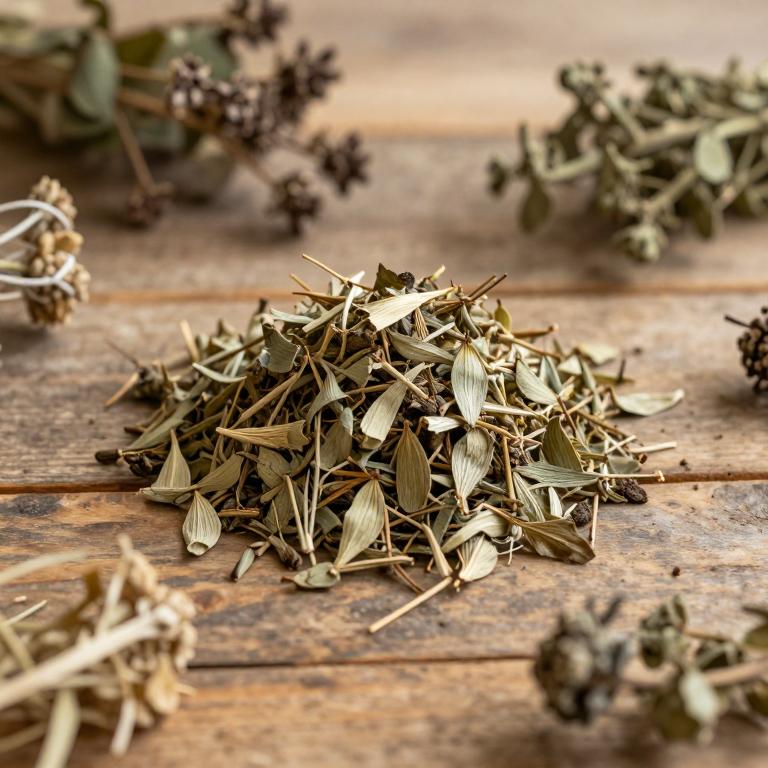
Names and Synonyms
Scientific Names
Accepted name
Fuerstia africanaSources: Wikidata
Taxonomical Classification
This plant, Fuerstia africana, belongs to the kingdom Plantae and the phylum Streptophyta. It is further classified within the class Equisetopsida and the subclass Magnoliidae, falling under the order Lamiales and the family Lamiaceae. Ultimately, its taxonomic identity is defined by its placement in the genus Fuerstia.
| Rank | Classification |
|---|---|
| Kingdom | Plantae |
| Phylum | Streptophyta |
| Class | Equisetopsida |
| Subclass | Magnoliidae |
| Order | Lamiales |
| Family | Lamiaceae |
| Genus | Fuerstia |
Sources: The World Checklist of Vascular Plants (WCVP)
Distribution
This plant exhibits a diverse distribution pattern across several key regions of the African continent. In West-Central Tropical Africa, it can be specifically located within Rwanda. Its range extends into Northeast Tropical Africa, where it is found in both Ethiopia and Somalia. Furthermore, the species is widely distributed throughout East Tropical Africa. Within this eastern region, the plant is documented to grow in both Kenya and Tanzania.
| Region | Area |
|---|---|
| West-Central Tropical Africa | Rwanda |
| Northeast Tropical Africa | Ethiopia |
| Northeast Tropical Africa | Somalia |
| East Tropical Africa | Kenya |
| East Tropical Africa | Tanzania |
| East Tropical Africa | Uganda |
Sources: The World Checklist of Vascular Plants (WCVP)
Botanical Identification
Life history
The life history of Fuerstiia africanana is characterized by its specific growth habit and survival strategy, categorized primarily as a chamaephyte. This life form indicates that the plant's permanent buds are located close to the soil surface, often slightly above it, allowing it to withstand environmental stressors by keeping its regenerative tissues protected near the ground. Within the broader spectrum of plant life histories, it functions through a strategy that avoids the extreme vulnerability of being a therophyte or the high structural investment of a large phanerophyte, instead maintaining a compact stature that balances resource acquisition with resilience. This positioning within the nanophanerophyte to chamaephyte continuum suggests a lifecycle adapted to specific microclimates where low-growing structures provide a competitive advantage in managing moisture retention and protection from herbivory or climatic fluctuations.
- Life form :
- chamaephyte
Morphology
The morphology of Fuerstia africana is characterized by its growth form as a herb, exhibiting a non-woody structure throughout its vegetative parts. This plant functions as a self-supporting climber, utilizing its physical structure to ascend without the need for external hosts. It is an independent organism that does not exhibit parasitic behavior, and it maintains a terrestrial lifestyle rather than growing as an epiphyte.
- Climber :
- self-supporting
- Epiphyte :
- terrestrial
- Growth form :
- herb
- Parasite :
- independent
- Woodiness :
- non-woody
Sources: Global Inventory of Floras and Traits (GIFT)
Plant Parts
Fuerstia africana has 1 reported plant parts identified across 1 scientific publications and several other databases that are studied for medicinal purposes. The most consistently reported plant part include leaf.
| Plant part | Supporting sources | Consensus |
|---|---|---|
| Leaf | 1 supporting sources | ★☆☆☆☆ |
Leaf
- Journal of ethnopharmacology
Chemicals
Fuerstia africana has 1 reported phytochemicals identified across 1 scientific publications and several other databases. The most consistently reported chemicals include Ferruginol.
| Chemical | Supporting sources | Consensus |
|---|---|---|
| Ferruginol | 1 supporting sources | ★☆☆☆☆ |
Ferruginol
- Planta medica
Activities
Fuerstia africana has 1 reported activities identified across 1 scientific publications and several other databases. The most consistently reported activities include Antimalarial.
| Activity | Supporting sources | Consensus |
|---|---|---|
| Antimalarial | 1 supporting sources | ★☆☆☆☆ |
Antimalarial
- Frontiers in pharmacology
Conditions
Fuerstia africana has 3 reported investigations on conditions identified across 1 scientific publications and several other databases. The most consistently reported conditions include Plasmodium falciparum, malaria, snakebites.
| Condition | Supporting sources | Consensus |
|---|---|---|
| Plasmodium falciparum | 2 supporting sources | ★☆☆☆☆ |
| Malaria | 1 supporting sources | ★☆☆☆☆ |
| Snakebites | 1 supporting sources | ★☆☆☆☆ |
Plasmodium falciparum
- Phytotherapy research : PTR
- Frontiers in pharmacology
Malaria
- Planta medica
Snakebites
- Journal of toxicology
Preparations
Fuerstia africana has 3 reported preparations identified across 1 scientific publications and several other databases. The most consistently reported preparations include methanol extract, methanol leaf extract, methanolic extract.
| Preparation | Supporting sources | Consensus |
|---|---|---|
| Methanol extract | 1 supporting sources | ★☆☆☆☆ |
| Methanol leaf extract | 1 supporting sources | ★☆☆☆☆ |
| Methanolic extract | 1 supporting sources | ★☆☆☆☆ |
Methanol extract
- Phytotherapy research : PTR
Methanol leaf extract
- Journal of ethnopharmacology
Methanolic extract
- Planta medica