fritillary
Fritillaria · Accepted scientific name
Scientific literature: Sparse (68 studies) · ★★☆☆☆
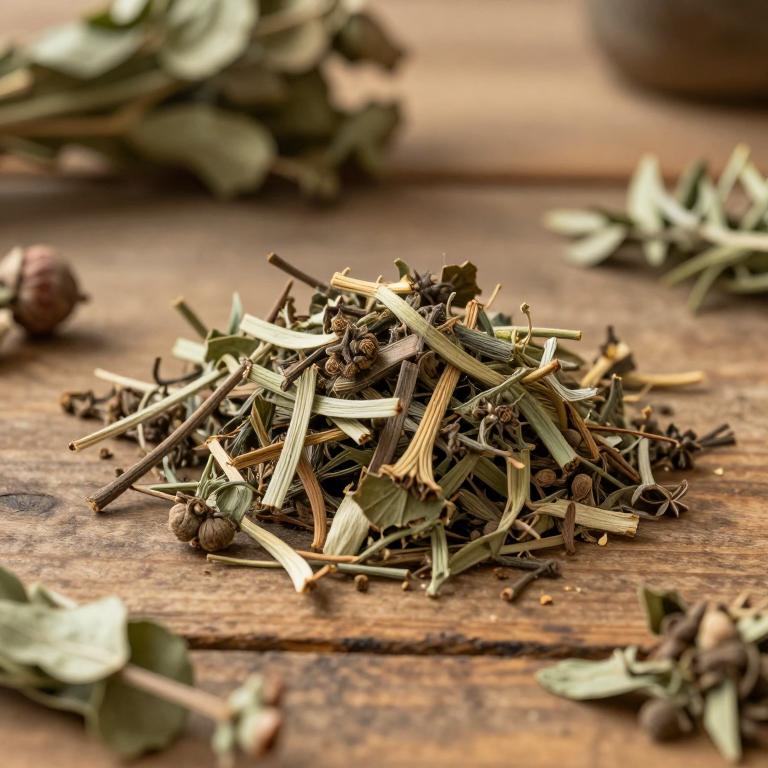
Fritillary, scientifically known as Fritillaria, is a diverse genus of bulbous perennials admired for their striking, bell-shaped flowers. Beyond their ornamental beauty, various species hold significant roles in traditional medicine, particularly in East Asian practices, where they are utilized to treat respiratory ailments and soothe persistent, dry coughs.
Names and Synonyms
Common Names
- fritillary
- missionbells
- Checkered Lilies
- Fritillaries
- Snake's-head Lilies
- Snakeshead Lilies
- Snakesheads
Scientific Names
Accepted name
FritillariaSynonyms
- Eucrinum
- Petilium
- Sarana
- Ochrocodon
- Melorima
- Liliorhiza
- Korolkowia
- Monocodon
- Rhinopetalum
- Amblirion
- Tozzettia
- Theresia
- Baimo
- Corona
- Imperialis
Regional and Traditional Names
Spanish:
- Fritillaria (Fritillariidae)
- Melorima
- Korolkowia
- Sarana
- Monocodon
- Lyperia
- Baimo
- Ochrocodon
- Theresia
- Imperialis
- Liliorhiza
- Rhinopetalum
- Eucrinum
- Amblirion
- Petilium
- Ajedrezadas
- Ajedrezadas
German:
- Fritillaria (Fritillariidae)
- Schachblume
- Fritillarien
- Schachblumen
French:
- Fritillaria (Fritillariidae)
- fritillaire
- Fritillaire
- Fritillaires
- Fritillaire
Sources: Wikidata, Catalogue of Life
Taxonomical Classification
This plant belongs to the kingdom Plantae and the phylum Streptophyta, falling under the class Equisetopsida and subclass Magnoliidae. Within the order Liliales, it is classified under the family Liliaceae. Its specific taxonomic designation is found within the genus Fritillaria.
| Rank | Classification |
|---|---|
| Kingdom | Plantae |
| Phylum | Streptophyta |
| Class | Equisetopsida |
| Subclass | Magnoliidae |
| Order | Liliales |
| Family | Liliaceae |
| Genus | Fritillaria |
Sources: The World Checklist of Vascular Plants (WCVP)
Distribution
This plant exhibits a distinct distribution pattern across the northern regions of Europe. Within Northern Europe, it can be found growing in the landscapes of Denmark. Its presence also extends to the territories of Finland and Norway. Furthermore, the species is documented throughout the country of Sweden. Finally, its geographical range reaches as far as Great Britain.
| Region | Area |
|---|---|
| Northern Europe | Denmark |
| Northern Europe | Finland |
| Northern Europe | Great Britain |
| Northern Europe | Norway |
| Northern Europe | Sweden |
| Middle Europe | Austria |
| Middle Europe | Belgium |
| Middle Europe | Czechia-Slovakia |
| Middle Europe | Germany |
| Middle Europe | Hungary |
Sources: The World Checklist of Vascular Plants (WCVP)
Chemicals
Fritillaria has 17 reported phytochemicals identified across 0 scientific publications and several other databases. The most consistently reported chemicals include verticinone, Imperialine, Peimisine, Yibeinoside A, adenosine.
| Chemical | Supporting sources | Consensus |
|---|---|---|
| verticinone | 4 supporting sources | ★★☆☆☆ |
| Imperialine | 2 supporting sources | ★☆☆☆☆ |
| Peimisine | 2 supporting sources | ★☆☆☆☆ |
| Yibeinoside A | 2 supporting sources | ★☆☆☆☆ |
| adenosine | 2 supporting sources | ★☆☆☆☆ |
| thymidine | 2 supporting sources | ★☆☆☆☆ |
| Azoxystrobin | 1 supporting sources | ★☆☆☆☆ |
| Difenoconazole | 1 supporting sources | ★☆☆☆☆ |
| Ebeiedinone | 1 supporting sources | ★☆☆☆☆ |
| Fluxapyroxad | 1 supporting sources | ★☆☆☆☆ |
verticinone
- Journal of chromatography. A
- Oncology letters
- Zhongguo Zhong yao za zhi = Zhongguo zhongyao zazhi = China journal of Chinese materia medica
- Yao xue xue bao = Acta pharmaceutica Sinica
Imperialine
- Yao xue xue bao = Acta pharmaceutica Sinica
- Zhongguo Zhong yao za zhi = Zhongguo zhongyao zazhi = China journal of Chinese materia medica
Peimisine
- Zhongguo Zhong yao za zhi = Zhongguo zhongyao zazhi = China journal of Chinese materia medica
- Molecules (Basel, Switzerland)
Yibeinoside A
- Yao xue xue bao = Acta pharmaceutica Sinica
- Molecules (Basel, Switzerland)
adenosine
- Yao xue xue bao = Acta pharmaceutica Sinica
- Zhongguo Zhong yao za zhi = Zhongguo zhongyao zazhi = China journal of Chinese materia medica
thymidine
- Yao xue xue bao = Acta pharmaceutica Sinica
- Zhongguo Zhong yao za zhi = Zhongguo zhongyao zazhi = China journal of Chinese materia medica
Azoxystrobin
- Environmental science and pollution research international
Difenoconazole
- Environmental science and pollution research international
Ebeiedinone
- Oncology letters
Fluxapyroxad
- Environmental science and pollution research international
Activities
Fritillaria has 4 reported activities identified across 0 scientific publications and several other databases. The most consistently reported activities include Antitussive, Expectorant, Antiasthmatic, Neuroprotective.
| Activity | Supporting sources | Consensus |
|---|---|---|
| Antitussive | 5 supporting sources | ★★★☆☆ |
| Expectorant | 3 supporting sources | ★★☆☆☆ |
| Antiasthmatic | 1 supporting sources | ★☆☆☆☆ |
| Neuroprotective | 1 supporting sources | ★☆☆☆☆ |
Antitussive
- Zhongguo Zhong yao za zhi = Zhongguo zhongyao zazhi = China journal of Chinese materia medica
- Fitoterapia
- Critical reviews in analytical chemistry
- Yao xue xue bao = Acta pharmaceutica Sinica
- Planta medica
Expectorant
- Critical reviews in analytical chemistry
- Yao xue xue bao = Acta pharmaceutica Sinica
- Planta medica
Antiasthmatic
- Yao xue xue bao = Acta pharmaceutica Sinica
Neuroprotective
- Scientific reports
Conditions
Fritillaria has 7 reported investigations on conditions identified across 0 scientific publications and several other databases. The most consistently reported conditions include antitussive, Parkinson's disease, antiasthmatic, cough, expectorant.
| Condition | Supporting sources | Consensus |
|---|---|---|
| Antitussive | 3 supporting sources | ★★☆☆☆ |
| Parkinson's disease | 1 supporting sources | ★☆☆☆☆ |
| Antiasthmatic | 1 supporting sources | ★☆☆☆☆ |
| Cough | 1 supporting sources | ★☆☆☆☆ |
| Expectorant | 1 supporting sources | ★☆☆☆☆ |
| Non-small cell lung cancer | 1 supporting sources | ★☆☆☆☆ |
| Pain | 1 supporting sources | ★☆☆☆☆ |
Antitussive
- Zhongguo Zhong yao za zhi = Zhongguo zhongyao zazhi = China journal of Chinese materia medica
- Fitoterapia
- Yao xue xue bao = Acta pharmaceutica Sinica
Parkinson's disease
- Scientific reports
Antiasthmatic
- Yao xue xue bao = Acta pharmaceutica Sinica
Cough
- Molecules (Basel, Switzerland)
Expectorant
- Yao xue xue bao = Acta pharmaceutica Sinica
Non-small cell lung cancer
- Oncology letters
Pain
- Fitoterapia
Preparations
Fritillaria has 7 reported preparations identified across 0 scientific publications and several other databases. The most consistently reported preparations include bulbs, Beimu (bulbs of Friillaria), dry Fritillaria, fresh Fritillaria, methanol extracts.
| Preparation | Supporting sources | Consensus |
|---|---|---|
| Bulbs | 2 supporting sources | ★☆☆☆☆ |
| Beimu (bulbs of friillaria) | 1 supporting sources | ★☆☆☆☆ |
| Dry fritillaria | 1 supporting sources | ★☆☆☆☆ |
| Fresh fritillaria | 1 supporting sources | ★☆☆☆☆ |
| Methanol extracts | 1 supporting sources | ★☆☆☆☆ |
| Powdered drug | 1 supporting sources | ★☆☆☆☆ |
| Powders | 1 supporting sources | ★☆☆☆☆ |
Bulbs
- Yao xue xue bao = Acta pharmaceutica Sinica
- Molecules (Basel, Switzerland)
Beimu (bulbs of friillaria)
- Planta medica
Dry fritillaria
- Environmental science and pollution research international
Fresh fritillaria
- Environmental science and pollution research international
Methanol extracts
- Yao xue xue bao = Acta pharmaceutica Sinica
Powdered drug
- Zhongguo Zhong yao za zhi = Zhongguo zhongyao zazhi = China journal of Chinese materia medica
Powders
- Zhongguo Zhong yao za zhi = Zhongguo zhongyao zazhi = China journal of Chinese materia medica