ashes
Fraxinus · Accepted scientific name
Scientific literature: Very Sparse (25 studies) · ★☆☆☆☆
Ashes, scientifically known as Fraxinus, is a genus of deciduous trees valued for both its timber and traditional medicinal properties. Often utilized in herbal remedies to address inflammation and support kidney health, this resilient plant offers a rich history of holistic healing through its bark, leaves, and various extracts.
- Family
- Oleaceae
- Native range
- Europe
- Parts used
- Leaf · Stem
- Common names
- Ash · Ashes
- Scientific synonyms
- Leptalix · Ornus · 8 more
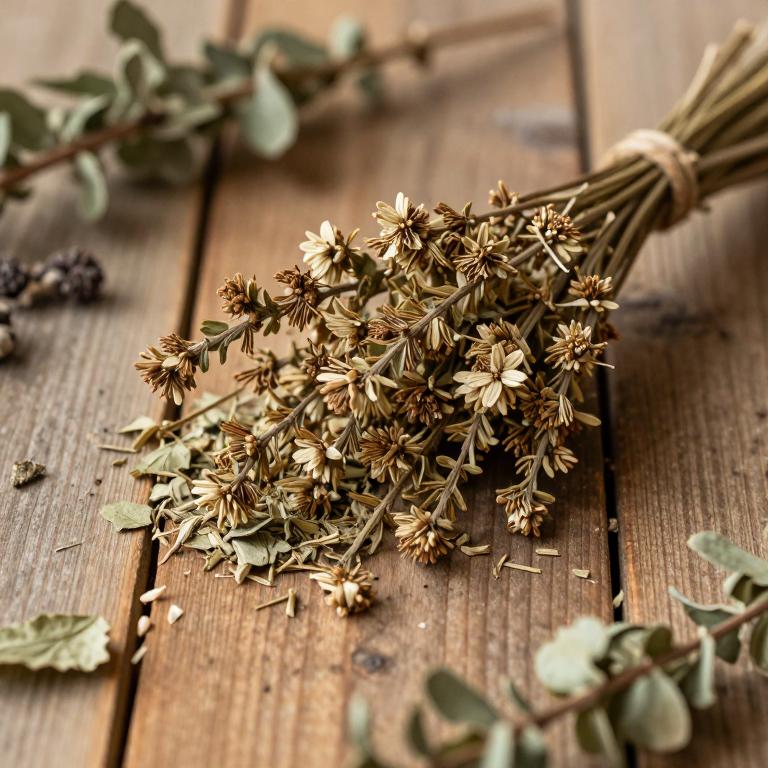
Names and Synonyms
Common Names
- ash
- ashes
Scientific Names
Accepted name
FraxinusSynonyms
- Leptalix
- Ornus
- Samarpses
- Petlomelia
- Mannaphorus
- Fraxinoides
- Calycomelia
- Aplilia
- Ornanthes
- Meliopsis
Regional and Traditional Names
Spanish:
- Fraxinoides
- Ornus
- Meliopsis
- Apilia
- Fresno
- Petlomelia
- Calycomelia
- Mannaphorus
- Samarpses
- Leptalix
- Ornanthes
- Aplilia
- Samarpsea
- Fresnos
- Fresnos
- Fresno
German:
- Eschen
- Esche
- Eschen
French:
- frêne
- Frene
- Frêne
- frênes
- frênes
- Frêne
Sources: Wikidata, Catalogue of Life
Taxonomical Classification
This plant belongs to the kingdom Plantae within the phylum Streptophyta and the class Equisetopsida. It is further classified under the subclass Magnoliidae and the order Lamiales. Finally, it resides in the family Oleaceae under the genus Fraxinus.
| Rank | Classification |
|---|---|
| Kingdom | Plantae |
| Phylum | Streptophyta |
| Class | Equisetopsida |
| Subclass | Magnoliidae |
| Order | Lamiales |
| Family | Oleaceae |
| Genus | Fraxinus |
Sources: The World Checklist of Vascular Plants (WCVP)
Distribution
This plant exhibits a specific presence across several regions within Northern Europe. It can be found growing naturally in Denmark, spanning much of the Danish landscape. The species is also well-distributed throughout Great Britain and Ireland. Furthermore, its range extends into the northernmost territories of Norway. Finally, the plant is a documented part of the flora in Sweden.
| Region | Area |
|---|---|
| Northern Europe | Denmark |
| Northern Europe | Great Britain |
| Northern Europe | Ireland |
| Northern Europe | Norway |
| Northern Europe | Sweden |
| Middle Europe | Austria |
| Middle Europe | Belgium |
| Middle Europe | Czechia-Slovakia |
| Middle Europe | Germany |
| Middle Europe | Hungary |
Sources: The World Checklist of Vascular Plants (WCVP)
Plant Parts
Fraxinus has 2 reported plant parts identified across 2 scientific publications and several other databases that are studied for medicinal purposes. The most consistently reported plant part include leaf, stem.
| Plant part | Supporting sources | Consensus |
|---|---|---|
| Leaf | 1 supporting sources | ★☆☆☆☆ |
| Stem | 1 supporting sources | ★☆☆☆☆ |
Leaf
- Plants (Basel, Switzerland)
Stem
- Plants (Basel, Switzerland)
Chemicals
Fraxinus has 7 reported phytochemicals identified across 2 scientific publications and several other databases. The most consistently reported chemicals include Fraxin, Coumarins, Esculetin, Esculin, Flavonoids.
| Chemical | Supporting sources | Consensus |
|---|---|---|
| Fraxin | 2 supporting sources | ★☆☆☆☆ |
| Coumarins | 1 supporting sources | ★☆☆☆☆ |
| Esculetin | 1 supporting sources | ★☆☆☆☆ |
| Esculin | 1 supporting sources | ★☆☆☆☆ |
| Flavonoids | 1 supporting sources | ★☆☆☆☆ |
| Lignans | 1 supporting sources | ★☆☆☆☆ |
| Phytoestrogen | 1 supporting sources | ★☆☆☆☆ |
Fraxin
- Journal of chromatographic science
- Chemistry & biodiversity
Coumarins
- Evidence-based complementary and alternative medicine : eCAM
Esculetin
- Journal of chromatographic science
Esculin
- Journal of chromatographic science
Flavonoids
- Evidence-based complementary and alternative medicine : eCAM
Lignans
- Evidence-based complementary and alternative medicine : eCAM
Phytoestrogen
- Zhongguo Zhong yao za zhi = Zhongguo zhongyao zazhi = China journal of Chinese materia medica
Activities
Fraxinus has 6 reported activities identified across 2 scientific publications and several other databases. The most consistently reported activities include Anticancer, Antimicrobial, Antioxidant, Gastroprotective, Hepatoprotective.
| Activity | Supporting sources | Consensus |
|---|---|---|
| Anticancer | 1 supporting sources | ★☆☆☆☆ |
| Antimicrobial | 1 supporting sources | ★☆☆☆☆ |
| Antioxidant | 1 supporting sources | ★☆☆☆☆ |
| Gastroprotective | 1 supporting sources | ★☆☆☆☆ |
| Hepatoprotective | 1 supporting sources | ★☆☆☆☆ |
| Neuroprotective | 1 supporting sources | ★☆☆☆☆ |
Anticancer
- Evidence-based complementary and alternative medicine : eCAM
Antimicrobial
- Evidence-based complementary and alternative medicine : eCAM
Antioxidant
- Evidence-based complementary and alternative medicine : eCAM
Gastroprotective
- Chemistry & biodiversity
Hepatoprotective
- Chemistry & biodiversity
Neuroprotective
- Evidence-based complementary and alternative medicine : eCAM
Conditions
Fraxinus has 6 reported investigations on conditions identified across 2 scientific publications and several other databases. The most consistently reported conditions include antioxidant, depression, diabetic nephropathy, inflammation, neurodegenerative disorders.
| Condition | Supporting sources | Consensus |
|---|---|---|
| Antioxidant | 1 supporting sources | ★☆☆☆☆ |
| Depression | 1 supporting sources | ★☆☆☆☆ |
| Diabetic nephropathy | 1 supporting sources | ★☆☆☆☆ |
| Inflammation | 1 supporting sources | ★☆☆☆☆ |
| Neurodegenerative disorders | 1 supporting sources | ★☆☆☆☆ |
| Viral infection | 1 supporting sources | ★☆☆☆☆ |
Antioxidant
- Evidence-based complementary and alternative medicine : eCAM
Depression
- Chemistry & biodiversity
Diabetic nephropathy
- Chemistry & biodiversity
Inflammation
- Chemistry & biodiversity
Neurodegenerative disorders
- Chemistry & biodiversity
Viral infection
- Chemistry & biodiversity
Preparations
Fraxinus has 1 reported preparations identified across 2 scientific publications and several other databases. The most consistently reported preparations include secoiridoid and iridoid glucosides.
| Preparation | Supporting sources | Consensus |
|---|---|---|
| Secoiridoid and iridoid glucosides | 1 supporting sources | ★☆☆☆☆ |
Secoiridoid and iridoid glucosides
- Yakugaku zasshi : Journal of the Pharmaceutical Society of Japan