European sea-heath
Frankenia pulverulenta · Accepted scientific name
Scientific literature: Very Sparse (11 studies) · ★☆☆☆☆
European sea-heath, scientifically known as Frankenia pulverulenta, is a resilient, salt-tolerant shrub native to coastal ecosystems. Renowned for its ability to thrive in saline environments, this medicinal plant offers significant pharmacological potential. Research highlights its diverse bioactive compounds, which may provide therapeutic benefits in treating various inflammatory conditions.
- Family
- Frankeniaceae
- Native range
- Europe
- Parts used
- Not available
- Common names
- European Sea-Heath · Wisp Weed · 3 more
- Scientific synonyms
- Franca Pulverulenta
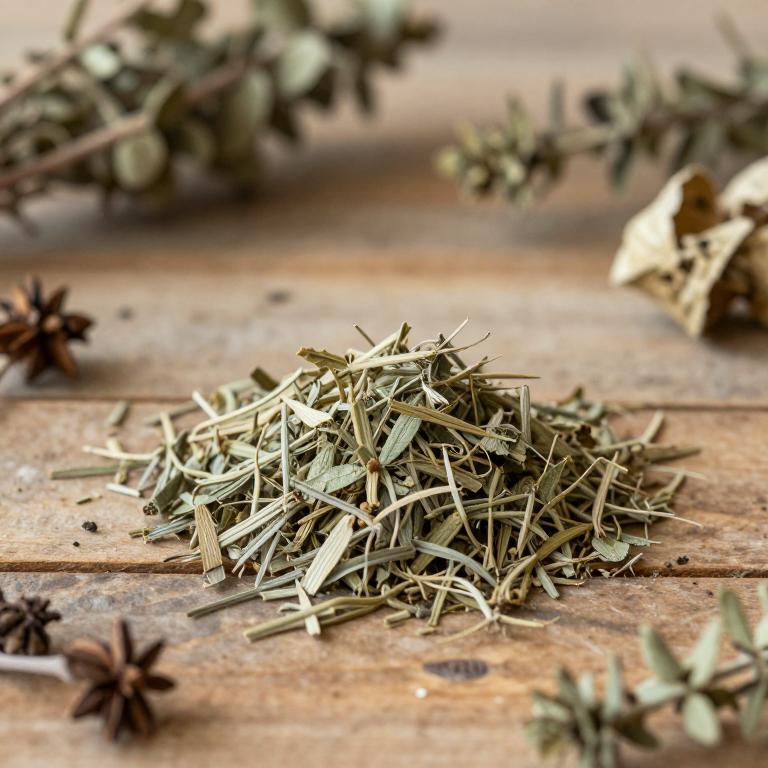
Names and Synonyms
Common Names
- European sea-heath
- wisp weed
- Annual Sea Heath
- Annual Sea-heath
- European Seaheath
Scientific Names
Accepted name
Frankenia pulverulentaSynonyms
- Franca pulverulenta
Regional and Traditional Names
German:
- Einjährige Seeheide
- Staubige Frankenie
- Staubige Frankenie
- Einjährige Seeheide
French:
- frankénie annuelle
Sources: Wikidata, Catalogue of Life
Taxonomical Classification
This plant belongs to the kingdom Plantae and is classified under the phylum Streptophyta within the class Equisetopsida. As a member of the subclass Magnoliidae and the order Caryophyllales, it is positioned in the family Frankeniaceae. Finally, its specific taxonomic identification is placed within the genus Frankenia.
| Rank | Classification |
|---|---|
| Kingdom | Plantae |
| Phylum | Streptophyta |
| Class | Equisetopsida |
| Subclass | Magnoliidae |
| Order | Caryophyllales |
| Family | Frankeniaceae |
| Genus | Frankenia |
Sources: The World Checklist of Vascular Plants (WCVP)
Distribution
This plant exhibits a diverse geographical distribution across several European regions. In Middle Europe, it can be found within the borders of Germany. Its presence extends into Southwestern Europe, where it inhabits the islands of the Baleares and Corse. Furthermore, the species is established in the mainland territories of France. Finally, its range reaches the western coastline of the continent in Portugal.
| Region | Area |
|---|---|
| Middle Europe | Germany |
| Southwestern Europe | Baleares |
| Southwestern Europe | Corse |
| Southwestern Europe | France |
| Southwestern Europe | Portugal |
| Southwestern Europe | Sardegna |
| Southwestern Europe | Spain |
| Southeastern Europe | Albania |
| Southeastern Europe | Bulgaria |
| Southeastern Europe | Greece |
Sources: The World Checklist of Vascular Plants (WCVP)
Botanical Identification
Ecology
The ecology of Frankenia pulverulentosa is characterized by its ability to thrive in specialized environments, specifically occupying saline places and steppe landscapes. This species demonstrates a broad altitudinal distribution, ranging from sea level at 0 m AMSL up to a maximum elevation of 1370 m AMSL. Its presence in saline and steppe habitats suggests an adaptation to high-salinity soils and semi-arid conditions, allowing it to persist in ecological niches where many other plant species might struggle due to osmotic stress or limited moisture availability.
- Elevational range max:
- 1370 m AMSL
- Elevational range min:
- 0 m AMSL
- Habitat :
- saline places, steppe
Life history
The life history of Frankenia pulverulenta is characterized by its classification as an annual plant, completing its entire developmental cycle from germination to seed production within a single growing season. In terms of its structural growth habit and ecological positioning, the species functions as a therophyte, meaning it survives the unfavorable season as a seed, with the vegetative body dying off once the reproductive phase is concluded. This life form is consistent across its developmental stages, as it lacks permanent woody structures or perennial underground organs, instead relying on its rapid annual lifecycle to persist within its habitat.
- Life form :
- therophyte
- Lifecycle :
- annual
Morphology
The morphology of Frankenia pulverulenta is characterized by a growth form identified as a non-woody herb and forb. This terrestrial plant, which operates as an independent organism rather than a parasite or epiphyte, exhibits a relatively small stature with a plant height ranging from a minimum of 0.01 m to a maximum of 0.35 m, maintaining a mean height of approximately 0.11 m. Its shoots, which vary in length from 5 cm to 17 cm, display an ascending shoot orientation. Furthermore, the plant functions as a self-supporting climber, possessing the structural capacity to maintain its position without the need for external hosts.
- Aquatic :
- terrestrial
- Climber :
- self-supporting
- Epiphyte :
- terrestrial
- Growth form :
- herb
- Growth form :
- forb
- Parasite :
- independent
- Plant height max:
- 0.35 m
- Plant height mean:
- 0.11 m
- Plant height min:
- 0.01 m
- Shoot length max:
- 17 cm
- Shoot length min:
- 5 cm
- Shoot orientation :
- ascending
- Woodiness :
- non-woody
Physiology
The physiological characteristics of the foliage in Frankenia pulverulenta are defined by a specific morphological structure and size distribution. The leaves exhibit an oblong form and are organized in an opposite arrangement along the stem. In terms of dimensions, the leaf length varies significantly, with a minimum measurement of 0.2 cm, a mean length of 0.45 cm, and reaching a maximum of 0.7 cm. The width of the leaves also shows distinct variability, ranging from a minimum of 0.05 cm to a maximum of 0.35 cm.
- Leaf arrangement :
- opposite
- Leaf form :
- oblong
- Leaf length max:
- 0.7 cm
- Leaf length mean:
- 0.45 cm
- Leaf length min:
- 0.2 cm
- Leaf width max:
- 0.35 cm
- Leaf width min:
- 0.05 cm
Reproduction
The reproduction of Frankenia pulverulenta is characterized by a sexual process utilizing bisexual flowers that exhibit a pink coloration. The flowering period is seasonal, typically beginning in February and concluding in August. These flowers, which range in length from a minimum of 0.35 cm to a maximum of 0.5 cm, rely on a biotic pollination syndrome, specifically utilizing insects to facilitate pollen transfer. Notably, self-fertilization is absent in this species, necessitating cross-pollination. Following successful fertilization, the plant produces a capsule-type fruit. These fruits are quite small, maintaining a consistent dimension with a mean length of 0.2 cm and a mean width of 0.1 cm (ranging from 0.1 cm to 0.2 cm in length and 0.1 cm in width). Each capsule is highly prolific, containing more than 1,000 seeds. The seeds themselves are minute, with a mean mass of $3 \times 10^{-5}$ g, ranging from a minimum of $2 \times 10^{-5}$ g to a maximum of $4 \times 10^{-5}$ g. Dispersal is achieved through an anemochorous syndrome, meaning the seeds are dispersed by the wind.
- Dispersal syndrome :
- anemochorous
- Flower colour :
- pink
- Flower length max:
- 0.5 cm
- Flower length min:
- 0.35 cm
- Flowering time :
- Feb
- Flowering time :
- Aug
- Fruit length max:
- 0.2 cm
- Fruit type :
- capsule
- Fruit width max:
- 0.1 cm
- Pollination syndrome :
- insect
- Pollination syndrome :
- biotic
- Reproduction sexual :
- bisexual
- Seed mass max:
- 4e-05 g
- Seed mass mean:
- 3e-05 g
- Seed mass min:
- 2e-05 g
- Seeds_per_fruit :
- >1000
- Self fertilization :
- absent
Sources: Global Inventory of Floras and Traits (GIFT)
Chemicals
Frankenia pulverulenta has 2 reported phytochemicals identified across 0 scientific publications and several other databases. The most consistently reported chemicals include Gallic acid, quercetin.
| Chemical | Supporting sources | Consensus |
|---|---|---|
| Gallic acid | 1 supporting sources | ★☆☆☆☆ |
| quercetin | 1 supporting sources | ★☆☆☆☆ |
Gallic acid
- Pharmaceutical biology
quercetin
- Pharmaceutical biology
Activities
Frankenia pulverulenta has 4 reported activities identified across 0 scientific publications and several other databases. The most consistently reported activities include Analgesic, Antioxidant, Antiviral, Neuroprotective.
| Activity | Supporting sources | Consensus |
|---|---|---|
| Analgesic | 1 supporting sources | ★☆☆☆☆ |
| Antioxidant | 1 supporting sources | ★☆☆☆☆ |
| Antiviral | 1 supporting sources | ★☆☆☆☆ |
| Neuroprotective | 1 supporting sources | ★☆☆☆☆ |
Analgesic
- Pharmaceutical biology
Antioxidant
- Pharmaceutical biology
Antiviral
- Pharmaceutical biology
Neuroprotective
- Pharmaceutical biology
Conditions
Frankenia pulverulenta has 3 reported investigations on conditions identified across 0 scientific publications and several other databases. The most consistently reported conditions include Herpes simplex virus type 1, analgesic, antiviral.
| Condition | Supporting sources | Consensus |
|---|---|---|
| Herpes simplex virus type 1 | 1 supporting sources | ★☆☆☆☆ |
| Analgesic | 1 supporting sources | ★☆☆☆☆ |
| Antiviral | 1 supporting sources | ★☆☆☆☆ |
Herpes simplex virus type 1
- Natural product research
Analgesic
- Pharmaceutical biology
Antiviral
- Pharmaceutical biology