Sea-Heath
Frankenia laevis · Accepted scientific name
Scientific literature: Very Sparse (7 studies) · ★☆☆☆☆
Sea-Heath, scientifically known as Frankenia laevis, is a resilient, woody shrub native to the coastal regions of Africa and Asia. Renowned for its striking yellow flowers, this medicinal plant is deeply embedded in traditional healing practices, valued for its diverse bioactive compounds and significant therapeutic potential in folk medicine.
- Family
- Frankeniaceae
- Native range
- Europe
- Parts used
- Not available
- Common names
- Sea-Heath
- Scientific synonyms
- Frankenia Hirsuta Var. Laevis · Frankenia Hirsuta Subsp. Laevis
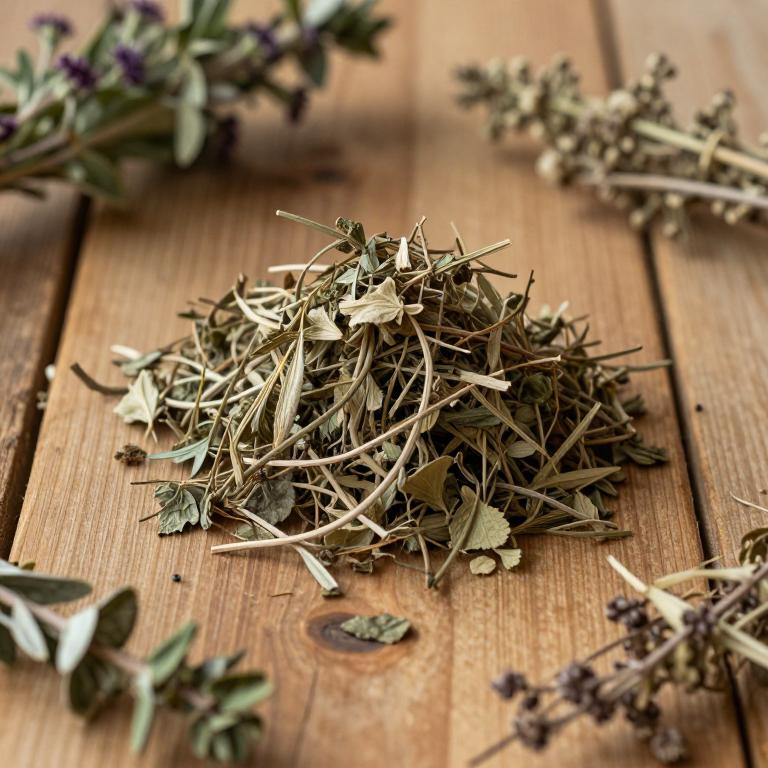
Names and Synonyms
Common Names
- Sea-Heath
Scientific Names
Accepted name
Frankenia laevisSynonyms
- Frankenia hirsuta var. laevis
- Frankenia hirsuta subsp. laevis
Regional and Traditional Names
French:
- Frankénie lisse
- Frankénie
- Bruyère maritime
Sources: Wikidata, Catalogue of Life
Taxonomical Classification
This plant, known scientifically as Frankenia laevis, belongs to the kingdom Plantae and the phylum Streptophyta. Within the class Equisetopsida and subclass Magnoliidae, it is further classified under the order Caryophyllales. It is a member of the family Frankeniaceae and is specifically categorized under the genus Frankenia.
| Rank | Classification |
|---|---|
| Kingdom | Plantae |
| Phylum | Streptophyta |
| Class | Equisetopsida |
| Subclass | Magnoliidae |
| Order | Caryophyllales |
| Family | Frankeniaceae |
| Genus | Frankenia |
Sources: The World Checklist of Vascular Plants (WCVP)
Distribution
This plant exhibits a scattered geographical distribution across several regions of Europe. In Northern Europe, its presence can be identified within Great Britain. Moving toward the Mediterranean, it is found in various parts of Southwestern Europe. Specifically, it inhabits the islands of Baleares and Corse. Additionally, the species is distributed throughout France and Portugal.
| Region | Area |
|---|---|
| Northern Europe | Great Britain |
| Southwestern Europe | Baleares |
| Southwestern Europe | Corse |
| Southwestern Europe | France |
| Southwestern Europe | Portugal |
| Southwestern Europe | Sardegna |
| Southwestern Europe | Spain |
| Southeastern Europe | Italy |
| Southeastern Europe | Sicilia |
| Northern Africa | Algeria |
Sources: The World Checklist of Vascular Plants (WCVP)
Botanical Identification
Life history
The life history of Frankenia laevis is characterized by its classification as a perennial species, allowing it to persist through multiple growing seasons. In terms of its growth habit and structural positioning, it is categorized as a chamaephyte, meaning its perennial buds are located close to the soil surface, often protected by a layer of leaf litter or substrate. This life form, consistent with its designation as a chamaephyte across various botanical assessments, enables the plant to withstand environmental fluctuations while maintaining its long-term presence in its natural habitat.
- Life form :
- chamaephyte
- Lifecycle :
- perennial
Morphology
The morphology of Frankenia laevis is characterized by a woody growth form, specifically functioning as a subshrub. It exhibits a relatively low stature with a mean plant height of approximately 0.15 m. In terms of its climbing habit, the plant is categorized as self-supporting, rather than being an obligatory or facultative liana or vine. It grows as an independent organism, meaning it does not function as a parasite, and it maintains a terrestrial life habit rather than being an epiphyte.
- Climber :
- self-supporting
- Epiphyte :
- terrestrial
- Growth form :
- subshrub
- Parasite :
- independent
- Plant height mean:
- 0.15 m
- Woodiness :
- woody
Physiology
The physiology of Frankenia laevis is characterized by specific metabolic adaptations suited to its environmental requirements, most notably its reliance on the C3 photosynthetic pathway. As a C3 plant, its carbon fixation process begins with the direct carboxylation of ribulose-1,5-bisphosphate (RuBP) by the enzyme RuBisCO, resulting in the formation of a three-carbon compound, 3-phosphoglycerate. This pathway dictates its gas exchange dynamics and water-use efficiency, as the plant must balance the intake of carbon dioxide with the risk of photorespiration and transpiration. The physiological efficiency of this C3 mechanism is closely linked to the plant's ability to manage moisture availability and light intensity within its native habitat.
- Photosynthetic pathway :
- C3
Reproduction
The reproduction of Frankenia laevis is characterized by the production of minute seeds that play a critical role in its dispersal and establishment within its habitat. Quantitative analysis of the reproductive output reveals that the seeds are exceptionally lightweight, with a recorded mean seed mass of 0.0012135 g. The uniformity in seed size is evident in the recorded data, where both the maximum and minimum seed mass values are documented at 0.00121 g, indicating a highly consistent reproductive strategy in terms of individual seed weight. This minimal mass suggests that the plant likely relies on efficient dispersal mechanisms suited for such small biological units to ensure the colonization of suitable substrates.
- Seed mass max:
- 0.00121 g
- Seed mass mean:
- 0.0012135 g
Sources: Global Inventory of Floras and Traits (GIFT)
Chemicals
Frankenia laevis has 3 reported phytochemicals identified across 0 scientific publications and several other databases. The most consistently reported chemicals include Flavonoids, Lignans, Monoterpenes.
| Chemical | Supporting sources | Consensus |
|---|---|---|
| Flavonoids | 1 supporting sources | ★☆☆☆☆ |
| Lignans | 1 supporting sources | ★☆☆☆☆ |
| Monoterpenes | 1 supporting sources | ★☆☆☆☆ |
Flavonoids
- Plants (Basel, Switzerland)
Lignans
- Plants (Basel, Switzerland)
Monoterpenes
- Plants (Basel, Switzerland)
Activities
Frankenia laevis has 2 reported activities identified across 0 scientific publications and several other databases. The most consistently reported activities include Antioxidant, Cytotoxic.
| Activity | Supporting sources | Consensus |
|---|---|---|
| Antioxidant | 1 supporting sources | ★☆☆☆☆ |
| Cytotoxic | 1 supporting sources | ★☆☆☆☆ |
Antioxidant
- Plants (Basel, Switzerland)
Cytotoxic
- Plants (Basel, Switzerland)
Conditions
Frankenia laevis has 2 reported investigations on conditions identified across 0 scientific publications and several other databases. The most consistently reported conditions include Type 2 diabetes, hyperpigmentation.
| Condition | Supporting sources | Consensus |
|---|---|---|
| Type 2 diabetes | 1 supporting sources | ★☆☆☆☆ |
| Hyperpigmentation | 1 supporting sources | ★☆☆☆☆ |
Type 2 diabetes
- Plants (Basel, Switzerland)
Hyperpigmentation
- Plants (Basel, Switzerland)