Chamaedryfolia tenacissima
Forsskaolea tenacissima · Accepted scientific name
Scientific literature: Very Sparse (1 studies) · ★☆☆☆☆
Chamaedryfolia tenacissima, scientifically known as Forsskaolea tenacissima, is a rare medicinal plant valued for its unique therapeutic properties. Native to specific ecological niches, this species is studied for its bioactive compounds. Understanding its botanical characteristics and traditional uses is essential for exploring its potential in modern pharmacological developments.
- Family
- Urticaceae
- Native range
- Europe
- Parts used
- Not available
- Common names
- Desert Nettle
- Scientific synonyms
- Chamaedryfolia Tenacissima · Forsskaolea Tenacissima Var. Cossoniana · 3 more
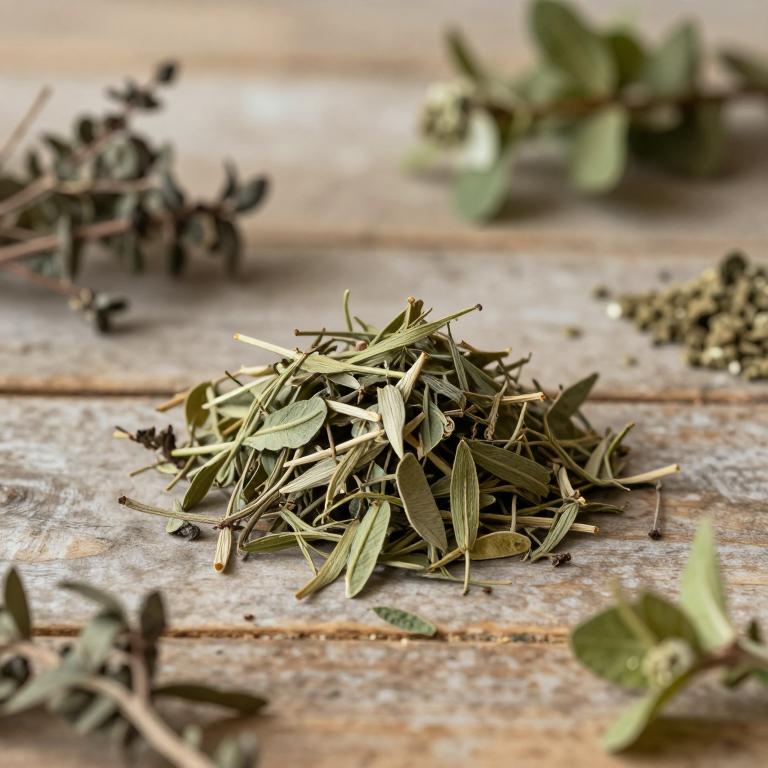
Names and Synonyms
Common Names
- Desert Nettle
Scientific Names
Accepted name
Forsskaolea tenacissimaSynonyms
- Chamaedryfolia tenacissima
- Forsskaolea tenacissima var. cossoniana
- Forsskaolea tenacissima var. erythraea
- Caidbeja adhaerens
- Forsskaolea cossoniana
Regional and Traditional Names
French:
- Forsskaolée à feuilles tenues
Sources: Wikidata, Catalogue of Life
Taxonomical Classification
This plant belongs to the kingdom Plantae and is classified under the phylum Streptophyta and the class Equisetopsida. Within the subclass Magnoliidae, it is ordered under Rosales and placed in the family Urticaceae. Finally, it is identified by the genus Forsskaolea, with the specific species name tenacissima.
| Rank | Classification |
|---|---|
| Kingdom | Plantae |
| Phylum | Streptophyta |
| Class | Equisetopsida |
| Subclass | Magnoliidae |
| Order | Rosales |
| Family | Urticaceae |
| Genus | Forsskaolea |
Sources: The World Checklist of Vascular Plants (WCVP)
Distribution
This plant, Forsskaolea tenacissima, exhibits a specific geographical distribution across the Mediterranean region. In Southwestern Europe, its presence is recorded within the country of Spain. Its range extends significantly into Northern Africa, where it can be found in Algeria. Additionally, the species is distributed across the North African territories of Libya and Egypt. Finally, the plant is also documented to grow within the borders of Morocco.
| Region | Area |
|---|---|
| Southwestern Europe | Spain |
| Northern Africa | Algeria |
| Northern Africa | Egypt |
| Northern Africa | Libya |
| Northern Africa | Morocco |
| Northern Africa | Tunisia |
| Northern Africa | Western Sahara |
| West Tropical Africa | Mali |
| West Tropical Africa | Mauritania |
| West Tropical Africa | Niger |
Sources: The World Checklist of Vascular Plants (WCVP)
Botanical Identification
Ecology
The ecology of Forsskaolea tenacissima is characterized by its specific adaptation to montane environments, where it thrives within a defined altitudinal niche. This species is primarily distributed across an elevational range that begins at 600 m AMSL and extends up to a maximum of 1000 m AMSL. Within this vertical gradient, the plant occupies specific ecological zones that influence its growth patterns, reproductive success, and interaction with the surrounding biotic and abiotic factors of its habitat.
- Elevational range max:
- 1000 m AMSL
- Elevational range min:
- 600 m AMSL
Life history
The life history of Forsskaolea tenacissima is characterized by a perennial lifecycle, allowing the plant to persist through multiple growing seasons. In terms of its structural growth and survival strategy, the species exhibits dual life form classifications, functioning as both a chamaephyte and a hemicryptophyte. As a chamaephyte, its perennating buds are located close to or just above the soil surface, while its classification as a hemicryptophyte indicates that its overwintering buds are positioned at the soil surface, typically protected by leaf litter or organic matter.
- Life form :
- chamaephyte
- Life form :
- hemicryptophyte
- Lifecycle :
- perennial
Morphology
The morphology of Forsskaolea tenacissima is characterized by its growth form as a herb, which lacks any significant woodiness, resulting in a non-woody structure. This plant functions as an independent organism, showing no parasitic tendencies, and maintains a self-supporting habit rather than acting as a climber. In terms of its ecological positioning and habitat preference, it exhibits a versatile range of environmental adaptations, being capable of existing in aquatic, semiaquatic, or terrestrial conditions.
- Aquatic :
- terrestrial
- Climber :
- self-supporting
- Growth form :
- herb
- Parasite :
- independent
- Woodiness :
- non-woody
Physiology
The physiology of Forsskaolea tenacissima is characterized by a metabolic framework that utilizes the C3 photosynthetic pathway. In this process, carbon dioxide is initially fixed by the enzyme ribulose-1,5-bisphosphate carboxylase/oxygenase (RuBisCO) to form a three-carbon compound, 3-phosphoglycerate, during the Calvin cycle. This carbon fixation mechanism dictates the plant's water-use efficiency and gas exchange dynamics, as it relies on the direct diffusion of CO2 through the stomata into the mesophyll cells. Consequently, the physiological performance of the plant, including its growth rate and biomass accumulation, is closely tied to the availability of moisture and the management of photorespiration inherent to the C3 cycle.
- Photosynthetic pathway :
- C3
Reproduction
The reproduction of Forsskaolea tenacissima is characterized by a specific flowering window and highly uniform seed production. The flowering period typically begins in March and concludes in April, though the timing can be variable across different seasonal cycles. Following pollination, the plant produces seeds that exhibit remarkable consistency in size and weight; the seed mass is strictly uniform, with a mean, maximum, and minimum value all recorded at 0.00993 g. This precise seed mass indicates a highly standardized reproductive output for the species.
- Flowering time :
- Mar
- Flowering time :
- Apr
- Seed mass mean:
- 0.00993 g
Sources: Global Inventory of Floras and Traits (GIFT)
Activities
Forsskaolea tenacissima has 1 reported activities identified across 0 scientific publications and several other databases. The most consistently reported activities include Antibacterial.
| Activity | Supporting sources | Consensus |
|---|---|---|
| Antibacterial | 1 supporting sources | ★☆☆☆☆ |
Antibacterial
- Microorganisms
Preparations
Forsskaolea tenacissima has 4 reported preparations identified across 0 scientific publications and several other databases. The most consistently reported preparations include aqueous extracts, ethanolic extracts, methanol extracts, methanol ones.
| Preparation | Supporting sources | Consensus |
|---|---|---|
| Aqueous extracts | 1 supporting sources | ★☆☆☆☆ |
| Ethanolic extracts | 1 supporting sources | ★☆☆☆☆ |
| Methanol extracts | 1 supporting sources | ★☆☆☆☆ |
| Methanol ones | 1 supporting sources | ★☆☆☆☆ |
Aqueous extracts
- Journal of the Egyptian Society of Parasitology
Ethanolic extracts
- Microorganisms
Methanol extracts
- Journal of the Egyptian Society of Parasitology
Methanol ones
- Journal of the Egyptian Society of Parasitology