Filago congesta
Filago congesta · Accepted scientific name
Scientific literature: Very Sparse (3 studies) · ★☆☆☆☆
Filago congesta, scientifically known as Filago congesta, is a small, annual herb belonging to the Asteraceae family. Commonly found in sandy, open habitats, this plant is valued in traditional medicine for its diverse therapeutic properties, often utilized for its potential antioxidant and anti-inflammatory effects in various herbal remedies.
- Family
- Asteraceae
- Native range
- Europe
- Parts used
- Stem
- Common names
- Not available
- Scientific synonyms
- Evacopsis Angustifolia · Filago Exigua · 9 more
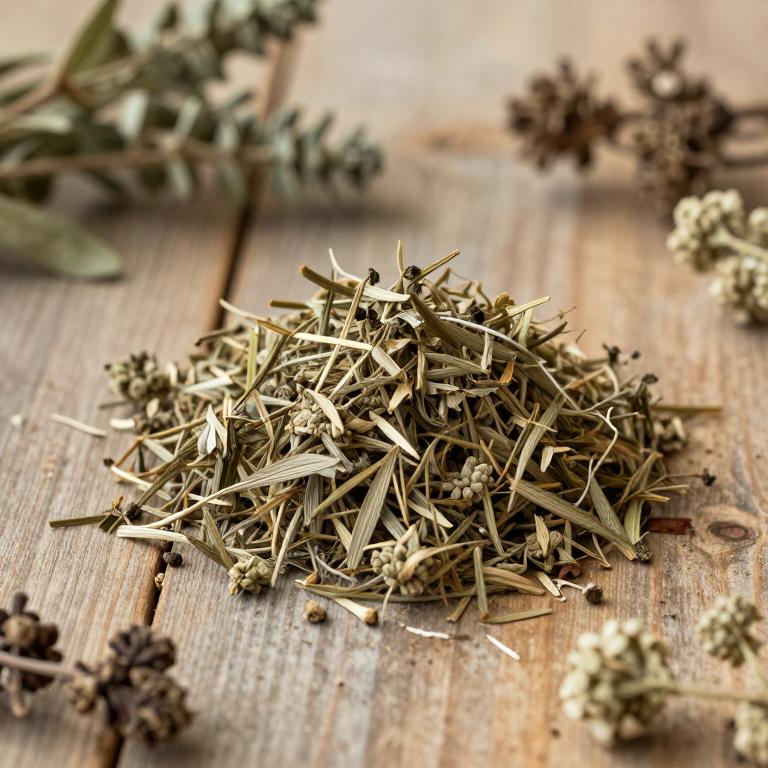
Names and Synonyms
Scientific Names
Accepted name
Filago congestaSynonyms
- Evacopsis angustifolia
- Filago exigua
- Leontopodium alpinum
- Evacopsis exigua
- Evacopsis polycephala
- Evax exigua
- Filago bianorii
- Filago bolivarii
- Filago polycephala
- Gifola bianorii
- Micropus exiguus
Regional and Traditional Names
Spanish:
- Alcaudonera menor
French:
- Cotonnière dense
Sources: Wikidata, Catalogue of Life
Taxonomical Classification
This plant, known scientifically as Filago congesta, belongs to the kingdom Plantae and the phylum Streptophyta. Within the class Equisetopsida and subclass Magnoliidae, it is classified under the order Asterales and the family Asteraceae. Finally, it is categorized under the genus Filago.
| Rank | Classification |
|---|---|
| Kingdom | Plantae |
| Phylum | Streptophyta |
| Class | Equisetopsida |
| Subclass | Magnoliidae |
| Order | Asterales |
| Family | Asteraceae |
| Genus | Filago |
Sources: The World Checklist of Vascular Plants (WCVP)
Distribution
This plant exhibits a specific distribution pattern concentrated within the Mediterranean region. In Southwestern Europe, it can be found across Spain, the Balearic Islands, and Sardegna. Its presence also extends into Southeastern Europe, specifically within the territories of Italy. Additionally, the species is documented growing in Sicilia. Overall, these locations highlight the plant's preference for various Mediterranean climates.
| Region | Area |
|---|---|
| Southwestern Europe | Baleares |
| Southwestern Europe | Sardegna |
| Southwestern Europe | Spain |
| Southeastern Europe | Italy |
| Southeastern Europe | Sicilia |
| Northern Africa | Algeria |
| Northern Africa | Morocco |
| Northern Africa | Tunisia |
Sources: The World Checklist of Vascular Plants (WCVP)
Botanical Identification
Life history
The life history of Filago congesta is characterized by its classification as a therophyte, meaning it completes its entire life cycle within a single growing season. As a therophyte, the plant survives unfavorable environmental conditions by producing resistant seeds that remain dormant in the soil until conditions become optimal for germination. This ephemeral life strategy allows it to exploit transient moisture and nutrient availability in its typical habitats. Within the broader spectrum of plant life forms, its developmental pattern is strictly defined by its status as a therophyte (Life_form_1) and a therophyte (Life_form_2), ensuring that it avoids the physiological stress of seasonal extremes by retreating into a seed state rather than maintaining perennial vegetative structures such as those found in chamaephytes or hemicryptophytes.
- Life form :
- therophyte
Morphology
The morphology of Filago congesta is characterized by its growth habit and structural development. In terms of its climbing capacity, the plant functions as a self-supporting entity, exhibiting characteristics consistent with both liana and vine-like tendencies, though it maintains its own structural integrity without external reliance. Specifically, its climbing nature is classified as self-supporting, meaning it does not require an obligatory host for verticality but can display facultative climbing behaviors through its growth pattern. This self-supporting mechanism allows the plant to navigate its environment effectively while maintaining a stable physical form.
- Climber :
- self-supporting
Sources: Global Inventory of Floras and Traits (GIFT)
Plant Parts
Filago congesta has 1 reported plant parts identified across 1 scientific publications and several other databases that are studied for medicinal purposes. The most consistently reported plant part include stem.
| Plant part | Supporting sources | Consensus |
|---|---|---|
| Stem | 1 supporting sources | ★☆☆☆☆ |
Stem
- Biomolecules
Chemicals
Filago congesta has 1 reported phytochemicals identified across 1 scientific publications and several other databases. The most consistently reported chemicals include Leontopodic acid.
| Chemical | Supporting sources | Consensus |
|---|---|---|
| Leontopodic acid | 1 supporting sources | ★☆☆☆☆ |
Leontopodic acid
- Biomolecules
Activities
Filago congesta has 1 reported activities identified across 1 scientific publications and several other databases. The most consistently reported activities include Analgesic.
| Activity | Supporting sources | Consensus |
|---|---|---|
| Analgesic | 1 supporting sources | ★☆☆☆☆ |
Analgesic
- Journal of ethnopharmacology
Preparations
Filago congesta has 1 reported preparations identified across 1 scientific publications and several other databases. The most consistently reported preparations include cosmetic serums.
| Preparation | Supporting sources | Consensus |
|---|---|---|
| Cosmetic serums | 1 supporting sources | ★☆☆☆☆ |
Cosmetic serums
- Biomolecules