Common Red-stem Fig
Ficus variegata · Accepted scientific name
Scientific literature: Very Sparse (3 studies) · ★☆☆☆☆
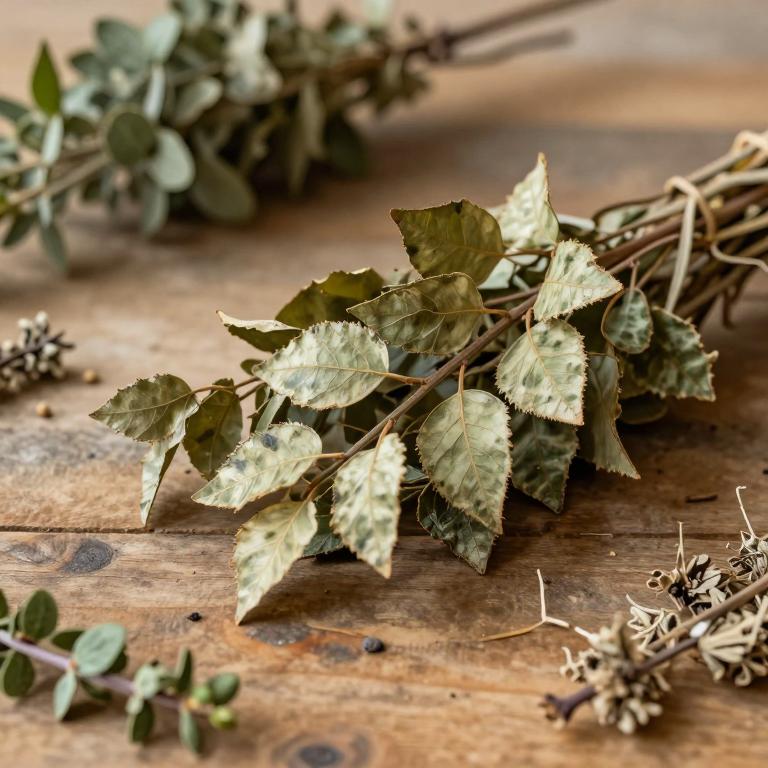
Common Red-stem Fig, scientifically known as Ficus variegata, is a versatile tropical shrub celebrated for its striking aesthetic and medicinal properties. Renowned for its distinctive colorful stems and glossy leaves, this plant is traditionally used in various cultures to treat skin ailments, inflammation, and digestive issues through its bioactive compounds.
Names and Synonyms
Common Names
- common red-stem fig
- green-fruit fig
- red-stem fig
- variegated fig
Scientific Names
Accepted name
Ficus variegataSynonyms
- Urostigma cordifolium
- Ficus variegata var. pilosior
- Ficus variegata var. ilangoides
- Ficus variegata var. kondang
- Ficus variegata var. leles
- Urostigma javanicum
- Sycomorus gummiflua
- Ficus variegata var. chlorocarpa
- Ficus variegata var. garciae
- Ficus variegata f. paucinervia
- Ficus variegata var. sycomoroides
- Ficus viridicarpa
- Ficus sum
- Ficus subopaca
- Ficus subracemosa
- Ficus sycomoroides
- Ficus tenimbrensis
- Ficus glochidiifolia
- Ficus konishii
- Ficus latsonii
- Ficus paucinervia
- Ficus ehretioides
- Ficus domestica
- Ficus garciae
- Ficus cerifera
- Ficus amboinensis
Sources: Wikidata, Catalogue of Life
Taxonomical Classification
This plant belongs to the kingdom Plantae and is classified within the phylum Streptophyta and the class Equisetopsida. Within the subclass Magnoliidae, it falls under the order Rosales and the family Moraceae. Ultimately, it is identified by its genus, Ficus.
| Rank | Classification |
|---|---|
| Kingdom | Plantae |
| Phylum | Streptophyta |
| Class | Equisetopsida |
| Subclass | Magnoliidae |
| Order | Rosales |
| Family | Moraceae |
| Genus | Ficus |
Sources: The World Checklist of Vascular Plants (WCVP)
Distribution
This plant is widely distributed across several specific regions in East Asia. Within China, it can be found throughout the South-Central areas as well as the Southeast. Its presence extends to the tropical island of Hainan in the southern part of the country. Additionally, the species is documented in Taiwan and the Nansei-shoto islands. This diverse range highlights its established ecological footprint across these coastal and subtropical territories.
| Region | Area |
|---|---|
| China | China South-Central |
| China | Hainan |
| China | China Southeast |
| Eastern Asia | Nansei-shoto |
| Eastern Asia | Taiwan |
| Indian Subcontinent | Assam |
| Indian Subcontinent | Bangladesh |
| Indian Subcontinent | India |
| Indo-China | Andaman Is. |
| Indo-China | Cambodia |
Sources: The World Checklist of Vascular Plants (WCVP)
Botanical Identification
Life history
The life history of Ficus variegata is characterized by its status as a perennial organism, allowing it to persist in its environment over many growing seasons. As an evergreen species, it maintains its foliage throughout the year, ensuring a continuous photosynthetic capacity that supports its long-term survival and structural development. This combination of a perennial lifecycle and evergreen habit enables the plant to establish a stable presence within its ecological niche, contributing to its enduring nature in various habitats.
- Deciduousness :
- evergreen
- Lifecycle :
- perennial
Morphology
The morphology of Ficus variegata is characterized by its growth form as a woody tree that is strictly self-supporting rather than acting as a climber or liana. As a terrestrial species, it does not function as an epiphyte or a parasite, maintaining an independent existence in its habitat. The plant exhibits significant vertical development, with a height ranging from a minimum of 7 m to a maximum of 33 m, maintaining an average height of approximately 17.83 m. Its structural integrity is defined by its woody nature, which supports its substantial stature as a prominent tree within its ecosystem.
- Aquatic :
- terrestrial
- Climber :
- self-supporting
- Epiphyte :
- terrestrial
- Growth form :
- tree
- Parasite :
- independent
- Plant height max:
- 33 m
- Plant height mean:
- 17.8333333333333 m
- Plant height min:
- 7 m
- Woodiness :
- woody
Physiology
The physiology of Ficus variegata is characterized by a C3 photosynthetic pathway, which dictates its carbon fixation processes and metabolic efficiency in varying environmental conditions. The plant exhibits specific morphological dimensions in its foliage, with leaf lengths ranging from a minimum of 10 cm to a maximum of 17 cm, maintaining a mean leaf length of approximately 13.5 cm. Furthermore, the species does not function as a nitrogen fixer, relying instead on the uptake of available nitrogen from the soil through its root system to support its metabolic and growth requirements.
- Leaf length max:
- 17 cm
- Leaf length mean:
- 13.5 cm
- Leaf length min:
- 10 cm
- Nitrogen fixer :
- no
- Photosynthetic pathway :
- C3
Reproduction
The reproduction of Ficus variegata is characterized by a specialized biological process involving biotic pollination and zoochorous dispersal. The plant relies on a biotic pollination syndrome, specifically facilitated by insects, to ensure successful fertilization. The resulting reproductive structures consist of fleshy fruits, classified under the "other" type (specifically a syconium), which maintain an average length of 2.12 cm and an average width of 1.81 cm. Within these fleshy fruits, the seeds are notably minute, possessing a consistent seed mass of 0.00034 g and a uniform seed volume of 0.79 mm³. This small seed size and the fleshy nature of the fruit facilitate a zoochorous dispersal syndrome, where animals play a crucial role in spreading the seeds to new locations.
- Dispersal syndrome :
- zoochorous
- Fruit dryness :
- fleshy
- Fruit length mean:
- 2.12 cm
- Fruit type :
- other
- Fruit width mean:
- 1.81 cm
- Pollination syndrome :
- insect
- Pollination syndrome :
- biotic
- Seed mass mean:
- 0.00034 g
- Seed volume max:
- 0.79 mm³
Sources: Global Inventory of Floras and Traits (GIFT)
Chemicals
Ficus variegata has 1 reported phytochemicals identified across 0 scientific publications and several other databases. The most consistently reported chemicals include Flavonoids.
| Chemical | Supporting sources | Consensus |
|---|---|---|
| Flavonoids | 1 supporting sources | ★☆☆☆☆ |
Flavonoids
- Pakistan journal of pharmaceutical sciences
Activities
Ficus variegata has 1 reported activities identified across 0 scientific publications and several other databases. The most consistently reported activities include Antioxidant.
| Activity | Supporting sources | Consensus |
|---|---|---|
| Antioxidant | 1 supporting sources | ★☆☆☆☆ |
Antioxidant
- Pakistan journal of pharmaceutical sciences
Preparations
Ficus variegata has 1 reported preparations identified across 0 scientific publications and several other databases. The most consistently reported preparations include ethanol (95%).
| Preparation | Supporting sources | Consensus |
|---|---|---|
| Ethanol (95%) | 1 supporting sources | ★☆☆☆☆ |
Ethanol (95%)
- Pakistan journal of pharmaceutical sciences