small figtree
Ficus thonningii · Accepted scientific name
Scientific literature: Very Sparse (22 studies) · ★☆☆☆☆
Small figtree, scientifically known as Ficus thonningii, is a versatile medicinal plant widely utilized in traditional healing practices. Renowned for its potent bioactive compounds, various parts of this species are employed to treat skin ailments, inflammation, and digestive issues, offering significant therapeutic potential in ethnobotanical studies and pharmacology.
- Family
- Moraceae
- Native range
- Africa
- Parts used
- Not available
- Common names
- Small Figtree · Common Wild Fig
- Scientific synonyms
- Ficus Bongoensis · Ficus Dusenii · 54 more
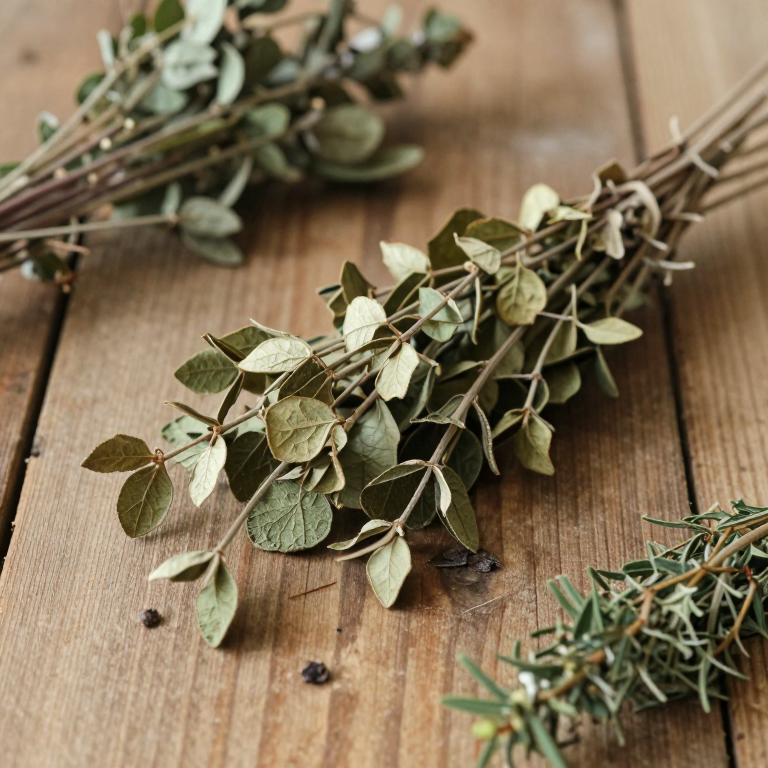
Names and Synonyms
Common Names
- small figtree
- Common Wild Fig
Scientific Names
Accepted name
Ficus thonningiiSynonyms
- Ficus bongoensis
- Ficus dusenii
- Ficus acrocarpa
- Ficus acrocarpa var. saligna
- Ficus hochstetteri
- Ficus schimperi var. hochstetteri
- Ficus acrocarpa var. ellipticifolia
- Ficus goetzei
- Ficus cognata
- Urostigma dekdekena
- Urostigma thonningii
- Urostigma schimperi
- Ficus hochstetteri var. glabior
- Urostigma acrocarpum
- Ficus spragueana
- Urostigma burkei
- Ficus crassipedicellata f. angustifolia
- Urostigma hochstetteri
- Ficus tropophyton
- Ficus crassipedicellata f. boonei
- Ficus schinziana
- Ficus crassipedicellata var. cuneata
- Ficus schimperi
- Ficus ruficeps
- Ficus saligna
- Ficus rokko
- Ficus rhodesiaca
- Ficus psilopoga
- Ficus pubicosta
- Ficus phillipsii
- Ficus petersii
- Ficus persicifolia
- Ficus mammigera
- Ficus medullaris
- Ficus mabifolia
- Ficus mabifolia
- Ficus iteophylla
- Ficus kagerensis
- Ficus chlamydodora
- Ficus butaguensis
- Ficus burkei
- Ficus basarensis
- Ficus bequaertii
- Ficus annobonensis
- Ficus cyphocarpa
- Ficus dinteri
- Ficus dekdekena
- Ficus crassipedicellata
- Ficus eriocarpa
- Ficus erici-rosenii
- Ficus dissocarpa
- Ficus galpinii
- Ficus persicifolia var. angustifolia
- Ficus persicifolia var. glabripes
- Ficus thonningii var. heterophylla
- Ficus dekdekena var. angustifolia
Regional and Traditional Names
French:
- figuier à pagnes
Sources: Wikidata, Catalogue of Life
Taxonomical Classification
This plant belongs to the kingdom Plantae and is classified within the phylum Streptophyta and the class Equisetopsida. Following the subclass Magnoliidae, it is placed under the order Rosales and the family Moraceae. Finally, it is categorized under the genus Ficus.
| Rank | Classification |
|---|---|
| Kingdom | Plantae |
| Phylum | Streptophyta |
| Class | Equisetopsida |
| Subclass | Magnoliidae |
| Order | Rosales |
| Family | Moraceae |
| Genus | Ficus |
Sources: The World Checklist of Vascular Plants (WCVP)
Distribution
This plant exhibits a broad geographical distribution across several distinct tropical and Atlantic regions. Within the Macaronesian islands, its presence is specifically noted in Cape Verde. Moving to the mainland, it is widely spread throughout West Tropical Africa. Its range includes several countries such as Benin, Burkina, and the Gambia. Additionally, the species can be found inhabiting the landscapes of Ghana.
| Region | Area |
|---|---|
| Macaronesia | Cape Verde |
| West Tropical Africa | Benin |
| West Tropical Africa | Burkina |
| West Tropical Africa | Gambia |
| West Tropical Africa | Ghana |
| West Tropical Africa | Guinea-Bissau |
| West Tropical Africa | Guinea |
| West Tropical Africa | Ivory Coast |
| West Tropical Africa | Liberia |
| West Tropical Africa | Mali |
Sources: The World Checklist of Vascular Plants (WCVP)
Botanical Identification
Ecology
The ecology of Ficus thonningsii is characterized by its ability to thrive across a broad vertical gradient within its native habitats, spanning from lowland areas to montane environments. It exhibits a significant adaptive range, occurring at elevations as low as 10 m AMSL and extending up to a maximum altitude of 1800 m AMSL. This wide elevational distribution suggests a high degree of ecological plasticity, allowing the species to occupy diverse microclimates and varying moisture regimes within forest ecosystems.
- Elevational range max:
- 1800 m AMSL
- Elevational range min:
- 10 m AMSL
Life history
The life history of Ficus thonningsii is characterized by a perennial lifecycle, allowing the plant to persist through multiple growing seasons. As a phanerophyte, its reproductive shoots are elevated well above the ground, a trait shared across its life form classifications which categorize it specifically as a phanerophyte. This structural growth strategy supports its long-term survival in its natural habitat. Furthermore, the plant exhibits an evergreen deciduousness, maintaining its foliage throughout the year rather than shedding it seasonally, which ensures continuous photosynthetic activity.
- Deciduousness :
- evergreen
- Life form :
- phanerophyte
- Lifecycle :
- perennial
Morphology
The morphology of Ficus thonningsii is characterized by a woody growth form that primarily manifests as a tree or shrub. It is a terrestrial species that functions as an independent organism rather than a parasite, maintaining a self-supporting structure without the need for climbing mechanisms like vines or lianas. The plant exhibits significant variation in its stature, with heights ranging from a minimum of 1 meter to a maximum of approximately 18.29 meters, averaging around 18 meters. Although it is classified as a terrestrial plant rather than an epiphyte, its robust and woody composition allows it to maintain a stable, self-supporting presence within its environment.
- Aquatic :
- terrestrial
- Climber :
- self-supporting
- Epiphyte :
- terrestrial
- Growth form :
- tree
- Growth form :
- shrub
- Parasite :
- independent
- Plant height max:
- 18.28822238 m
- Plant height mean:
- 18 m
- Plant height min:
- 1 m
- Woodiness :
- woody
Physiology
The physiology of Ficus thonningsii is characterized by a standard C3 photosynthetic pathway, meaning it utilizes the Calvin cycle for carbon fixation without the specialized adaptations found in C4 or CAM metabolism. This metabolic process involves the initial fixation of atmospheric carbon dioxide by the enzyme RuBisCO to produce 3-phosphoglycerate. Furthermore, the plant does not function as a nitrogen fixer, lacking the symbiotic relationships with diazotrophic bacteria required to convert atmospheric nitrogen into biologically available forms.
- Nitrogen fixer :
- no
- Photosynthetic pathway :
- C3
Reproduction
The reproduction of Ficus thonningsii is characterized by a complex biotic pollination syndrome, relying primarily on insects for successful fertilization. The plant produces fruits that are classified as fleshy in texture, with a mean length and width of approximately 1 cm. The dispersal of these fruits follows a zoochorous strategy, specifically via endozoochory, where seeds are dispersed through the digestive tracts of animals. The seeds themselves are minute, exhibiting a mean seed mass of 0.000315 g (ranging from a minimum of 0.00026 g to a maximum of 0.00038 g) and a consistent seed volume of 0.27 mm³.
- Dispersal syndrome :
- zoochorous
- Dispersal syndrome :
- endozoochorous
- Fruit dryness :
- fleshy
- Fruit length mean:
- 1 cm
- Fruit type :
- other
- Fruit width mean:
- 1 cm
- Pollination syndrome :
- insect
- Pollination syndrome :
- biotic
- Seed mass max:
- 0.00038 g
- Seed mass mean:
- 0.000315 g
- Seed mass min:
- 0.00026 g
- Seed volume max:
- 0.27 mm³
Sources: Global Inventory of Floras and Traits (GIFT)
Chemicals
Ficus thonningii has 12 reported phytochemicals identified across 0 scientific publications and several other databases. The most consistently reported chemicals include 3',5'-O-dicaffeoylquinic acid, CALCIUM, COPPER, FAT, Flavonoids.
| Chemical | Supporting sources | Consensus |
|---|---|---|
| 3',5'-O-dicaffeoylquinic acid | 1 supporting sources | ★☆☆☆☆ |
| CALCIUM | 1 supporting sources | ★☆☆☆☆ |
| COPPER | 1 supporting sources | ★☆☆☆☆ |
| FAT | 1 supporting sources | ★☆☆☆☆ |
| Flavonoids | 1 supporting sources | ★☆☆☆☆ |
| IRON | 1 supporting sources | ★☆☆☆☆ |
| SYRINGIC ACID | 1 supporting sources | ★☆☆☆☆ |
| Saponins | 1 supporting sources | ★☆☆☆☆ |
| Tannins | 1 supporting sources | ★☆☆☆☆ |
| Terpenoids | 1 supporting sources | ★☆☆☆☆ |
3',5'-O-dicaffeoylquinic acid
- Biomedical chromatography : BMC
CALCIUM
- International journal of food sciences and nutrition
COPPER
- International journal of food sciences and nutrition
FAT
- International journal of food sciences and nutrition
Flavonoids
- African journal of traditional, complementary, and alternative medicines : AJTCAM
IRON
- International journal of food sciences and nutrition
SYRINGIC ACID
- Biomedical chromatography : BMC
Saponins
- African journal of traditional, complementary, and alternative medicines : AJTCAM
Tannins
- African journal of traditional, complementary, and alternative medicines : AJTCAM
Terpenoids
- African journal of traditional, complementary, and alternative medicines : AJTCAM
Activities
Ficus thonningii has 3 reported activities identified across 0 scientific publications and several other databases. The most consistently reported activities include Analgesic, Antimicrobial, Antioxidant.
| Activity | Supporting sources | Consensus |
|---|---|---|
| Analgesic | 1 supporting sources | ★☆☆☆☆ |
| Antimicrobial | 1 supporting sources | ★☆☆☆☆ |
| Antioxidant | 1 supporting sources | ★☆☆☆☆ |
Analgesic
- African journal of traditional, complementary, and alternative medicines : AJTCAM
Antimicrobial
- African journal of traditional, complementary, and alternative medicines : AJTCAM
Antioxidant
- African journal of traditional, complementary, and alternative medicines : AJTCAM
Conditions
Ficus thonningii has 7 reported investigations on conditions identified across 0 scientific publications and several other databases. The most consistently reported conditions include Plasmodium falciparum, antimalarial, bacterial diseases, diabetes mellitus, mental illnesses.
| Condition | Supporting sources | Consensus |
|---|---|---|
| Plasmodium falciparum | 1 supporting sources | ★☆☆☆☆ |
| Antimalarial | 1 supporting sources | ★☆☆☆☆ |
| Bacterial diseases | 1 supporting sources | ★☆☆☆☆ |
| Diabetes mellitus | 1 supporting sources | ★☆☆☆☆ |
| Mental illnesses | 1 supporting sources | ★☆☆☆☆ |
| Respiratory infections | 1 supporting sources | ★☆☆☆☆ |
| Urinary tract infections | 1 supporting sources | ★☆☆☆☆ |
Plasmodium falciparum
- African journal of traditional, complementary, and alternative medicines : AJTCAM
Antimalarial
- African journal of traditional, complementary, and alternative medicines : AJTCAM
Bacterial diseases
- Journal of ethnopharmacology
Diabetes mellitus
- African journal of traditional, complementary, and alternative medicines : AJTCAM
Mental illnesses
- African journal of traditional, complementary, and alternative medicines : AJTCAM
Respiratory infections
- African journal of traditional, complementary, and alternative medicines : AJTCAM
Urinary tract infections
- African journal of traditional, complementary, and alternative medicines : AJTCAM
Preparations
Ficus thonningii has 2 reported preparations identified across 0 scientific publications and several other databases. The most consistently reported preparations include leaf extract, methanolic extract.
| Preparation | Supporting sources | Consensus |
|---|---|---|
| Leaf extract | 1 supporting sources | ★☆☆☆☆ |
| Methanolic extract | 1 supporting sources | ★☆☆☆☆ |
Leaf extract
- Biomedical chromatography : BMC
Methanolic extract
- African journal of traditional, complementary, and alternative medicines : AJTCAM