sycamore fig
Ficus sycomorus · Accepted scientific name
Scientific literature: Very Sparse (16 studies) · ★☆☆☆☆
Sycamore fig, scientifically known as Ficus sycomorus, is a versatile multipurpose tree deeply rooted in African landscapes. Renowned for its nutritional fruit and medicinal properties, it is traditionally used to treat ailments ranging from digestive issues to skin inflammations. This resilient species remains a vital resource for holistic wellness.
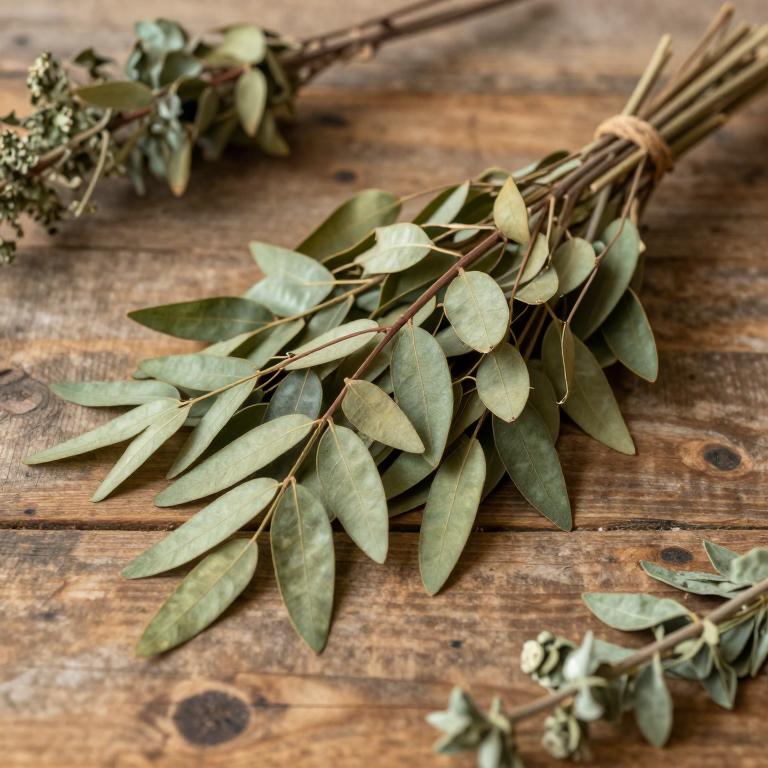
Names and Synonyms
Common Names
- mulberry fig
- pharoah fig
- sycamore fig
- sycomore
- Common Cluster Fig
- sycomore fig
Scientific Names
Accepted name
Ficus sycomorusSynonyms
- Ficus comorensis
- Sycomorus antiquorum
- Sycomorus gnaphalocarpa
- Ficus cocculifolia subsp. sakalavarum
- Ficus cocculifolia var. sakalavarum
- Sycomorus rigida
- Sycomorus trachyphyllus
- Ficus cocculifolia
- Ficus damarensis
- Ficus chanas
- Ficus gnaphalocarpa
- Ficus sakalavarum
- Ficus sycomorus subsp. gnaphalocarpa
- Ficus trachyphylla
Regional and Traditional Names
Spanish:
- Ficus sicómoro
- Ficus sicomoro
- higuera loca
- sicomoro
German:
- Maulbeer-Feige
- Eselsfeige
- Maulbeerfeige
- Sykomoren
- Sykomore
- Eselsfeige
- Sykomore
French:
- figuier sycomore
- figuier d'Adam
- figuier d'Egypte
- figuier sycomore
Sources: Wikidata, Catalogue of Life
Taxonomical Classification
This plant belongs to the kingdom Plantae and is classified under the phylum Streptophyta and class Equisetopsida. Within the subclass Magnoliidae, it falls under the order Rosales and the family Moraceae. Finally, its taxonomic identity is defined by the genus Ficus.
| Rank | Classification |
|---|---|
| Kingdom | Plantae |
| Phylum | Streptophyta |
| Class | Equisetopsida |
| Subclass | Magnoliidae |
| Order | Rosales |
| Family | Moraceae |
| Genus | Ficus |
Sources: The World Checklist of Vascular Plants (WCVP)
Distribution
This plant exhibits a broad geographical distribution across several distinct regions of the African continent. In Northern Africa, it can be found growing in both Algeria and Egypt. Its range extends into the Macaronesian islands, specifically within Cape Verde. Furthermore, the species is present in West Tropical Africa, occurring in countries such as Benin. Finally, the distribution continues inland to include the territory of Burkina.
| Region | Area |
|---|---|
| Northern Africa | Algeria |
| Northern Africa | Egypt |
| Macaronesia | Cape Verde |
| West Tropical Africa | Benin |
| West Tropical Africa | Burkina |
| West Tropical Africa | Gambia |
| West Tropical Africa | Ghana |
| West Tropical Africa | Guinea-Bissau |
| West Tropical Africa | Guinea |
| West Tropical Africa | Ivory Coast |
Sources: The World Checklist of Vascular Plants (WCVP)
Botanical Identification
Ecology
The ecology of Ficus sycomorus is characterized by its specific niche preferences and broad altitudinal adaptability. This species thrives in diverse environments, particularly in riparian zones and areas characterized by a high groundwater table, though it is also commonly found within forest and bushland ecosystems. Its vertical distribution is extensive, occupying an elevational range that begins as low as 6 m AMSL and extends up to a maximum of 1500 m AMSL.
- Elevational range max:
- 1500 m AMSL
- Elevational range min:
- 6 m AMSL
- Habitat :
- riparian, places with high groundwater table, also forest and bushland
Life history
The life history of Ficus sycomorus is characterized by its status as a perennial species, allowing it to persist in its environment over many years through multiple growing seasons. As a phanerophyte, its regenerative buds are located high above the ground on woody branches, a structural adaptation that supports its development into a large, long-lived tree. This phanerophyte life form ensures that the plant maintains a robust, elevated canopy, facilitating its long-term survival and reproductive success within its ecological niche.
- Life form :
- phanerophyte
- Lifecycle :
- perennial
Morphology
The morphology of Ficus sycomorus is characterized by its robust growth form, as it develops as a woody, self-supporting tree. As a terrestrial organism, it maintains an independent life cycle, functioning as a non-parasitic and non-epiphytic species. The plant exhibits significant vertical development, with height measurements ranging from a minimum of 2 m to a maximum of 30 m, maintaining an average plant height of approximately 16.67 m.
- Aquatic :
- terrestrial
- Climber :
- self-supporting
- Epiphyte :
- terrestrial
- Growth form :
- tree
- Parasite :
- independent
- Plant height max:
- 30 m
- Plant height mean:
- 16.6666666666667 m
- Plant height min:
- 2 m
- Woodiness :
- woody
Physiology
The physiology of Ficus sycomorus is characterized by a standard C3 photosynthetic pathway, which dictates its carbon fixation process and metabolic efficiency under varying environmental conditions. Unlike specialized desert plants, it does not utilize C4 or CAM pathways, relying instead on the direct fixation of atmospheric carbon dioxide through the enzyme RuBisCO during the light-independent reactions. Furthermore, the species does not function as a nitrogen fixer; it lacks the symbiotic relationship with nitrogen-fixing bacteria, such as Rhizobia, typically found in leguminous plants, and therefore depends entirely on the uptake of nitrates and ammonium available within the soil matrix to satisfy its nutritional requirements for protein synthesis and cellular growth.
- Nitrogen fixer :
- no
- Photosynthetic pathway :
- C3
Reproduction
Reproduction in Ficus sycomorus is characterized by a highly specialized biological process involving biotic pollination and animal-mediated dispersal. The plant utilizes a biotic pollination syndrome, specifically relying on insects to facilitate fertilization. The reproductive structures produce a fleshy fruit type, classified as an anthocarp, which maintains a fleshy texture to attract dispersers. These fruits are relatively uniform in size, possessing a mean length of 2.5 cm and a mean width of 2.5 cm. Seed dispersal is zoochorous, meaning the plant relies on animals to spread its progeny. The seeds themselves are minute, with a mean mass of 0.0014 g, ranging from a minimum of 0.00041 g to a maximum of 0.00414 g. Correspondingly, the seed volume is consistent across the population, with a recorded mean, minimum, and maximum value of 0.41 mm³.
- Dispersal syndrome :
- zoochorous
- Fruit dryness :
- fleshy
- Fruit length mean:
- 2.5 cm
- Fruit type :
- other
- Fruit width mean:
- 2.5 cm
- Pollination syndrome :
- insect
- Pollination syndrome :
- biotic
- Seed mass max:
- 0.00414 g
- Seed mass mean:
- 0.0014 g
- Seed mass min:
- 0.00041 g
- Seed volume max:
- 0.41 mm³
Sources: Global Inventory of Floras and Traits (GIFT)
Plant Parts
Ficus sycomorus has 2 reported plant parts identified across 2 scientific publications and several other databases that are studied for medicinal purposes. The most consistently reported plant part include fruit, leaf.
| Plant part | Supporting sources | Consensus |
|---|---|---|
| Fruit | 1 supporting sources | ★☆☆☆☆ |
| Leaf | 1 supporting sources | ★☆☆☆☆ |
Fruit
- Carbohydrate research
Leaf
- African journal of traditional, complementary, and alternative medicines : AJTCAM
Chemicals
Ficus sycomorus has 1 reported phytochemicals identified across 2 scientific publications and several other databases. The most consistently reported chemicals include Quercetin 3-rutinoside.
| Chemical | Supporting sources | Consensus |
|---|---|---|
| Quercetin 3-rutinoside | 1 supporting sources | ★☆☆☆☆ |
Quercetin 3-rutinoside
- Carbohydrate research
Activities
Ficus sycomorus has 6 reported activities identified across 2 scientific publications and several other databases. The most consistently reported activities include Antibacterial, Antiplasmodial, Antispasmodic, Antiviral, Cardiovascular.
| Activity | Supporting sources | Consensus |
|---|---|---|
| Antibacterial | 1 supporting sources | ★☆☆☆☆ |
| Antiplasmodial | 1 supporting sources | ★☆☆☆☆ |
| Antispasmodic | 1 supporting sources | ★☆☆☆☆ |
| Antiviral | 1 supporting sources | ★☆☆☆☆ |
| Cardiovascular | 1 supporting sources | ★☆☆☆☆ |
| Hepatoprotective | 1 supporting sources | ★☆☆☆☆ |
Antibacterial
- Carbohydrate research
Antiplasmodial
- Journal of ethnopharmacology
Antispasmodic
- Carbohydrate research
Antiviral
- Journal of ethnopharmacology
Cardiovascular
- Carbohydrate research
Hepatoprotective
- Journal of the Egyptian Society of Parasitology
Conditions
Ficus sycomorus has 6 reported investigations on conditions identified across 2 scientific publications and several other databases. The most consistently reported conditions include Herpes Simplex Virus type 1, Plasmodium falciparum, Schistosoma mansoni, antispasmodic, diarrhea.
| Condition | Supporting sources | Consensus |
|---|---|---|
| Herpes simplex virus type 1 | 1 supporting sources | ★☆☆☆☆ |
| Plasmodium falciparum | 1 supporting sources | ★☆☆☆☆ |
| Schistosoma mansoni | 1 supporting sources | ★☆☆☆☆ |
| Antispasmodic | 1 supporting sources | ★☆☆☆☆ |
| Diarrhea | 1 supporting sources | ★☆☆☆☆ |
| Psoriasis | 1 supporting sources | ★☆☆☆☆ |
Herpes simplex virus type 1
- Journal of ethnopharmacology
Plasmodium falciparum
- Journal of ethnopharmacology
Schistosoma mansoni
- Journal of the Egyptian Society of Parasitology
Antispasmodic
- Carbohydrate research
Diarrhea
- African journal of traditional, complementary, and alternative medicines : AJTCAM
Psoriasis
- International journal of dermatology
Preparations
Ficus sycomorus has 4 reported preparations identified across 2 scientific publications and several other databases. The most consistently reported preparations include 70% methanol extract, Extracts, crude extract, ethyl acetate extract.
| Preparation | Supporting sources | Consensus |
|---|---|---|
| 70% methanol extract | 1 supporting sources | ★☆☆☆☆ |
| Extracts | 1 supporting sources | ★☆☆☆☆ |
| Crude extract | 1 supporting sources | ★☆☆☆☆ |
| Ethyl acetate extract | 1 supporting sources | ★☆☆☆☆ |
70% methanol extract
- Journal of the Egyptian Society of Parasitology
Extracts
- Journal of ethnopharmacology
Crude extract
- Carbohydrate research
Ethyl acetate extract
- Carbohydrate research