Broom Cluster Fig
Ficus sur · Accepted scientific name
Scientific literature: Very Sparse (22 studies) · ★☆☆☆☆
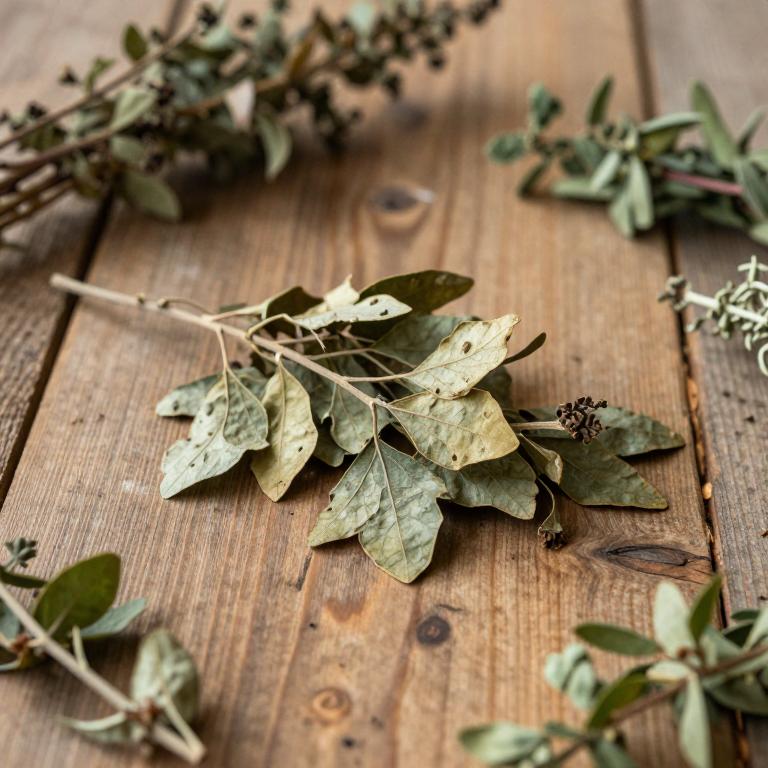
Broom Cluster Fig, scientifically known as Ficus sur, is a versatile medicinal tree native to tropical Africa. Renowned for its unique fruiting habit, it is deeply embedded in traditional healing. Various parts, including the bark and leaves, are utilized to treat ailments ranging from skin infections to digestive disorders.
Names and Synonyms
Common Names
- Broom Cluster Fig
- Broom-Cluster Fig
- Cape Wild Fig
- Fire Sticks
- Kooman
- Kooman Fig
Scientific Names
Accepted name
Ficus surSynonyms
- Sycomorus panifica
- Sycomorus capensis
- Ficus capensis var. beniensis
- Ficus thonningiana
- Ficus capensis f. pubifolia
- Ficus lichtensteinii
- Ficus capensis
- Ficus sycomorus var. alnea
- Ficus sycomorus var. polybotrya
- Sycomorus guineensis
- Ficus sycomorus var. prodigiosa
- Ficus stellulata var. glabrescens
- Ficus capensis var. guineensis
- Ficus villosipes
- Ficus capensis var. trichoneura
- Ficus riparia
- Ficus hermannii
- Ficus plateiocarpa
- Ficus panifica
- Ficus ostiolata
- Ficus mallotocarpa
- Ficus munsae
- Ficus kondeensis
- Ficus ituriensis
- Ficus guineensis
- Ficus gongoensis
- Ficus beniensis
- Ficus clethrophylla
- Sycomorus riparia
- Sycomorus thonningiana
- Ficus capensis var. mallotocarpa
- Ficus ostiolata var. brevipedunculata
- Ficus capensis var. ostiolata
- Ficus capensis var. ituriensis
- Ficus capensis var. pubescens
Regional and Traditional Names
German:
- Kap-Feige
- Besen-Feige
French:
- Petit sycomore
Sources: Wikidata, Catalogue of Life
Taxonomical Classification
This plant, known scientifically as Ficus sur, belongs to the kingdom Plantae and the phylum Streptophyta. Within the class Equisetopsida and subclass Magnoliidae, it is categorized under the order Rosales and the family Moraceae. Finally, it is classified under the genus Ficus.
| Rank | Classification |
|---|---|
| Kingdom | Plantae |
| Phylum | Streptophyta |
| Class | Equisetopsida |
| Subclass | Magnoliidae |
| Order | Rosales |
| Family | Moraceae |
| Genus | Ficus |
Sources: The World Checklist of Vascular Plants (WCVP)
Distribution
This plant, Ficus sur, exhibits a specific distribution pattern across several distinct regions. Within the Macaronesian islands, it can be found located in Cape Verde. Its presence extends significantly into West Tropical Africa, where it inhabits various territories. Specifically, the species is documented in the countries of Benin, Burkina, and Gambia. Additionally, the plant's geographical range includes the nation of Ghana.
| Region | Area |
|---|---|
| Macaronesia | Cape Verde |
| West Tropical Africa | Benin |
| West Tropical Africa | Burkina |
| West Tropical Africa | Gambia |
| West Tropical Africa | Ghana |
| West Tropical Africa | Guinea-Bissau |
| West Tropical Africa | Guinea |
| West Tropical Africa | Ivory Coast |
| West Tropical Africa | Liberia |
| West Tropical Africa | Mali |
Sources: The World Checklist of Vascular Plants (WCVP)
Botanical Identification
Ecology
The ecology of Ficus sur is characterized by its specific preference for moisture-rich environments, typically occurring within riverine forests and bush, as well as groundwater forests, though it is less frequently encountered in forest ecosystems situated away from water sources. This species exhibits a broad altitudinal distribution, thriving across a significant vertical gradient that ranges from a low elevation of 15 m AMSL to a maximum elevation of 2300 m AMSL.
- Elevational range max:
- 2300 m AMSL
- Elevational range min:
- 15 m AMSL
- Habitat :
- riverine forest and bush, groundwater forest, less often in forest away from water
Life history
The life history of Ficus sur is characterized by its status as a perennial plant, ensuring its long-term presence and survival within its ecological niche through multiple growing seasons. As a phanerophyte, it maintains its photosynthetic organs on elevated branches, a growth strategy that allows it to thrive in various forest environments. This phanerophyte life form is further supported by its structural development as a phanerophyte, which facilitates its ability to establish a robust, long-lived presence in its habitat.
- Life form :
- phanerophyte
- Lifecycle :
- perennial
Morphology
The morphology of Ficus sur is characterized by its growth form as a woody tree that functions as a self-supporting structure. It is a terrestrial plant that grows independently, rather than acting as a parasite or an epiphyte. The plant exhibits significant variation in its physical stature, with heights ranging from a minimum of 1 meter to a maximum of 35 meters, maintaining an average plant height of approximately 17.33 meters.
- Aquatic :
- terrestrial
- Climber :
- self-supporting
- Epiphyte :
- terrestrial
- Growth form :
- tree
- Parasite :
- independent
- Plant height max:
- 35 m
- Plant height mean:
- 17.3333333333333 m
- Plant height min:
- 1 m
- Woodiness :
- woody
Physiology
The physiology of Ficus sur is characterized by a C3 photosynthetic pathway, which governs its carbon fixation processes and energy production through the standard Calvin cycle. In terms of nutrient cycling and symbiotic associations, the plant does not function as a nitrogen fixer, meaning it lacks the specialized symbiotic relationship with diazotrophic bacteria required to convert atmospheric nitrogen into usable forms.
- Nitrogen fixer :
- no
- Photosynthetic pathway :
- C3
Reproduction
The reproduction of Ficus sur is characterized by a complex biological process involving biotic pollination and specialized dispersal mechanisms. The plant utilizes a biotic pollination syndrome, specifically relying on insects to facilitate fertilization. The fruit produced is a fleshy type, with an average length and width of 3.5 cm. The fruiting cycle is highly variable throughout the year, though specific data indicates a notable period centered around April. Following successful fertilization, the plant produces small seeds with a mean mass of 0.000564 g (ranging from a minimum of 0.00032 g to a maximum of 0.0011 g) and a consistent seed volume of 0.79 mm³. The dispersal of these seeds is achieved through a zoochorous syndrome, meaning they are spread by animals, which is a common evolutionary strategy for fleshy-fruited species to ensure effective seed distribution.
- Dispersal syndrome :
- zoochorous
- Fruit dryness :
- fleshy
- Fruit length mean:
- 3.5 cm
- Fruit type :
- other
- Fruit width mean:
- 3.5 cm
- Fruiting time :
- Apr
- Pollination syndrome :
- insect
- Pollination syndrome :
- biotic
- Seed mass max:
- 0.0011 g
- Seed mass mean:
- 0.000564 g
- Seed mass min:
- 0.00032 g
- Seed volume max:
- 0.79 mm³
Sources: Global Inventory of Floras and Traits (GIFT)
Plant Parts
Ficus sur has 1 reported plant parts identified across 1 scientific publications and several other databases that are studied for medicinal purposes. The most consistently reported plant part include root.
| Plant part | Supporting sources | Consensus |
|---|---|---|
| Root | 1 supporting sources | ★☆☆☆☆ |
Root
- Zeitschrift fur Naturforschung. C, Journal of biosciences
Chemicals
Ficus sur has 13 reported phytochemicals identified across 1 scientific publications and several other databases. The most consistently reported chemicals include Anthocyanins, As, CA, CD, CO.
| Chemical | Supporting sources | Consensus |
|---|---|---|
| Anthocyanins | 1 supporting sources | ★☆☆☆☆ |
| As | 1 supporting sources | ★☆☆☆☆ |
| CA | 1 supporting sources | ★☆☆☆☆ |
| CD | 1 supporting sources | ★☆☆☆☆ |
| CO | 1 supporting sources | ★☆☆☆☆ |
| CU | 1 supporting sources | ★☆☆☆☆ |
| FE | 1 supporting sources | ★☆☆☆☆ |
| MG | 1 supporting sources | ★☆☆☆☆ |
| MN | 1 supporting sources | ★☆☆☆☆ |
| PB | 1 supporting sources | ★☆☆☆☆ |
Anthocyanins
- Journal of ethnopharmacology
As
- Journal of environmental science and health. Part. B, Pesticides, food contaminants, and agricultural wastes
CA
- Journal of environmental science and health. Part. B, Pesticides, food contaminants, and agricultural wastes
CD
- Journal of environmental science and health. Part. B, Pesticides, food contaminants, and agricultural wastes
CO
- Journal of environmental science and health. Part. B, Pesticides, food contaminants, and agricultural wastes
CU
- Journal of environmental science and health. Part. B, Pesticides, food contaminants, and agricultural wastes
FE
- Journal of environmental science and health. Part. B, Pesticides, food contaminants, and agricultural wastes
MG
- Journal of environmental science and health. Part. B, Pesticides, food contaminants, and agricultural wastes
MN
- Journal of environmental science and health. Part. B, Pesticides, food contaminants, and agricultural wastes
PB
- Journal of environmental science and health. Part. B, Pesticides, food contaminants, and agricultural wastes
Conditions
Ficus sur has 1 reported investigations on conditions identified across 1 scientific publications and several other databases. The most consistently reported conditions include malaria.
| Condition | Supporting sources | Consensus |
|---|---|---|
| Malaria | 1 supporting sources | ★☆☆☆☆ |
Malaria
- Journal of ethnopharmacology
Preparations
Ficus sur has 8 reported preparations identified across 1 scientific publications and several other databases. The most consistently reported preparations include Ethanolic extracts, FC ethanolic extract, L/SB/RB, RB, aqueous and ethanolic extracts.
| Preparation | Supporting sources | Consensus |
|---|---|---|
| Ethanolic extracts | 1 supporting sources | ★☆☆☆☆ |
| Fc ethanolic extract | 1 supporting sources | ★☆☆☆☆ |
| L/sb/rb | 1 supporting sources | ★☆☆☆☆ |
| Rb | 1 supporting sources | ★☆☆☆☆ |
| Aqueous and ethanolic extracts | 1 supporting sources | ★☆☆☆☆ |
| Bark extract | 1 supporting sources | ★☆☆☆☆ |
| Ethanolic extract | 1 supporting sources | ★☆☆☆☆ |
| Extracts | 1 supporting sources | ★☆☆☆☆ |
Ethanolic extracts
- PloS one
Fc ethanolic extract
- In silico pharmacology
L/sb/rb
- Journal of ethnopharmacology
Rb
- Journal of ethnopharmacology
Aqueous and ethanolic extracts
- Journal of ethnopharmacology
Bark extract
- Acta poloniae pharmaceutica
Ethanolic extract
- Acta poloniae pharmaceutica
Extracts
- Journal of ethnopharmacology