amäk wäm
Ficus maxima · Accepted scientific name
Scientific literature: Very Sparse (15 studies) · ★☆☆☆☆
amäk wäm, scientifically known as Ficus maxima, is a versatile medicinal plant cherished in traditional healing practices. Renowned for its diverse therapeutic properties, this species is frequently utilized to treat various ailments, ranging from skin conditions to digestive issues, offering a natural approach to holistic wellness and community health.
- Family
- Moraceae
- Native range
- Northern America
- Parts used
- Not available
- Common names
- Hicatee Fig
- Scientific synonyms
- Ficus Vicencionis · Ficus Murilloi · 23 more
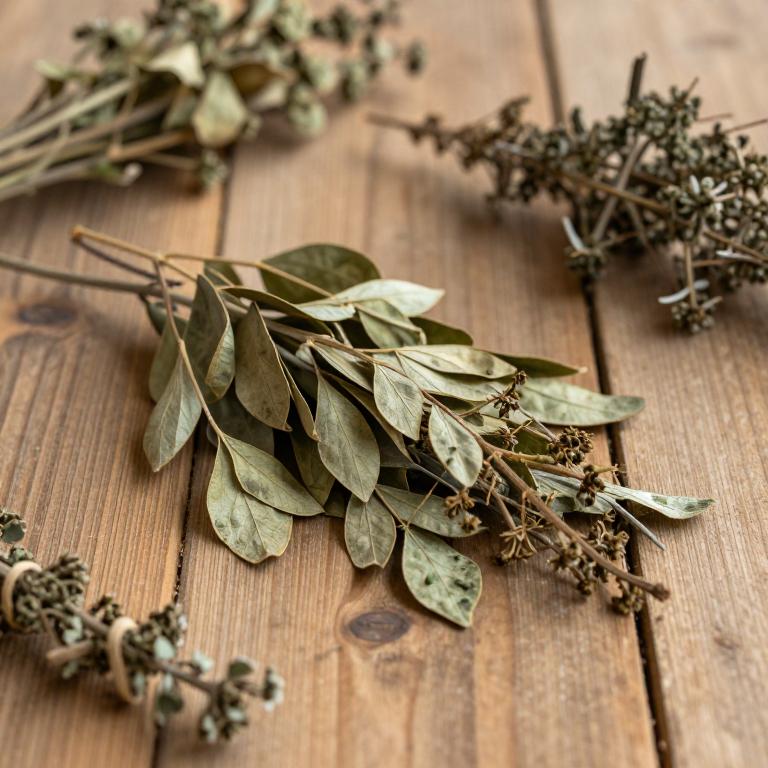
Names and Synonyms
Common Names
- hicatee fig
Scientific Names
Accepted name
Ficus maximaSynonyms
- Ficus vicencionis
- Ficus murilloi
- Ficus murilloi var. cajambrensis
- Ficus bopiana
- Pharmacosycea rigida
- Pharmacosycea pseudoradula
- Pharmacosycea glaucescens
- Pharmacosycea guyanensis
- Urostigma protensum
- Ficus chaconiana
- Ficus coybana
- Pharmacosycea grandaeva
- Ficus rubricosta
- Pharmacosycea hernandezii
- Ficus pseudoradula
- Ficus protensa
- Ficus plumieri
- Ficus subscabrida
- Ficus suffocans
- Ficus parkeri
- Ficus picardae
- Ficus glaucescens
- Ficus guadalajarana
- Ficus hernandezii
- Ficus populnea f. citrifolia
Regional and Traditional Names
Spanish:
- Álamo
- caucho higuerón
Sources: Wikidata, Catalogue of Life
Taxonomical Classification
This plant belongs to the kingdom Plantae and the phylum Streptophyta, falling under the class Equisetopsida and subclass Magnoliidae. Within the order Rosales, it is classified under the family Moraceae. Finally, its specific taxonomic placement is within the genus Ficus.
| Rank | Classification |
|---|---|
| Kingdom | Plantae |
| Phylum | Streptophyta |
| Class | Equisetopsida |
| Subclass | Magnoliidae |
| Order | Rosales |
| Family | Moraceae |
| Genus | Ficus |
Sources: The World Checklist of Vascular Plants (WCVP)
Distribution
This plant, Ficus maxima, exhibits a wide-ranging presence across the diverse landscapes of Mexico. It can be found throughout the central regions, occupying the heart of the country. Its distribution also extends into the northeast, where it adapts to the specific local climates. Furthermore, the species is established in the gulf areas and spreads across the northwest territories. Finally, its geographical footprint reaches the southwest, completing its broad coverage of the Mexican terrain.
| Region | Area |
|---|---|
| Mexico | Mexico Central |
| Mexico | Mexico Northeast |
| Mexico | Mexico Gulf |
| Mexico | Mexico Northwest |
| Mexico | Mexico Southwest |
| Mexico | Mexico Southeast |
| Central America | Belize |
| Central America | Costa Rica |
| Central America | El Salvador |
| Central America | Guatemala |
Sources: The World Checklist of Vascular Plants (WCVP)
Botanical Identification
Ecology
The ecology of Ficus maxima is defined by its presence in diverse tropical forest environments, specifically within Floresta de Terra Firme, Floresta Ombrófila (also known as Floresta Pluvial), and Floresta Ombrófila Mista. This species exhibits a broad vertical distribution across various landscapes, occupying an elevational range that begins at sea level (0 m AMSL) and extends up to a maximum altitude of 2100 m AMSL.
- Elevational range max:
- 2100 m AMSL
- Elevational range min:
- 0 m AMSL
- Habitat :
- Floresta de Terra Firme, Floresta Ombrófila (= Floresta Pluvial), Floresta Ombrófila Mista
Life history
The life history of Ficus maxima is characterized by its nature as a perennial organism, meaning it persists through many growing seasons rather than completing its cycle in a single year. As a long-lived woody species, its development follows a multi-year trajectory that begins with seed germination, leading to the establishment of a robust root system and a spreading canopy. Throughout its extended lifespan, the plant undergoes continuous vegetative growth and periodic reproductive phases, often influenced by environmental stability and seasonal shifts. This perennial lifecycle allows the plant to accumulate significant biomass over time, establishing a permanent presence within its ecological niche.
- Lifecycle :
- perennial
Morphology
The morphology of Ficus maxima is characterized by its robust growth form as a woody tree, which can reach an impressive maximum height of 35 m, with a mean height typically recorded around 8.5 m. As a terrestrial organism, it does not exhibit aquatic or semiaquatic tendencies, nor does it function as an epiphyte; instead, it maintains a strictly terrestrial existence. The plant is an independent species, lacking any parasitic relationship with other organisms. In terms of its structural habit, it is a self-supporting tree rather than a climber, liana, or vine, ensuring its stability through its significant woody architecture.
- Aquatic :
- terrestrial
- Climber :
- self-supporting
- Epiphyte :
- terrestrial
- Growth form :
- tree
- Parasite :
- independent
- Plant height max:
- 35 m
- Plant height mean:
- 8.5 m
- Woodiness :
- woody
Physiology
The physiology of Ficus maxima is characterized by a standard C3 photosynthetic pathway, wherein carbon dioxide fixation occurs via the Calvin cycle during the light-independent reactions. Unlike plants utilizing C4 or CAM mechanisms to minimize photorespiration, this species relies on the enzyme RuBisCO to catalyze the carboxylation of ribulose-1,5-bisphosphate. Furthermore, regarding its nutrient acquisition capabilities, Ficus maxima is not a nitrogen fixer; it lacks the symbiotic relationship with nitrogen-fixing bacteria (such as Rhizobium or Frankia) required to convert atmospheric nitrogen into bioavailable forms, necessitating the uptake of nitrates or ammonium directly from the soil through its root system.
- Nitrogen fixer :
- no
- Photosynthetic pathway :
- C3
Reproduction
The reproduction of Ficus maxima is characterized by a complex biotic pollination syndrome, primarily reliant on insects to facilitate the transfer of pollen. This specialized interaction ensures the success of its reproductive cycle through highly specific insect-mediated mechanisms. Following successful fertilization, the plant produces fleshy fruits, which serve as the primary vessel for seed protection and subsequent dispersal. The dispersal syndrome is categorized as zoochorous, meaning the seeds are distributed via animals that consume the fruit, facilitating the spread of the species across its habitat. The seeds themselves are relatively small and uniform, with a consistent seed volume of 0.52 mm³ (ranging from a minimum to a maximum of 0.52 mm³). In terms of physical dimensions, the seed length varies, with a minimum measurement of 1 mm and a maximum reaching up to 6 mm.
- Dispersal syndrome :
- zoochorous
- Fruit dryness :
- fleshy
- Pollination syndrome :
- insect
- Pollination syndrome :
- biotic
- Seed length max:
- 6 mm
- Seed length min:
- 1 mm
- Seed volume max:
- 0.52 mm³
Sources: Global Inventory of Floras and Traits (GIFT)
Chemicals
Ficus maxima has 6 reported phytochemicals identified across 0 scientific publications and several other databases. The most consistently reported chemicals include CHLOROGENIC ACID, Gallic acid, LOLIOLIDE, Lupeol, PYGENIC ACID A.
| Chemical | Supporting sources | Consensus |
|---|---|---|
| CHLOROGENIC ACID | 1 supporting sources | ★☆☆☆☆ |
| Gallic acid | 1 supporting sources | ★☆☆☆☆ |
| LOLIOLIDE | 1 supporting sources | ★☆☆☆☆ |
| Lupeol | 1 supporting sources | ★☆☆☆☆ |
| PYGENIC ACID A | 1 supporting sources | ★☆☆☆☆ |
| luteolin | 1 supporting sources | ★☆☆☆☆ |
CHLOROGENIC ACID
- Journal of ethnopharmacology
Gallic acid
- Journal of ethnopharmacology
LOLIOLIDE
- Journal of ethnopharmacology
Lupeol
- Journal of ethnopharmacology
PYGENIC ACID A
- Journal of ethnopharmacology
luteolin
- Journal of ethnopharmacology
Activities
Ficus maxima has 1 reported activities identified across 0 scientific publications and several other databases. The most consistently reported activities include Antinociceptive.
| Activity | Supporting sources | Consensus |
|---|---|---|
| Antinociceptive | 1 supporting sources | ★☆☆☆☆ |
Antinociceptive
- Journal of ethnopharmacology
Conditions
Ficus maxima has 2 reported investigations on conditions identified across 0 scientific publications and several other databases. The most consistently reported conditions include gingivitis, snake bites.
| Condition | Supporting sources | Consensus |
|---|---|---|
| Gingivitis | 1 supporting sources | ★☆☆☆☆ |
| Snake bites | 1 supporting sources | ★☆☆☆☆ |
Gingivitis
- Journal of ethnopharmacology
Snake bites
- Journal of ethnopharmacology
Preparations
Ficus maxima has 8 reported preparations identified across 0 scientific publications and several other databases. The most consistently reported preparations include EBFM-DCM, EBFM-EtOAc, EBFM-Hex, ELFM-DCM, ELFM-EtOAc.
| Preparation | Supporting sources | Consensus |
|---|---|---|
| Ebfm-dcm | 1 supporting sources | ★☆☆☆☆ |
| Ebfm-etoac | 1 supporting sources | ★☆☆☆☆ |
| Ebfm-hex | 1 supporting sources | ★☆☆☆☆ |
| Elfm-dcm | 1 supporting sources | ★☆☆☆☆ |
| Elfm-etoac | 1 supporting sources | ★☆☆☆☆ |
| Elfm-hex | 1 supporting sources | ★☆☆☆☆ |
| Leaf (elfm) extracts | 1 supporting sources | ★☆☆☆☆ |
| Stem bark (ebfm) extracts | 1 supporting sources | ★☆☆☆☆ |
Ebfm-dcm
- Journal of ethnopharmacology
Ebfm-etoac
- Journal of ethnopharmacology
Ebfm-hex
- Journal of ethnopharmacology
Elfm-dcm
- Journal of ethnopharmacology
Elfm-etoac
- Journal of ethnopharmacology
Elfm-hex
- Journal of ethnopharmacology
Leaf (elfm) extracts
- Journal of ethnopharmacology
Stem bark (ebfm) extracts
- Journal of ethnopharmacology