Hairy Rock Fig
Ficus glumosa · Accepted scientific name
Scientific literature: Very Sparse (11 studies) · ★☆☆☆☆
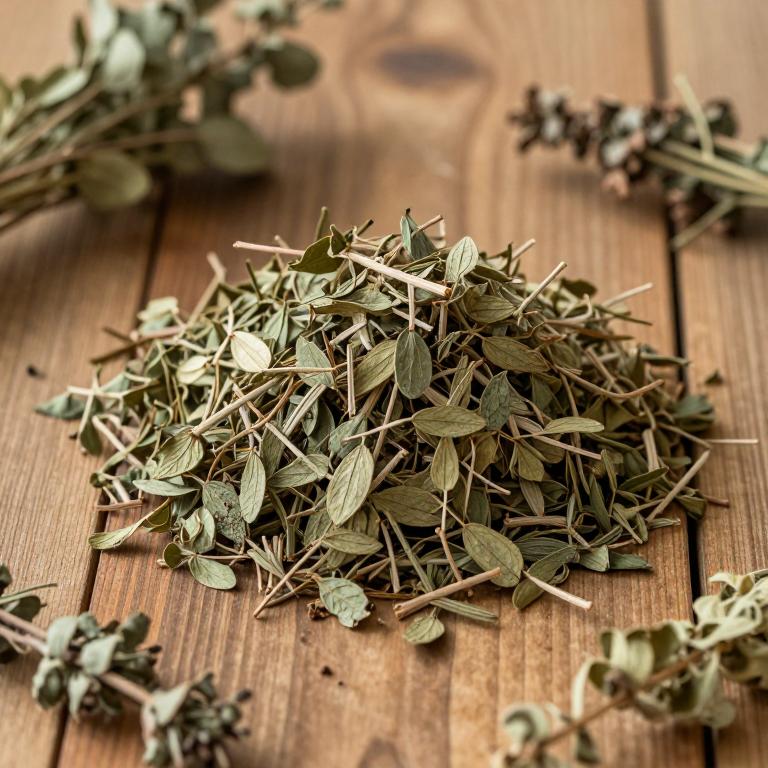
Hairy Rock Fig, scientifically known as Ficus glumosa, is a resilient, creeping shrub native to tropical Africa. Often found clinging to rocky outcrops, this versatile plant is highly valued in traditional medicine. It is frequently utilized to treat various ailments, including skin conditions, digestive issues, and inflammatory ailments.
Names and Synonyms
Common Names
- Hairy Rock Fig
- African Rock Fig
- African Rock-Fig
- Golden-Haired Rock Fig
- Mountain rock fig
- Sonder's Fig
- Sonder's Wild Fig
Scientific Names
Accepted name
Ficus glumosaSynonyms
- Ficus rubicunda
- Ficus rehmannii var. ovatifolia
- Ficus rehmannii var. villosa
- Ficus glumosa var. lanuginosa
- Ficus glumosa var. intermedia
- Urostigma glumosum
- Urostigma fazokelense
- Ficus gombariensis
- Urostigma rubicundum
- Ficus glumosa var. glaberrima
- Ficus glumosoides
- Ficus kitaba
- Ficus rehmannii
- Ficus sonderi
- Ficus rukwaensis
- Ficus fazokelensis
- Ficus durandiana
- Sycomorus hirsuta
Regional and Traditional Names
German:
- Berg-Feige
- Steiffblattfeige
Sources: Wikidata, Catalogue of Life
Taxonomical Classification
This plant belongs to the kingdom Plantae and is classified within the phylum Streptophyta and class Equisetopsida. Under the subclass Magnoliidae and order Rosales, it is a member of the family Moraceae. Ultimately, it is categorized under the genus Ficus as the species Ficus glumosa.
| Rank | Classification |
|---|---|
| Kingdom | Plantae |
| Phylum | Streptophyta |
| Class | Equisetopsida |
| Subclass | Magnoliidae |
| Order | Rosales |
| Family | Moraceae |
| Genus | Ficus |
Sources: The World Checklist of Vascular Plants (WCVP)
Distribution
This plant is primarily distributed across the diverse landscapes of West Tropical Africa. Its presence is documented within the borders of Benin, where it plays a role in the local ecosystem. It can also be found growing throughout the territory of Burkina. Furthermore, the species extends its range into the coastal and inland regions of Gambia. Finally, its geographical footprint includes the nation of Ghana and the country of Guinea-Bissau.
| Region | Area |
|---|---|
| West Tropical Africa | Benin |
| West Tropical Africa | Burkina |
| West Tropical Africa | Gambia |
| West Tropical Africa | Ghana |
| West Tropical Africa | Guinea-Bissau |
| West Tropical Africa | Guinea |
| West Tropical Africa | Ivory Coast |
| West Tropical Africa | Mali |
| West Tropical Africa | Nigeria |
| West Tropical Africa | Senegal |
Sources: The World Checklist of Vascular Plants (WCVP)
Botanical Identification
Ecology
The ecology of Ficus glumosa is defined by its broad adaptability to diverse topographical gradients, allowing it to thrive across a significant altitudinal spectrum. It is primarily distributed within tropical forest ecosystems, where it occupies varied niches ranging from lowland habitats to more montane environments. Specifically, its ecological presence is established across an elevational range that begins at a minimum of 245 m AMSL and extends to a maximum of 1850 m AMSL. This wide elevational tolerance suggests a high degree of resilience to varying temperature regimes and moisture levels, enabling the species to persist in both humid lowland forests and the cooler, more temperate zones of higher elevations.
- Elevational range max:
- 1850 m AMSL
- Elevational range min:
- 245 m AMSL
Life history
The life history of Ficus glumosa is characterized by its status as a perennial organism, ensuring its long-term survival and persistence within its ecological niche. As a member of the phanerophyte life forms, specifically categorized under both phanerophyte classifications, the plant maintains its photosynthetic organs well above the ground level, typically supported by a woody stem or trunk. This growth strategy allows it to establish a stable presence in its environment over multiple years, contributing to the structural complexity of its habitat through its enduring biological cycle.
- Life form :
- phanerophyte
- Lifecycle :
- perennial
Morphology
The morphology of Ficus glumosa is characterized by its growth form as a woody tree. This species is a terrestrial plant that functions as an independent organism rather than a parasite or an epiphyte. In terms of stature, it is a self-supporting tree that does not exhibit climbing habits such as vines or lianas. The plant exhibits significant vertical development, with a height range that starts from a minimum of 1 m, reaches a mean height of approximately 12 m, and can attain a maximum height of up to 15.24 m.
- Aquatic :
- terrestrial
- Climber :
- self-supporting
- Epiphyte :
- terrestrial
- Growth form :
- tree
- Parasite :
- independent
- Plant height max:
- 15.24018532 m
- Plant height mean:
- 12 m
- Plant height min:
- 1 m
- Woodiness :
- woody
Physiology
The physiology of Ficus glumosa is characterized by a standard C3 photosynthetic pathway, meaning it utilizes the Calvin cycle to fix carbon dioxide during the light-independent reactions, a process typical of most woody tropical species. In terms of its nutrient cycling capabilities, the plant is not a nitrogen fixer, as it lacks the specialized symbiotic relationships with diazotrophic bacteria required to convert atmospheric nitrogen into usable forms.
- Nitrogen fixer :
- no
- Photosynthetic pathway :
- C3
Reproduction
The reproduction of Ficus glumosa is characterized by a biotic pollination syndrome, primarily mediated by insects. The plant produces fleshy fruits, which facilitate a zoochorous dispersal syndrome, relying on animals to aid in the movement of its seeds. The seeds themselves are quite small and uniform in size, with a recorded seed mass of 0.00104 g (both minimum and maximum) and a consistent seed volume of 4.2 mm³ (mean, minimum, and maximum).
- Dispersal syndrome :
- zoochorous
- Fruit dryness :
- fleshy
- Pollination syndrome :
- insect
- Pollination syndrome :
- biotic
- Seed mass mean:
- 0.00104 g
- Seed volume max:
- 4.2 mm³
Sources: Global Inventory of Floras and Traits (GIFT)
Plant Parts
Ficus glumosa has 2 reported plant parts identified across 2 scientific publications and several other databases that are studied for medicinal purposes. The most consistently reported plant part include leaf, stem.
| Plant part | Supporting sources | Consensus |
|---|---|---|
| Leaf | 1 supporting sources | ★☆☆☆☆ |
| Stem | 1 supporting sources | ★☆☆☆☆ |
Leaf
- Nigerian journal of physiological sciences : official publication of the Physiological Society of Nigeria
Stem
- Pharmaceuticals (Basel, Switzerland)
Chemicals
Ficus glumosa has 6 reported phytochemicals identified across 2 scientific publications and several other databases. The most consistently reported chemicals include Flavonoids, Cardiac Glycosides, Ceramides, SAPONIN, Tannins.
| Chemical | Supporting sources | Consensus |
|---|---|---|
| Flavonoids | 2 supporting sources | ★☆☆☆☆ |
| Cardiac Glycosides | 1 supporting sources | ★☆☆☆☆ |
| Ceramides | 1 supporting sources | ★☆☆☆☆ |
| SAPONIN | 1 supporting sources | ★☆☆☆☆ |
| Tannins | 1 supporting sources | ★☆☆☆☆ |
| Triterpenes | 1 supporting sources | ★☆☆☆☆ |
Flavonoids
- Pharmaceuticals (Basel, Switzerland)
- Nigerian journal of physiological sciences : official publication of the Physiological Society of Nigeria
Cardiac Glycosides
- Nigerian journal of physiological sciences : official publication of the Physiological Society of Nigeria
Ceramides
- Nigerian journal of physiological sciences : official publication of the Physiological Society of Nigeria
SAPONIN
- Nigerian journal of physiological sciences : official publication of the Physiological Society of Nigeria
Tannins
- Nigerian journal of physiological sciences : official publication of the Physiological Society of Nigeria
Triterpenes
- Nigerian journal of physiological sciences : official publication of the Physiological Society of Nigeria
Activities
Ficus glumosa has 2 reported activities identified across 2 scientific publications and several other databases. The most consistently reported activities include Antidiabetic, Hypoglycemic.
| Activity | Supporting sources | Consensus |
|---|---|---|
| Antidiabetic | 1 supporting sources | ★☆☆☆☆ |
| Hypoglycemic | 1 supporting sources | ★☆☆☆☆ |
Antidiabetic
- Journal of ethnopharmacology
Hypoglycemic
- Nigerian journal of physiological sciences : official publication of the Physiological Society of Nigeria
Preparations
Ficus glumosa has 11 reported preparations identified across 2 scientific publications and several other databases. The most consistently reported preparations include EA fraction, ethanol extracts, ethanol leaf extract, ethanolic leaves extract, ethanolic leaves extract of Ficus glumosa.
| Preparation | Supporting sources | Consensus |
|---|---|---|
| Ea fraction | 1 supporting sources | ★☆☆☆☆ |
| Ethanol extracts | 1 supporting sources | ★☆☆☆☆ |
| Ethanol leaf extract | 1 supporting sources | ★☆☆☆☆ |
| Ethanolic leaves extract | 1 supporting sources | ★☆☆☆☆ |
| Ethanolic leaves extract of ficus glumosa | 1 supporting sources | ★☆☆☆☆ |
| Ethyl acetate (ea) fraction | 1 supporting sources | ★☆☆☆☆ |
| Extract of ficus glumosa | 1 supporting sources | ★☆☆☆☆ |
| N-butanol fraction | 1 supporting sources | ★☆☆☆☆ |
| N-butanol fractions | 1 supporting sources | ★☆☆☆☆ |
| Petroleum ether (pe) fraction | 1 supporting sources | ★☆☆☆☆ |
Ea fraction
- Pharmaceuticals (Basel, Switzerland)
Ethanol extracts
- Pharmaceuticals (Basel, Switzerland)
Ethanol leaf extract
- Nigerian journal of physiological sciences : official publication of the Physiological Society of Nigeria
Ethanolic leaves extract
- Nigerian journal of physiological sciences : official publication of the Physiological Society of Nigeria
Ethanolic leaves extract of ficus glumosa
- Nigerian journal of physiological sciences : official publication of the Physiological Society of Nigeria
Ethyl acetate (ea) fraction
- Pharmaceuticals (Basel, Switzerland)
Extract of ficus glumosa
- Nigerian journal of physiological sciences : official publication of the Physiological Society of Nigeria
N-butanol fraction
- Pharmaceuticals (Basel, Switzerland)
N-butanol fractions
- Pharmaceuticals (Basel, Switzerland)
Petroleum ether (pe) fraction
- Pharmaceuticals (Basel, Switzerland)