India-rubber tree
Ficus elastica · Accepted scientific name
Scientific literature: Very Sparse (14 studies) · ★☆☆☆☆
India-rubber tree, scientifically known as Ficus elastica, is a versatile evergreen celebrated for its ornamental beauty and medicinal potential. Native to Southeast Asia, this robust plant offers diverse therapeutic benefits, ranging from traditional wound healing to modern pharmacological applications, making it a significant subject in ethnobotanical and herbal studies.
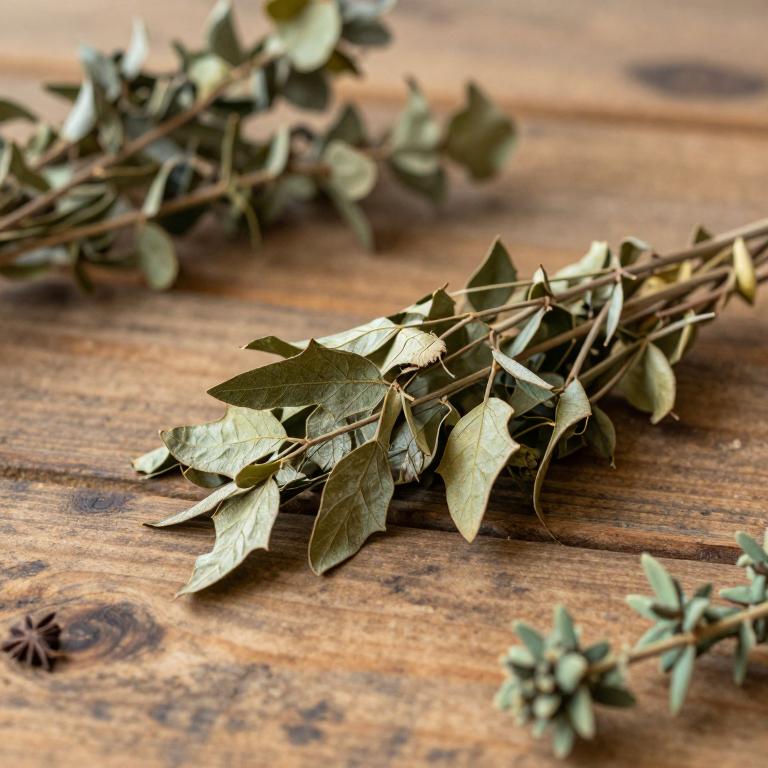
Names and Synonyms
Common Names
- India Rubber Fig
- Indian Rubber Tree
- Rubber Plant
- karet-tree
- India Rubber Tree
- Rubber Fig
Scientific Names
Accepted name
Ficus elasticaSynonyms
- Visiania elastica
- Urostigma elasticum
- Macrophthalma elastica
- Urostigma elasticum var. latifolium
- Ficus elastica var. variegata
- Ficus taeda
- Urostigma circumscissum
- Urostigma karet
- Urostigma odoratum
- Ficus skytinodermis
- Ficus elastica var. belgica
- Ficus elastica var. benghalensis
- Ficus elastica var. decora
- Ficus elastica var. karet
- Ficus elastica var. minor
- Ficus elastica var. odorata
- Ficus elastica var. rubra
- Stilpnophyllum elasticum
Regional and Traditional Names
Spanish:
- Ficus decora
- Árbol de la goma
- Arbol de la goma
- Ficus de hoja grande
- Higuera del caucho
- Árbol del caucho
- Higuera cauchera
- Gomero
- Arbol del caucho
- cauchú comun
- higuiera cauchera
- Caucho
- Gomero
- Hule asiático
- Gomero/Árbol del caucho
German:
- Gummibaum
- Gummibaum
French:
- arbre à la gomme
- arbre du caoutchouc
- ficus à grandes feuilles
- figuier caoutchouc
- figuier élastique
- gommier
- arbre à caoutchouc
- arbre à caoutchouc
- figuier élastique
- Caoutchouc
Sources: Wikidata, Catalogue of Life
Taxonomical Classification
This plant belongs to the kingdom Plantae and is classified under the phylum Streptophyta and class Equisetopsida. Within the subclass Magnoliidae, it is ordered under Rosales and situated in the family Moraceae. Ultimately, it is identified by the genus Ficus.
| Rank | Classification |
|---|---|
| Kingdom | Plantae |
| Phylum | Streptophyta |
| Class | Equisetopsida |
| Subclass | Magnoliidae |
| Order | Rosales |
| Family | Moraceae |
| Genus | Ficus |
Sources: The World Checklist of Vascular Plants (WCVP)
Distribution
This plant exhibits a diverse geographical distribution spanning across several continents. In Europe, it can be found in Spain within the southwestern region and in Sicilia throughout the southeast. Its reach extends into West Tropical Africa, where it is specifically located in Gambia. Furthermore, it inhabits the West-Central Tropical Africa region, particularly in Cameroon. Finally, the species is also distributed across the Gulf of Guinea Islands in West-Central Tropical Africa.
| Region | Area |
|---|---|
| Southwestern Europe | Spain |
| Southeastern Europe | Sicilia |
| West Tropical Africa | Gambia |
| West-Central Tropical Africa | Cameroon |
| West-Central Tropical Africa | Gulf of Guinea Is. |
| Western Indian Ocean | Comoros |
| Western Indian Ocean | Mauritius |
| Western Indian Ocean | Réunion |
| China | China South-Central |
| Indian Subcontinent | Assam |
Sources: The World Checklist of Vascular Plants (WCVP)
Botanical Identification
Ecology
The ecology of Ficus elasticas is characterized by a broad altitudinal distribution that spans from sea level to significant mountainous terrain. This species thrives across an elevational range starting at 0 m AMSL, indicating a high capacity for colonization in lowland tropical or subtropical environments. The distribution reaches its upper limits at a maximum elevation of 2600 m AMSL, showcasing its adaptability to varying climatic pressures and temperature gradients found at higher altitudes. On average, the plant is most commonly situated at a mean elevation of 1150 m AMSL, a mid-altitude zone that likely provides the optimal balance of moisture, light availability, and atmospheric conditions required for its growth and ecological integration.
- Elevational range max:
- 2600 m AMSL
- Elevational range mean:
- 1150 m AMSL
- Elevational range min:
- 0 m AMSL
Life history
The life history of Ficus elastica is characterized by its nature as a perennial species, allowing it to persist and thrive through many growing seasons. As a robust and long-lived plant, it maintains a consistent presence in its environment, contributing to its stability within its ecological niche. Complementing its long lifespan, the plant exhibits evergreen deciduousness, meaning it retains its lush, green foliage throughout the year without undergoing a seasonal shedding of leaves. This continuous leaf presence ensures a constant capacity for photosynthesis, supporting its vigorous growth patterns and its ability to reach significant structural maturity over time.
- Deciduousness :
- evergreen
- Lifecycle :
- perennial
Morphology
The morphology of Ficus elastica is characterized by its robust growth form as a woody tree. It is a terrestrial plant that functions as a self-supporting species rather than a climber or a vine, and it exists as an independent organism without parasitic tendencies. In terms of stature, the plant exhibits significant vertical development, with a height that typically ranges from a minimum of 20 meters to a maximum of 30 meters, though it can reach a mean height of approximately 37.5 meters. Its structural development is defined by its woody nature, providing the necessary stability for its massive, tree-like habit.
- Aquatic :
- terrestrial
- Climber :
- self-supporting
- Epiphyte :
- terrestrial
- Growth form :
- tree
- Parasite :
- independent
- Plant height max:
- 30 m
- Plant height mean:
- 37.5 m
- Plant height min:
- 20 m
- Woodiness :
- woody
Physiology
The physiology of Ficus elasticas is characterized by a C3 photosynthetic pathway, which dictates its metabolic processes and carbon fixation strategies. The plant's vegetative structure is defined by its foliage, which displays significant morphological variation in dimensions. The leaves possess a mean length of 19 cm, though they can range from a minimum of 8 cm to a maximum of 30 cm. In terms of lateral expansion, the leaf width shows a mean value of 8.5 cm, with measurements spanning from a minimum of 7 cm to a maximum of 10 cm. Furthermore, the plant does not function as a nitrogen fixer, meaning it relies on external soil nitrogen sources rather than symbiotic nitrogen-fixing bacteria to fulfill its nutritional requirements.
- Leaf length max:
- 30 cm
- Leaf length mean:
- 19 cm
- Leaf length min:
- 8 cm
- Leaf width max:
- 10 cm
- Leaf width mean:
- 8.5 cm
- Leaf width min:
- 7 cm
- Nitrogen fixer :
- no
- Photosynthetic pathway :
- C3
Reproduction
The reproduction of Ficus elasticas is characterized by a biotic pollination syndrome, primarily driven by insect vectors. The flowering cycle is highly flexible, with flowering start times often occurring in December, though the plant exhibits a variable flowering period that can span across all months from January through November. The resulting fruits are fleshy in nature, housing seeds with highly consistent physical properties. Specifically, the seeds maintain a uniform seed mass of 0.09804 g (with both minimum and maximum values recorded at this level) and a consistent seed volume of 100 mm³, representing both the minimum, maximum, and mean measurements.
- Flowering time :
- Dec
- Fruit dryness :
- fleshy
- Pollination syndrome :
- insect
- Pollination syndrome :
- biotic
- Seed mass mean:
- 0.09804 g
- Seed volume max:
- 100 mm³
Sources: Global Inventory of Floras and Traits (GIFT)
Plant Parts
Ficus elastica has 2 reported plant parts identified across 2 scientific publications and several other databases that are studied for medicinal purposes. The most consistently reported plant part include leaf, root.
| Plant part | Supporting sources | Consensus |
|---|---|---|
| Leaf | 1 supporting sources | ★☆☆☆☆ |
| Root | 1 supporting sources | ★☆☆☆☆ |
Leaf
- Pharmacognosy magazine
Root
- Archives internationales de pharmacodynamie et de therapie
Chemicals
Ficus elastica has 1 reported phytochemicals identified across 2 scientific publications and several other databases. The most consistently reported chemicals include Flavonoids.
| Chemical | Supporting sources | Consensus |
|---|---|---|
| Flavonoids | 1 supporting sources | ★☆☆☆☆ |
Flavonoids
- Archives internationales de pharmacodynamie et de therapie
Conditions
Ficus elastica has 9 reported investigations on conditions identified across 2 scientific publications and several other databases. The most consistently reported conditions include inflammation, Buruli ulcer, Plasmodium falciparum, Schistosoma mansoni, adjuvant arthritis.
| Condition | Supporting sources | Consensus |
|---|---|---|
| Inflammation | 2 supporting sources | ★☆☆☆☆ |
| Buruli ulcer | 1 supporting sources | ★☆☆☆☆ |
| Plasmodium falciparum | 1 supporting sources | ★☆☆☆☆ |
| Schistosoma mansoni | 1 supporting sources | ★☆☆☆☆ |
| Adjuvant arthritis | 1 supporting sources | ★☆☆☆☆ |
| Headache | 1 supporting sources | ★☆☆☆☆ |
| Menorrhagia | 1 supporting sources | ★☆☆☆☆ |
| Rheumatism | 1 supporting sources | ★☆☆☆☆ |
| Toothache | 1 supporting sources | ★☆☆☆☆ |
Inflammation
- Journal of ethnopharmacology
- Archives internationales de pharmacodynamie et de therapie
Buruli ulcer
- International journal of mycobacteriology
Plasmodium falciparum
- Saudi journal of biological sciences
Schistosoma mansoni
- Pharmaceutical biology
Adjuvant arthritis
- Archives internationales de pharmacodynamie et de therapie
Headache
- Pharmacognosy magazine
Menorrhagia
- Pharmacognosy magazine
Rheumatism
- Pharmacognosy magazine
Toothache
- Pharmacognosy magazine
Preparations
Ficus elastica has 6 reported preparations identified across 2 scientific publications and several other databases. The most consistently reported preparations include Ficus elastica extract, aqueous extract, crude aqueous extract of the root bark, dried leaves, latex.
| Preparation | Supporting sources | Consensus |
|---|---|---|
| Ficus elastica extract | 1 supporting sources | ★☆☆☆☆ |
| Aqueous extract | 1 supporting sources | ★☆☆☆☆ |
| Crude aqueous extract of the root bark | 1 supporting sources | ★☆☆☆☆ |
| Dried leaves | 1 supporting sources | ★☆☆☆☆ |
| Latex | 1 supporting sources | ★☆☆☆☆ |
| Methanolic and aqueous crude extracts | 1 supporting sources | ★☆☆☆☆ |
Ficus elastica extract
- Archives internationales de pharmacodynamie et de therapie
Aqueous extract
- Archives internationales de pharmacodynamie et de therapie
Crude aqueous extract of the root bark
- Archives internationales de pharmacodynamie et de therapie
Dried leaves
- Pharmacognosy magazine
Latex
- Pharmaceutical biology
Methanolic and aqueous crude extracts
- International journal of mycobacteriology