Mysore fig
Ficus drupacea · Accepted scientific name
Scientific literature: Very Sparse (7 studies) · ★☆☆☆☆
Mysore fig, scientifically known as Ficus drupacea, is a versatile medicinal plant native to South Asia. Renowned for its diverse therapeutic properties, it is used in traditional medicine to treat skin ailments, digestive issues, and inflammatory conditions. Its bark, leaves, and fruit offer significant bioactive compounds for healing.
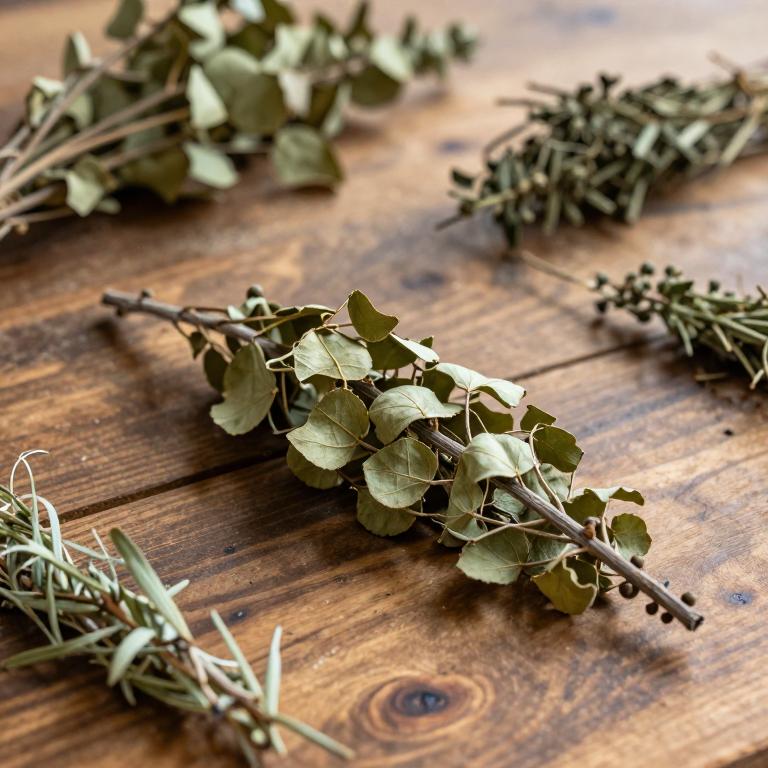
Names and Synonyms
Common Names
- brown-woolly fig
- drupe fig
- hairy fig
- red fig
Scientific Names
Accepted name
Ficus drupaceaSynonyms
- Ficus drupacea var. pubescens
- Ficus pubescens
- Ficus vidaliana
- Ficus mysorensis
- Ficus chrysochlamys
- Ficus chrysocoma
- Urostigma dasycarpum
- Urostigma chrysotrix
- Ficus drupacea var. mysorensis
- Urostigma subcuspidatum
- Urostigma bicorne
- Urostigma pilosum
- Ficus drupacea var. glabrata
- Urostigma mysorense
- Ficus drupacea var. pedicellata
- Urostigma drupaceum
- Ficus drupacea var. subrepanda
- Ficus subrepanda
- Ficus payapa
- Ficus pilosa
- Ficus pilosa var. chrysocoma
- Ficus mysorensis var. dasycarpa
- Ficus mysorensis f. parvifolia
- Ficus mysorensis var. pubescens
- Ficus mysorensis var. subrepanda
- Ficus gonia
Sources: Wikidata, Catalogue of Life
Taxonomical Classification
This plant belongs to the kingdom Plantae and the phylum Streptophyta, falling under the class Equisetopsida and subclass Magnoliidae. Within the order Rosales, it is classified under the family Moraceae. Finally, its taxonomic identity is defined by the genus Ficus.
| Rank | Classification |
|---|---|
| Kingdom | Plantae |
| Phylum | Streptophyta |
| Class | Equisetopsida |
| Subclass | Magnoliidae |
| Order | Rosales |
| Family | Moraceae |
| Genus | Ficus |
Sources: The World Checklist of Vascular Plants (WCVP)
Distribution
This plant exhibits a widespread presence across several key regions in Asia. In China, its distribution spans the South-Central, Southeast, and Hainan areas. Moving toward the Indian Subcontinent, it can be found growing in the state of Assam. Additionally, the species is documented to occur within the borders of Bangladesh. Together, these locations highlight the plant's broad ecological range across southern and eastern territories.
| Region | Area |
|---|---|
| China | China South-Central |
| China | Hainan |
| China | China Southeast |
| Indian Subcontinent | Assam |
| Indian Subcontinent | Bangladesh |
| Indian Subcontinent | East Himalaya |
| Indian Subcontinent | India |
| Indian Subcontinent | Nepal |
| Indian Subcontinent | Sri Lanka |
| Indo-China | Cambodia |
Sources: The World Checklist of Vascular Plants (WCVP)
Botanical Identification
Ecology
The ecology of Ficus drupacea is characterized by its specific altitudinal distribution within its native habitat, where it thrives across a distinct vertical gradient. This species is typically found at low to mid-elevation zones, occupying a range that begins at a minimum altitude of 160 m AMSL and extends up to a maximum of 1000 m AMSL. Within this ecological niche, the plant maintains a mean elevation of approximately 520 m AMSL, suggesting a preference for specific climatic and topographical conditions found within these lower montane or lowland environments.
- Elevational range max:
- 1000 m AMSL
- Elevational range mean:
- 520 m AMSL
- Elevational range min:
- 160 m AMSL
Life history
The life history of Ficus drupacea is characterized by its status as a perennial species, allowing the plant to persist through multiple growing seasons and establish a long-term presence in its ecosystem. As a perennial, it follows a continuous developmental trajectory rather than completing its cycle within a single year, which facilitates the development of robust woody structures and extensive root systems necessary for sustained growth. This prolonged lifecycle enables the plant to invest significant energy into complex reproductive strategies, including the production of specialized syconia, ensuring its survival and ability to interact with specific pollinator species over many years.
- Lifecycle :
- perennial
Morphology
The morphology of Ficus drupacea is characterized by its robust growth form as a woody tree. As a terrestrial species, it functions as an independent organism rather than a parasite or an epiphyte. The plant exhibits a self-supporting structure, meaning it does not require external support such as a liana or vine to maintain its upright posture. In terms of stature, the plant reaches significant dimensions, with a height typically ranging from a minimum of 10 m to a maximum of 15 m, though it maintains a mean plant height of approximately 18.75 m.
- Aquatic :
- terrestrial
- Climber :
- self-supporting
- Epiphyte :
- terrestrial
- Growth form :
- tree
- Parasite :
- independent
- Plant height max:
- 15 m
- Plant height mean:
- 18.75 m
- Plant height min:
- 10 m
- Woodiness :
- woody
Physiology
The physiology of Ficus drupacea is characterized by a C3 photosynthetic pathway, which dictates its carbon fixation processes and metabolic efficiency. The vegetative structure is defined by its foliage, where leaves exhibit significant morphological variation; the leaf length typically averages 16.5 cm, ranging from a minimum of 15 cm to a maximum of 18 cm. Correspondingly, the leaf width shows a mean of 7 cm, with measurements spanning from a minimum of 5 cm to a maximum of 9 cm. In terms of nutrient cycling and symbiotic relationships, the plant does not function as a nitrogen fixer, relying instead on soil-based nitrogen availability to support its physiological requirements and growth.
- Leaf length max:
- 18 cm
- Leaf length mean:
- 16.5 cm
- Leaf length min:
- 15 cm
- Leaf width max:
- 9 cm
- Leaf width mean:
- 7 cm
- Leaf width min:
- 5 cm
- Nitrogen fixer :
- no
- Photosynthetic pathway :
- C3
Reproduction
The reproduction of Ficus drupacea is characterized by a complex biotic pollination syndrome, relying on insect vectors to facilitate the transfer of pollen. The reproductive process results in the development of a specialized fruit type classified as an anthocarp, which is notable for its fleshy texture. These fruits are typically spherical or subglobose, maintaining a mean length and width of approximately 1.8 cm. Within this fleshy structure, the seeds are relatively uniform in size, with a mean, minimum, and maximum seed volume of 1 mm³. Following maturation, the plant employs a zoochorous dispersal syndrome, utilizing animals to distribute its seeds throughout the environment.
- Dispersal syndrome :
- zoochorous
- Fruit dryness :
- fleshy
- Fruit length mean:
- 1.8 cm
- Fruit type :
- other
- Fruit width mean:
- 1.8 cm
- Pollination syndrome :
- insect
- Pollination syndrome :
- biotic
- Seed volume max:
- 1 mm³
Sources: Global Inventory of Floras and Traits (GIFT)
Plant Parts
Ficus drupacea has 2 reported plant parts identified across 2 scientific publications and several other databases that are studied for medicinal purposes. The most consistently reported plant part include fruit, root.
| Plant part | Supporting sources | Consensus |
|---|---|---|
| Fruit | 1 supporting sources | ★☆☆☆☆ |
| Root | 1 supporting sources | ★☆☆☆☆ |
Fruit
- Chemistry & biodiversity
Root
- Chemistry & biodiversity
Chemicals
Ficus drupacea has 5 reported phytochemicals identified across 2 scientific publications and several other databases. The most consistently reported chemicals include Flavonoids, Polyunsaturated Fatty Acids, linoleic acid, oleic acid, palmitic acid.
| Chemical | Supporting sources | Consensus |
|---|---|---|
| Flavonoids | 1 supporting sources | ★☆☆☆☆ |
| Polyunsaturated Fatty Acids | 1 supporting sources | ★☆☆☆☆ |
| linoleic acid | 1 supporting sources | ★☆☆☆☆ |
| oleic acid | 1 supporting sources | ★☆☆☆☆ |
| palmitic acid | 1 supporting sources | ★☆☆☆☆ |
Flavonoids
- Chemistry & biodiversity
Polyunsaturated Fatty Acids
- Chemistry & biodiversity
linoleic acid
- Chemistry & biodiversity
oleic acid
- Chemistry & biodiversity
palmitic acid
- Chemistry & biodiversity
Preparations
Ficus drupacea has 1 reported preparations identified across 2 scientific publications and several other databases. The most consistently reported preparations include root powder.
| Preparation | Supporting sources | Consensus |
|---|---|---|
| Root powder | 1 supporting sources | ★☆☆☆☆ |
Root powder
- Chemistry & biodiversity