mistletoe fig
Ficus deltoidea · Accepted scientific name
Scientific literature: Sparse (51 studies) · ★★☆☆☆
Mistletoe fig, scientifically known as Ficus deltoidea, is a remarkable semi-parasitic plant native to specific tropical regions. Characterized by its unique growth habit and specialized foliage, this species plays a vital role in its ecosystem. Beyond its ecological importance, it holds significant potential for traditional and modern medicinal applications.
- Family
- Moraceae
- Native range
- Asia-Tropical
- Parts used
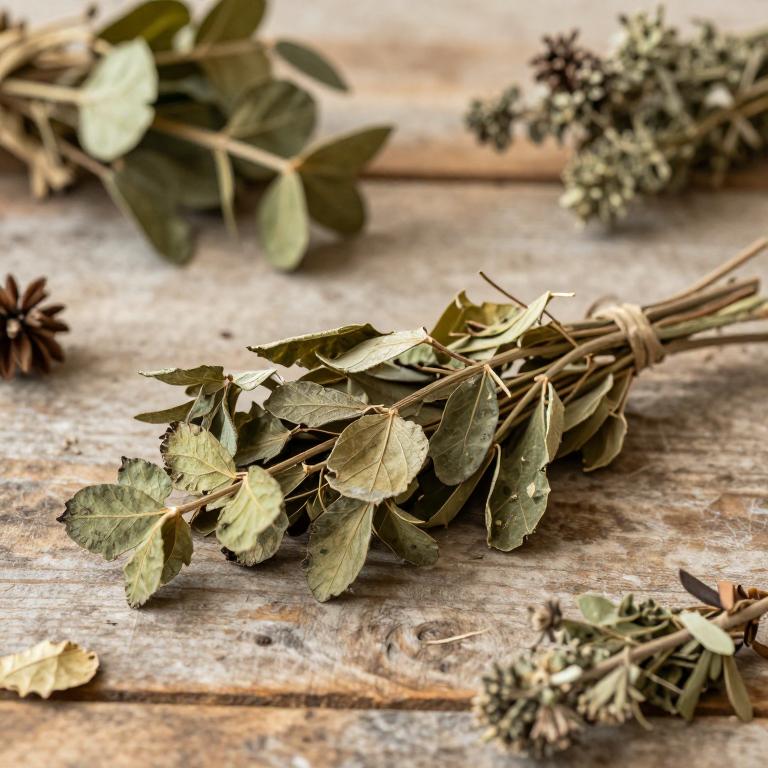
- Leaf · Fruit
- Common names
- Mistletoe Fig
- Scientific synonyms
- Ficus Diversifolia Var. Deltoidea
Names and Synonyms
Common Names
- mistletoe fig
Scientific Names
Accepted name
Ficus deltoideaSynonyms
- Ficus diversifolia var. deltoidea
Sources: Wikidata, Catalogue of Life
Taxonomical Classification
This plant belongs to the kingdom Plantae and the phylum Streptophyta, falling under the class Equisetopsida and subclass Magnoliidae. Within the order Rosales, it is classified under the family Moraceae and the genus Ficus. As a member of the Ficus genus, Ficus deltoidea is identified by its specific taxonomic placement within these hierarchical groups.
| Rank | Classification |
|---|---|
| Kingdom | Plantae |
| Phylum | Streptophyta |
| Class | Equisetopsida |
| Subclass | Magnoliidae |
| Order | Rosales |
| Family | Moraceae |
| Genus | Ficus |
Sources: The World Checklist of Vascular Plants (WCVP)
Distribution
This plant exhibits a broad geographical range across several key regions of Southeast Asia. Within the Indo-China region, its presence is specifically noted in Thailand. It also has an extensive distribution throughout the Malesia zone, including the island of Borneo. Furthermore, its habitat extends to Jawa and the Malay Peninsula. Finally, the species can be found reaching as far as the Maluku islands.
| Region | Area |
|---|---|
| Indo-China | Thailand |
| Malesia | Borneo |
| Malesia | Jawa |
| Malesia | Malaya |
| Malesia | Maluku |
| Malesia | Sulawesi |
| Malesia | Sumatera |
Sources: The World Checklist of Vascular Plants (WCVP)
Botanical Identification
Life history
The life history of Ficus deltoidea is characterized by a perennial lifecycle, meaning the plant persists through multiple years rather than completing its cycle in a single growing season. As a long-lived woody species, it maintains its physiological functions and structural integrity over extended periods, allowing it to establish a stable presence within its ecological niche. This enduring nature enables the plant to undergo repeated reproductive cycles, contributing to its long-term survival and ability to adapt to seasonal environmental shifts.
- Lifecycle :
- perennial
Morphology
The morphology of Ficus deltoidea is characterized by its woody structure, manifesting in growth forms that range from a shrub to a tree. It functions as an obligatory epiphyte, often utilizing other structures for support, yet it can also be described as a self-supporting plant. In terms of stature, the species exhibits significant vertical development, with a mean plant height of approximately 2 m and the capacity to reach a maximum height of up to 6 m.
- Climber :
- self-supporting
- Epiphyte :
- obligatory
- Growth form :
- shrub
- Growth form :
- tree
- Plant height max:
- 6 m
- Plant height mean:
- 2 m
- Woodiness :
- woody
Physiology
The physiology of Ficus deltoidea is characterized by a C3 photosynthetic pathway, a common metabolic strategy among many woody species that involves the direct fixation of atmospheric carbon dioxide through the Calvin cycle. This metabolic process dictates its carbon assimilation efficiency and water-use patterns in its native environment. Furthermore, this species does not function as a nitrogen fixer, meaning it lacks the specialized symbiotic relationships with diazotrophic bacteria required to convert atmospheric nitrogen into bioavailable forms, and instead relies on the uptake of nitrogenous compounds from the soil through its root system.
- Nitrogen fixer :
- no
- Photosynthetic pathway :
- C3
Reproduction
The reproduction of Ficus deltoidea is characterized by a biotic pollination syndrome, primarily relying on insects to facilitate the transfer of pollen. This insect-mediated process is central to its reproductive cycle, ensuring the successful fertilization required for fruit development. Once fertilization has occurred, the plant produces fleshy fruits, which serve as the vessel for its offspring. The seeds contained within these fleshy fruits are uniform in size, maintaining a consistent seed volume with a minimum, maximum, and mean measurement of 9.6 mm³.
- Fruit dryness :
- fleshy
- Pollination syndrome :
- insect
- Pollination syndrome :
- biotic
- Seed volume max:
- 9.6 mm³
Sources: Global Inventory of Floras and Traits (GIFT)
Plant Parts
Ficus deltoidea has 2 reported plant parts identified across 4 scientific publications and several other databases that are studied for medicinal purposes. The most consistently reported plant part include leaf, fruit.
| Plant part | Supporting sources | Consensus |
|---|---|---|
| Leaf | 3 supporting sources | ★★☆☆☆ |
| Fruit | 1 supporting sources | ★☆☆☆☆ |
Leaf
- Pakistan journal of pharmaceutical sciences
- Saudi journal of biological sciences
- International journal of cosmetic science
Fruit
- BMC complementary and alternative medicine
Chemicals
Ficus deltoidea has 23 reported phytochemicals identified across 4 scientific publications and several other databases. The most consistently reported chemicals include Flavonoid, Vitexin, AFZELECHIN, CATECHIN, Epicatechin.
| Chemical | Supporting sources | Consensus |
|---|---|---|
| Flavonoid | 3 supporting sources | ★★☆☆☆ |
| Vitexin | 2 supporting sources | ★☆☆☆☆ |
| AFZELECHIN | 1 supporting sources | ★☆☆☆☆ |
| CATECHIN | 1 supporting sources | ★☆☆☆☆ |
| Epicatechin | 1 supporting sources | ★☆☆☆☆ |
| Flavonoids | 1 supporting sources | ★☆☆☆☆ |
| Furanocoumarin | 1 supporting sources | ★☆☆☆☆ |
| Gallocatechin | 1 supporting sources | ★☆☆☆☆ |
| Hovetrichoside C | 1 supporting sources | ★☆☆☆☆ |
| Isovitexin | 1 supporting sources | ★☆☆☆☆ |
Flavonoid
- Saudi journal of biological sciences
- BMC complementary and alternative medicine
- Metabolomics : Official journal of the Metabolomic Society
Vitexin
- International journal of cosmetic science
- Data in brief
AFZELECHIN
- Data in brief
CATECHIN
- Data in brief
Epicatechin
- Data in brief
Flavonoids
- Journal of pharmacy & bioallied sciences
Furanocoumarin
- Metabolomics : Official journal of the Metabolomic Society
Gallocatechin
- Data in brief
Hovetrichoside C
- Data in brief
Isovitexin
- International journal of cosmetic science
Activities
Ficus deltoidea has 6 reported activities identified across 4 scientific publications and several other databases. The most consistently reported activities include Antioxidant, Antidiabetic, Antimicrobial, Antiproliferative, Cardioprotective.
| Activity | Supporting sources | Consensus |
|---|---|---|
| Antioxidant | 4 supporting sources | ★★☆☆☆ |
| Antidiabetic | 1 supporting sources | ★☆☆☆☆ |
| Antimicrobial | 1 supporting sources | ★☆☆☆☆ |
| Antiproliferative | 1 supporting sources | ★☆☆☆☆ |
| Cardioprotective | 1 supporting sources | ★☆☆☆☆ |
| Neuroprotective | 1 supporting sources | ★☆☆☆☆ |
Antioxidant
- Saudi journal of biological sciences
- International journal of cosmetic science
- BMC complementary and alternative medicine
- Neurochemical research
Antidiabetic
- BMC complementary and alternative medicine
Antimicrobial
- Saudi journal of biological sciences
Antiproliferative
- Saudi journal of biological sciences
Cardioprotective
- Journal of pharmacy & bioallied sciences
Neuroprotective
- Molecular neurobiology
Conditions
Ficus deltoidea has 11 reported investigations on conditions identified across 4 scientific publications and several other databases. The most consistently reported conditions include Alzheimer's disease, Osteoarthritis, Osteoporosis, Prostate cancer, blood pressure.
| Condition | Supporting sources | Consensus |
|---|---|---|
| Alzheimer's disease | 2 supporting sources | ★☆☆☆☆ |
| Osteoarthritis | 1 supporting sources | ★☆☆☆☆ |
| Osteoporosis | 1 supporting sources | ★☆☆☆☆ |
| Prostate cancer | 1 supporting sources | ★☆☆☆☆ |
| Blood pressure | 1 supporting sources | ★☆☆☆☆ |
| Blood sugar | 1 supporting sources | ★☆☆☆☆ |
| Chikungunya virus | 1 supporting sources | ★☆☆☆☆ |
| Cognitive decline | 1 supporting sources | ★☆☆☆☆ |
| Diabetes mellitus | 1 supporting sources | ★☆☆☆☆ |
| Erythema | 1 supporting sources | ★☆☆☆☆ |
Alzheimer's disease
- Neurochemical research
- Molecular neurobiology
Osteoarthritis
- Calcified tissue international
Osteoporosis
- Calcified tissue international
Prostate cancer
- Current issues in molecular biology
Blood pressure
- BMC complementary and alternative medicine
Blood sugar
- BMC complementary and alternative medicine
Chikungunya virus
- Plants (Basel, Switzerland)
Cognitive decline
- Molecular neurobiology
Diabetes mellitus
- BMC complementary and alternative medicine
Erythema
- International journal of cosmetic science
Preparations
Ficus deltoidea has 10 reported preparations identified across 4 scientific publications and several other databases. The most consistently reported preparations include FD extract, butanol extract, chloroform extract, daily dietary supplement, ethanol.
| Preparation | Supporting sources | Consensus |
|---|---|---|
| Fd extract | 3 supporting sources | ★★☆☆☆ |
| Butanol extract | 1 supporting sources | ★☆☆☆☆ |
| Chloroform extract | 1 supporting sources | ★☆☆☆☆ |
| Daily dietary supplement | 1 supporting sources | ★☆☆☆☆ |
| Ethanol | 1 supporting sources | ★☆☆☆☆ |
| Ethyl acetate extract | 1 supporting sources | ★☆☆☆☆ |
| Leaf extract | 1 supporting sources | ★☆☆☆☆ |
| Methanol extract | 1 supporting sources | ★☆☆☆☆ |
| Standardized methanolic ficus deltoidea extracts | 1 supporting sources | ★☆☆☆☆ |
| Standardized methanolic extracts | 1 supporting sources | ★☆☆☆☆ |
Fd extract
- Neurochemical research
- Calcified tissue international
- Molecular neurobiology
Butanol extract
- Saudi journal of biological sciences
Chloroform extract
- Saudi journal of biological sciences
Daily dietary supplement
- Journal of ovarian research
Ethanol
- Plants (Basel, Switzerland)
Ethyl acetate extract
- Saudi journal of biological sciences
Leaf extract
- International journal of cosmetic science
Methanol extract
- Saudi journal of biological sciences
Standardized methanolic ficus deltoidea extracts
- Evidence-based complementary and alternative medicine : eCAM
Standardized methanolic extracts
- Evidence-based complementary and alternative medicine : eCAM