Indian Bat Fig
Ficus amplissima · Accepted scientific name
Scientific literature: Very Sparse (4 studies) · ★☆☆☆☆
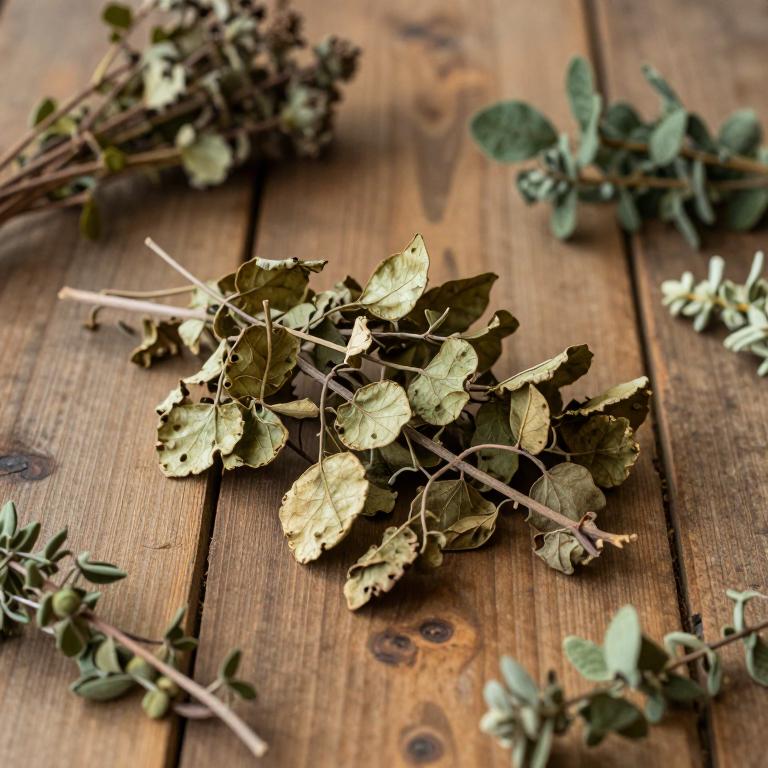
Indian Bat Fig, scientifically known as Ficus ampliassa, is a magnificent tropical tree renowned for its large, glossy, leathery leaves. While primarily celebrated as a stunning ornamental plant, its diverse chemical properties offer significant potential in traditional medicine, particularly for addressing inflammatory conditions and supporting various healing processes naturally.
- Family
- Moraceae
- Native range
- Asia-Tropical
- Parts used
- Leaf
- Common names
- Indian Bat Fig
- Scientific synonyms
- Ficus Pseudobenjamina · Urostigma Pseudotsiela · 2 more
Names and Synonyms
Common Names
- Indian Bat Fig
Scientific Names
Accepted name
Ficus amplissimaSynonyms
- Ficus pseudobenjamina
- Urostigma pseudotsiela
- Ficus pseudotsiela
- Urostigma pseudobenjaminum
Sources: Wikidata, Catalogue of Life
Taxonomical Classification
This plant belongs to the kingdom Plantae and is classified under the phylum Streptophyta within the class Equisetopsida. Following the subclass Magnoliidae, it is placed in the order Rosales and the family Moraceae. Finally, its taxonomic identity is established within the genus Ficus.
| Rank | Classification |
|---|---|
| Kingdom | Plantae |
| Phylum | Streptophyta |
| Class | Equisetopsida |
| Subclass | Magnoliidae |
| Order | Rosales |
| Family | Moraceae |
| Genus | Ficus |
Sources: The World Checklist of Vascular Plants (WCVP)
Distribution
This plant exhibits a specific geographical distribution concentrated within parts of Asia. Within the Indian Subcontinent, it can be found growing in India. Its presence extends across the waters to the islands of the Maldives. Furthermore, the species is documented throughout the nation of Sri Lanka. Finally, its range reaches into the Indo-China region, specifically in Vietnam.
| Region | Area |
|---|---|
| Indian Subcontinent | India |
| Indian Subcontinent | Maldives |
| Indian Subcontinent | Sri Lanka |
| Indo-China | Vietnam |
Sources: The World Checklist of Vascular Plants (WCVP)
Botanical Identification
Life history
The life history of Ficus ampliysima is characterized by its nature as a perennial organism, allowing it to persist through multiple growing seasons and establish a long-term presence in its environment. As an evergreen species, it maintains its lush, green foliage year-round, eschewing the seasonal shedding of leaves typical of deciduous plants. This continuous leaf retention enables the plant to engage in photosynthesis throughout the year, provided environmental conditions remain favorable, supporting its sustained growth and structural development over its extended lifespan.
- Deciduousness :
- evergreen
- Lifecycle :
- perennial
Morphology
The morphology of Ficus amplissima is characterized by its robust growth form as a tree, which can reach a mean plant height of approximately 15 m. As a woody species, it develops a sturdy, lignified structure capable of maintaining its own stature. In terms of its climbing habit, the plant is classified as self-supporting, meaning it does not rely on external structures like lianas or vines to ascend, but rather possesses the structural integrity to grow upright independently.
- Climber :
- self-supporting
- Growth form :
- tree
- Plant height mean:
- 15 m
- Woodiness :
- woody
Physiology
The physiology of Ficus ampliata is characterized by its robust metabolic processes, primarily centered on efficient photosynthetic pathways to support its large, leathery foliage. As a member of the Moraceae family, it utilizes a C3 photosynthetic mechanism, optimizing light absorption through a high density of chlorophyll within its expansive leaf surface area to facilitate carbon fixation. The plant exhibits specialized transpiration processes regulated by stomatal control, which helps maintain turgor pressure and facilitates nutrient transport from the root system to the canopy. Regarding its nutritional acquisition, Ficus ampliata is not a nitrogen fixer; it lacks the symbiotic relationship with diazotrophic bacteria, such as Rhizobium, required to convert atmospheric nitrogen into bioavailable forms, and therefore relies entirely on the uptake of nitrates and ammonium from the soil substrate. Its physiological resilience is further supported by a well-developed vascular system consisting of xylem and phloem, which ensures the consistent movement of water and organic solutes throughout its complex structural architecture.
- Nitrogen fixer :
- no
Reproduction
The reproduction of Ficus ampliissima is driven by a highly specialized biotic pollination syndrome, relying on complex biological interactions rather than abiotic factors. This process is characterized by a specific reliance on insect vectors, distinguishing its reproductive strategy from wind or water-based methods. Specifically, the plant utilizes an insect-mediated mechanism where pollination is carried out by specialized insects, typically within a symbiotic relationship involving agaonid wasps. This biotic interaction ensures that pollen is transferred effectively between the unique, enclosed inflorescences, marking its pollination syndrome as strictly dependent on living organisms to facilitate successful fertilization and seed development.
- Pollination syndrome :
- insect
- Pollination syndrome :
- biotic
Sources: Global Inventory of Floras and Traits (GIFT)
Plant Parts
Ficus amplissima has 1 reported plant parts identified across 1 scientific publications and several other databases that are studied for medicinal purposes. The most consistently reported plant part include leaf.
| Plant part | Supporting sources | Consensus |
|---|---|---|
| Leaf | 1 supporting sources | ★☆☆☆☆ |
Leaf
- Journal of ethnopharmacology
Chemicals
Ficus amplissima has 1 reported phytochemicals identified across 1 scientific publications and several other databases. The most consistently reported chemicals include Phenols.
| Chemical | Supporting sources | Consensus |
|---|---|---|
| Phenols | 1 supporting sources | ★☆☆☆☆ |
Phenols
- Journal of ethnopharmacology
Preparations
Ficus amplissima has 4 reported preparations identified across 1 scientific publications and several other databases. The most consistently reported preparations include acetone extract, latex, leaves juice, ointment containing 2% (w/w) acetone extract.
| Preparation | Supporting sources | Consensus |
|---|---|---|
| Acetone extract | 1 supporting sources | ★☆☆☆☆ |
| Latex | 1 supporting sources | ★☆☆☆☆ |
| Leaves juice | 1 supporting sources | ★☆☆☆☆ |
| Ointment containing 2% (w/w) acetone extract | 1 supporting sources | ★☆☆☆☆ |
Acetone extract
- Journal of ethnopharmacology
Latex
- Journal of ethnopharmacology
Leaves juice
- Journal of ethnopharmacology
Ointment containing 2% (w/w) acetone extract
- Journal of ethnopharmacology