Ficus adhatodifolia
Ficus adhatodifolia · Accepted scientific name
Scientific literature: Very Sparse (5 studies) · ★☆☆☆☆
, scientifically known as Ficus adhatodifolia, is a remarkable medicinal plant celebrated in traditional healing practices. Renowned for its diverse therapeutic properties, it is frequently utilized to treat various ailments, including skin conditions and digestive issues. Exploring its phytochemical profile reveals significant potential for modern pharmacological development and wellness.
- Family
- Moraceae
- Native range
- Southern America
- Parts used
- Not available
- Common names
- Not available
- Scientific synonyms
- Pharmacosycea Adhatodifolia · Ficus Officinalis · 7 more
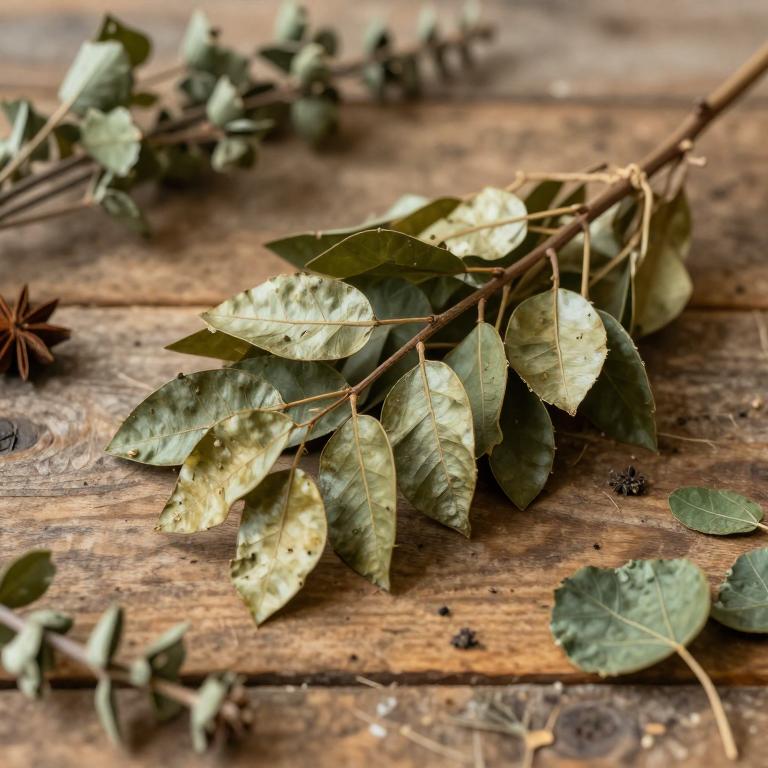
Names and Synonyms
Scientific Names
Accepted name
Ficus adhatodifoliaSynonyms
- Pharmacosycea adhatodifolia
- Ficus officinalis
- Galactodendrum chrysophyllifolium
- Galactodendrum ovalifolium
- Ficus anthelminthica var. missionum
- Pharmacosycea radula var. latifolia
- Pharmacosycea perforata
- Ficus morongii
- Ficus guapoi
Sources: Wikidata, Catalogue of Life
Taxonomical Classification
This plant belongs to the kingdom Plantae and the phylum Streptophyta, placing it within the class Equisetopsida and subclass Magnoliidae. It is further classified under the order Rosales and the family Moraceae. Ultimately, it is identified by the genus Ficus.
| Rank | Classification |
|---|---|
| Kingdom | Plantae |
| Phylum | Streptophyta |
| Class | Equisetopsida |
| Subclass | Magnoliidae |
| Order | Rosales |
| Family | Moraceae |
| Genus | Ficus |
Sources: The World Checklist of Vascular Plants (WCVP)
Distribution
This plant exhibits a broad geographical distribution across several key regions of South America. In the western part of the continent, it can be found specifically within Bolivia. Its presence is also extensively documented across the diverse landscapes of Brazil. Within Brazil, it spans from the North and Northeast regions to the West-Central areas. Finally, the species continues its range southward into the Southeast of the country.
| Region | Area |
|---|---|
| Western South America | Bolivia |
| Brazil | Brazil West-Central |
| Brazil | Brazil Northeast |
| Brazil | Brazil Southeast |
| Brazil | Brazil North |
| Brazil | Brazil South |
| Southern South America | Argentina Northeast |
| Southern South America | Paraguay |
Sources: The World Checklist of Vascular Plants (WCVP)
Botanical Identification
Ecology
The ecology of Ficus adhatodifolia is characterized by its adaptability across diverse Brazilian biomes, including the Cerrado (lato sensu), Ciliary or Gallery Forests, Seasonal Semi-deciduous Forests, and Ombrophilous (Rainforest) ecosystems. This species thrives within a broad altitudinal gradient, ranging from sea level (0 m AMSL) up to a maximum elevation of 800 m AMSL, allowing it to inhabit various moisture and light regimes found within these distinct forest types and savanna structures.
- Elevational range max:
- 800 m AMSL
- Elevational range min:
- 0 m AMSL
- Habitat :
- Cerrado (lato sensu), Floresta Ciliar ou Galeria, Floresta Estacional Semidecidual, Floresta Ombrófila (= Floresta Pluvial)
Life history
The life history of Ficus adhatodifolia is characterized by its status as a perennial organism, meaning it persists through many growing seasons and maintains its biological functions over a long-term duration. As a perennial species, it does not complete its life cycle within a single year or two, but rather establishes a permanent presence in its ecosystem, undergoing continuous cycles of growth, maintenance, and reproduction. This longevity allows the plant to develop robust structural systems and participate in complex ecological interactions, such as providing consistent habitats and food sources for various fauna throughout its extended lifespan.
- Lifecycle :
- perennial
Morphology
The morphology of Ficus adhatodifolia is characterized by its robust growth form as a woody tree, capable of reaching a maximum plant height of 40 m. Although some members of the genus exhibit epiphytic tendencies, this species is primarily terrestrial in its ecological habit and functions as an independent organism rather than a parasite. As a self-supporting tree, it does not utilize climbing mechanisms such as lianas or vines, nor does it rely on other structures for support. Its physical structure is defined by its substantial woodiness, supporting its significant vertical stature within its terrestrial habitat.
- Aquatic :
- terrestrial
- Climber :
- self-supporting
- Epiphyte :
- terrestrial
- Growth form :
- tree
- Parasite :
- independent
- Plant height max:
- 40 m
- Woodiness :
- woody
Physiology
The physiology of Ficus adhatodifolia is characterized by a metabolic framework governed by the C3 photosynthetic pathway, a trait shared by most members of the Moraceae family. Under this mechanism, the initial fixation of atmospheric carbon dioxide occurs via the enzyme RuBisCO (ribulose-1,5-bisphosphate carboxylase/oxygenase), which facilitates the incorporation of $CO_2$ into a three-carbon molecule, 3-phosphoglycerate, during the Calvin cycle. This C3 pathway dictates the plant's gas exchange strategies and water-use efficiency, as the reliance on stomatal conductance for $CO_2$ uptake necessitates a physiological balance between carbon assimilation and transpirational water loss. Consequently, the plant's metabolic rate and biomass production are closely tied to environmental factors such as light intensity and temperature, which influence the efficiency of the Calvin cycle and the potential for photorespiration.
- Photosynthetic pathway :
- C3
Sources: Global Inventory of Floras and Traits (GIFT)
Chemicals
Ficus adhatodifolia has 3 reported phytochemicals identified across 0 scientific publications and several other databases. The most consistently reported chemicals include Coumarins, Flavonoids, Tannins.
| Chemical | Supporting sources | Consensus |
|---|---|---|
| Coumarins | 1 supporting sources | ★☆☆☆☆ |
| Flavonoids | 1 supporting sources | ★☆☆☆☆ |
| Tannins | 1 supporting sources | ★☆☆☆☆ |
Coumarins
- Journal of toxicology and environmental health. Part A
Flavonoids
- Journal of toxicology and environmental health. Part A
Tannins
- Journal of toxicology and environmental health. Part A
Activities
Ficus adhatodifolia has 1 reported activities identified across 0 scientific publications and several other databases. The most consistently reported activities include Antioxidant.
| Activity | Supporting sources | Consensus |
|---|---|---|
| Antioxidant | 1 supporting sources | ★☆☆☆☆ |
Antioxidant
- Journal of toxicology and environmental health. Part A
Conditions
Ficus adhatodifolia has 1 reported investigations on conditions identified across 0 scientific publications and several other databases. The most consistently reported conditions include antioxidant.
| Condition | Supporting sources | Consensus |
|---|---|---|
| Antioxidant | 1 supporting sources | ★☆☆☆☆ |
Antioxidant
- Journal of toxicology and environmental health. Part A