fibraurea
Fibraurea tinctoria · Accepted scientific name
Scientific literature: Very Sparse (37 studies) · ★☆☆☆☆
Fibraurea, scientifically known as Fibraurea tinctoria, is a remarkable medicinal plant valued for its potent therapeutic properties. Renowned for its rich concentration of bioactive compounds, this species is widely utilized in traditional medicine to treat inflammatory conditions and support systemic healing, offering significant potential for modern pharmacological advancements.
- Family
- Menispermaceae
- Native range
- Asia-Tropical
- Parts used
- Stem · Root
- Common names
- Fibraurea
- Scientific synonyms
- Menispermum Tinctorium · Tinomiscium Nicobaricum · 5 more
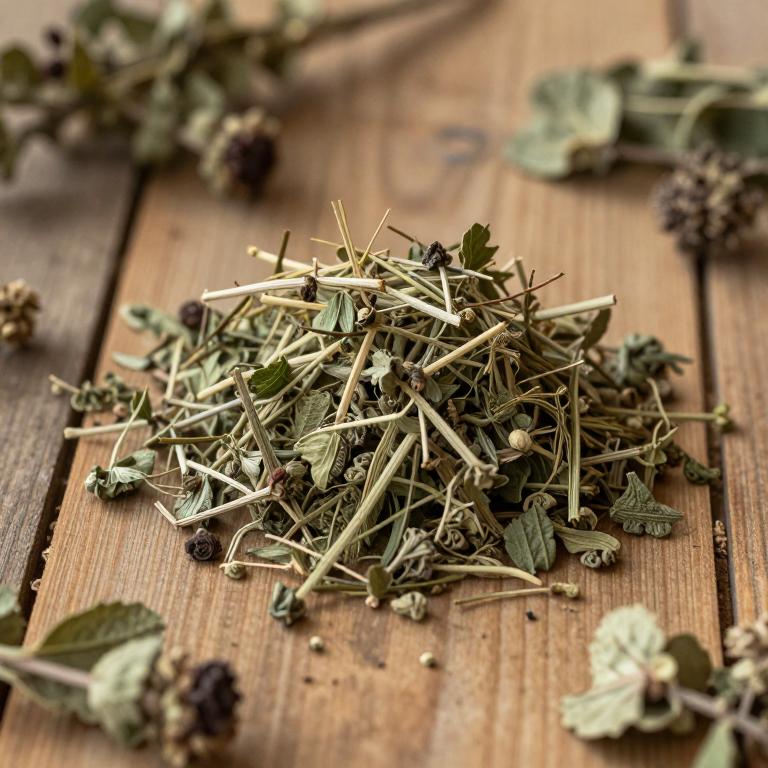
Names and Synonyms
Common Names
- fibraurea
Scientific Names
Accepted name
Fibraurea tinctoriaSynonyms
- Menispermum tinctorium
- Tinomiscium nicobaricum
- Cocculus fibraurea
- Fibraurea trotteri
- Fibraurea chloroleuca
- Fibraurea fasciculata
- Fibraurea laxa
Regional and Traditional Names
German:
- yellow root
- Akar Kuning
Sources: Wikidata, Catalogue of Life
Taxonomical Classification
This plant belongs to the kingdom Plantae and is classified under the phylum Streptophyta and class Equisetopsida. Within the subclass Magnoliidae and order Ranunculales, it is further categorized into the family Menispermaceae. Finally, its specific taxonomic identity is defined by the genus Fibraurea.
| Rank | Classification |
|---|---|
| Kingdom | Plantae |
| Phylum | Streptophyta |
| Class | Equisetopsida |
| Subclass | Magnoliidae |
| Order | Ranunculales |
| Family | Menispermaceae |
| Genus | Fibraurea |
Sources: The World Checklist of Vascular Plants (WCVP)
Distribution
This plant exhibits a broad distribution across several key regions in South and Southeast Asia. Within the Indian Subcontinent, it can be found throughout India, with a specific presence noted in Assam. Its range extends into the Indo-China region, where it is documented in Cambodia. Additionally, the species is known to inhabit the landscapes of Laos. Finally, its geographical reach includes the territory of Myanmar.
| Region | Area |
|---|---|
| Indian Subcontinent | Assam |
| Indian Subcontinent | India |
| Indo-China | Cambodia |
| Indo-China | Laos |
| Indo-China | Myanmar |
| Indo-China | Nicobar Is. |
| Indo-China | Thailand |
| Indo-China | Vietnam |
| Malesia | Borneo |
| Malesia | Jawa |
Sources: The World Checklist of Vascular Plants (WCVP)
Botanical Identification
Life history
The life history of Fibraurea tinctoria is characterized by its classification as a phanerophyte, specifically functioning as both a phanerophyte and a nanophanerophyte depending on the specific scale of its growth habit. As a woody climber, it maintains its perennating buds well above the soil surface, a trait typical of the phanerophyte life form. Its development involves a climbing strategy that allows it to access higher light intensities within its tropical forest habitat, utilizing its structural longevity to persist through varying seasonal conditions. The plant's growth cycle is defined by this elevated bud position, which protects its regenerative tissues from surface disturbances and environmental fluctuations, distinguishing it from shorter-lived life forms like chamaephytes or hemicryptophytes.
- Life form :
- phanerophyte
Morphology
The morphology of Fibraurea tinctoria is characterized by its growth as an obligatory climber, specifically functioning as a liana. This plant exhibits a variable degree of woodiness and possesses a growth form categorized as a shrub, though it primarily utilizes its climbing habit to reach significant heights. It is a terrestrial species rather than an epiphyte, growing from the ground. In terms of stature, the plant can reach a maximum height of 40 m, with a mean plant height typically recorded at 30 m.
- Climber :
- liana
- Climber :
- obligatory
- Epiphyte :
- terrestrial
- Growth form :
- shrub
- Plant height max:
- 40 m
- Plant height mean:
- 30 m
- Woodiness :
- variable
Physiology
The physiology of Fibraurea tinctoria is characterized by a C3 photosynthetic pathway, which dictates its carbon fixation processes and metabolic efficiency. The plant's vegetative architecture features leaves with a mean length of 20.9 cm and a mean width of 9.2 cm, forming a broad surface area for light interception. Despite this relatively large surface area, the leaves are notably delicate, possessing a mean thickness of only 0.029 mm. Furthermore, the plant does not function as a nitrogen fixer, meaning it relies on external sources of nitrogen within its environment rather than through symbiotic nitrogen-fixing mechanisms.
- Leaf length mean:
- 20.9 cm
- Leaf thickness mean:
- 0.029 mm
- Leaf width mean:
- 9.2 cm
- Nitrogen fixer :
- no
- Photosynthetic pathway :
- C3
Reproduction
The reproduction of Fibraurea tinctoria is characterized by a distinct reproductive strategy and specific seed morphology. The plant does not engage in self-fertilization, as the trait is documented as absent, suggesting a reliance on cross-pollination mechanisms to ensure genetic diversity. The seeds produced are relatively uniform in weight, maintaining a consistent seed mass of 0.71 g, which serves as both the minimum, maximum, and mean value. In terms of physical dimensions, the seeds exhibit a mean length of 11.5 mm. The structural complexity of the seed is further defined by its maximum height of 9.5 mm and a maximum width of 10.7 mm, providing specific morphological parameters essential for its dispersal and establishment.
- Seed height max:
- 9.5 mm
- Seed length mean:
- 11.5 mm
- Seed mass mean:
- 0.71 g
- Seed width max:
- 10.7 mm
- Self fertilization :
- absent
Sources: Global Inventory of Floras and Traits (GIFT)
Plant Parts
Fibraurea tinctoria has 3 reported plant parts identified across 7 scientific publications and several other databases that are studied for medicinal purposes. The most consistently reported plant part include stem, root, leaf.
| Plant part | Supporting sources | Consensus |
|---|---|---|
| Stem | 4 supporting sources | ★★☆☆☆ |
| Root | 2 supporting sources | ★☆☆☆☆ |
| Leaf | 1 supporting sources | ★☆☆☆☆ |
Stem
- Microscopy research and technique
- Planta medica
- Bioorganic & medicinal chemistry
- Journal of natural products
Root
- Microscopy research and technique
- Planta medica
Leaf
- Microscopy research and technique
Chemicals
Fibraurea tinctoria has 14 reported phytochemicals identified across 7 scientific publications and several other databases. The most consistently reported chemicals include Berberrubine, Dehydrocorydalmine, Jatrorrhizine, Magnoflorine, PALMATRUBINE.
| Chemical | Supporting sources | Consensus |
|---|---|---|
| Berberrubine | 1 supporting sources | ★☆☆☆☆ |
| Dehydrocorydalmine | 1 supporting sources | ★☆☆☆☆ |
| Jatrorrhizine | 1 supporting sources | ★☆☆☆☆ |
| Magnoflorine | 1 supporting sources | ★☆☆☆☆ |
| PALMATRUBINE | 1 supporting sources | ★☆☆☆☆ |
| Palmatine | 1 supporting sources | ★☆☆☆☆ |
| Pseudocolumbamine | 1 supporting sources | ★☆☆☆☆ |
| Terpenoids | 1 supporting sources | ★☆☆☆☆ |
| berberine | 1 supporting sources | ★☆☆☆☆ |
| epi-12-palmatoside G | 1 supporting sources | ★☆☆☆☆ |
Berberrubine
- Planta medica
Dehydrocorydalmine
- Planta medica
Jatrorrhizine
- Journal of natural products
Magnoflorine
- Planta medica
PALMATRUBINE
- Planta medica
Palmatine
- Journal of natural products
Pseudocolumbamine
- Planta medica
Terpenoids
- Microscopy research and technique
berberine
- Planta medica
epi-12-palmatoside G
- Journal of natural products
Activities
Fibraurea tinctoria has 5 reported activities identified across 7 scientific publications and several other databases. The most consistently reported activities include Antibacterial, Anticancer, Antidiabetic, Antioxidant, Antitumor.
| Activity | Supporting sources | Consensus |
|---|---|---|
| Antibacterial | 1 supporting sources | ★☆☆☆☆ |
| Anticancer | 1 supporting sources | ★☆☆☆☆ |
| Antidiabetic | 1 supporting sources | ★☆☆☆☆ |
| Antioxidant | 1 supporting sources | ★☆☆☆☆ |
| Antitumor | 1 supporting sources | ★☆☆☆☆ |
Antibacterial
- Microscopy research and technique
Anticancer
- Microscopy research and technique
Antidiabetic
- Microscopy research and technique
Antioxidant
- Microscopy research and technique
Antitumor
- Microscopy research and technique
Conditions
Fibraurea tinctoria has 3 reported investigations on conditions identified across 7 scientific publications and several other databases. The most consistently reported conditions include colon cancer, diabetes mellitus, malaria.
| Condition | Supporting sources | Consensus |
|---|---|---|
| Colon cancer | 1 supporting sources | ★☆☆☆☆ |
| Diabetes mellitus | 1 supporting sources | ★☆☆☆☆ |
| Malaria | 1 supporting sources | ★☆☆☆☆ |
Colon cancer
- Journal of ethnopharmacology
Diabetes mellitus
- Phytochemical analysis : PCA
Malaria
- Journal of ethnopharmacology
Preparations
Fibraurea tinctoria has 2 reported preparations identified across 7 scientific publications and several other databases. The most consistently reported preparations include Fibraurea tinctoria tinctures, methanolic extracts (MEs).
| Preparation | Supporting sources | Consensus |
|---|---|---|
| Fibraurea tinctoria tinctures | 1 supporting sources | ★☆☆☆☆ |
| Methanolic extracts (mes) | 1 supporting sources | ★☆☆☆☆ |
Fibraurea tinctoria tinctures
- Journal of natural products
Methanolic extracts (mes)
- Journal of ethnopharmacology