Giant Fennel
Ferula · Accepted scientific name
Scientific literature: Very Sparse (49 studies) · ★☆☆☆☆
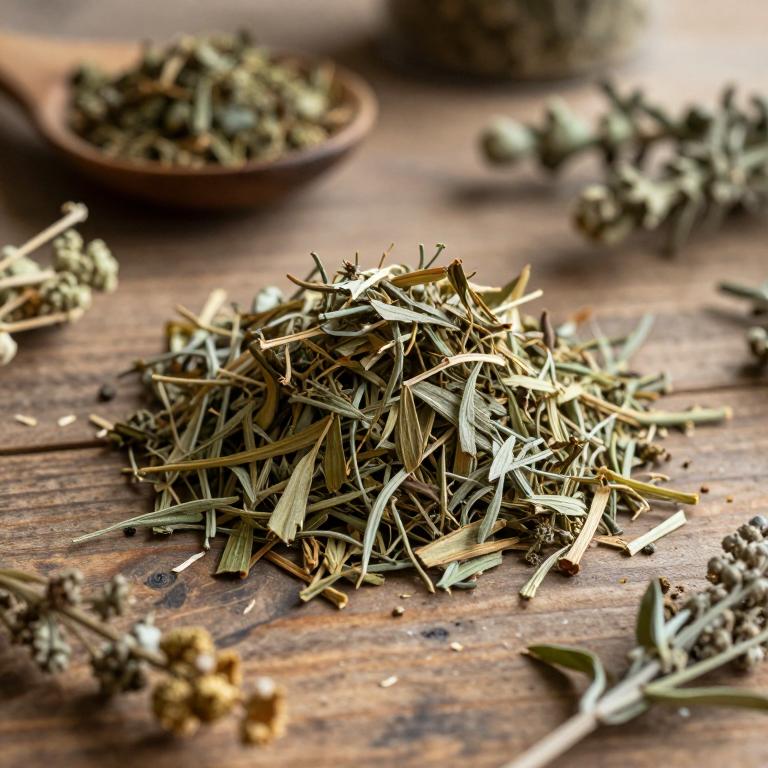
Giant Fennel, scientifically known as Ferula, is a versatile perennial herb belonging to the Apiaceae family. Renowned for its impressive stature and aromatic properties, it contains bioactive compounds used extensively in traditional medicine. These include anti-inflammatory and antimicrobial agents, making it a significant subject in ethnobotanical research today.
- Family
- Apiaceae
- Native range
- Europe
- Parts used
- Leaf · Root
- Common names
- Giant Fennel
- Scientific synonyms
- Eriosynaphe · Dorema · 14 more
Names and Synonyms
Common Names
- Giant Fennel
Scientific Names
Accepted name
FerulaSynonyms
- Eriosynaphe
- Dorema
- Dardanis
- Diserneston
- Agasulis
- Schumannia
- Soranthus
- Sumbulus
- Narthex
- Merwia
- Talassia
- Polycyrtus
- Pinacantha
- Buniotrinia
- Euryangium
- Scorodosma
Regional and Traditional Names
German:
- Steckenkräuter
- Riesenfenchel
- Rutenkräuter
- Steckenkräuter
French:
- Férule
Sources: Wikidata, Catalogue of Life
Taxonomical Classification
This plant belongs to the kingdom Plantae and the phylum Streptophyta, specifically within the class Equisetopsida and subclass Magnoliidae. It is classified under the order Apiales and the family Apiaceae, falling within the genus Ferula.
| Rank | Classification |
|---|---|
| Kingdom | Plantae |
| Phylum | Streptophyta |
| Class | Equisetopsida |
| Subclass | Magnoliidae |
| Order | Apiales |
| Family | Apiaceae |
| Genus | Ferula |
Sources: The World Checklist of Vascular Plants (WCVP)
Distribution
This plant exhibits a diverse geographical range across several European regions. In Northern Europe, its presence can be noted within Great Britain. Moving into Middle Europe, the species is distributed throughout Germany, Hungary, and the Czechia-Slovakia region. Additionally, its habitat extends to the Mediterranean climate of Southwestern Europe. Specifically, it can be found growing among the Baleares islands.
| Region | Area |
|---|---|
| Northern Europe | Great Britain |
| Middle Europe | Czechia-Slovakia |
| Middle Europe | Germany |
| Middle Europe | Hungary |
| Southwestern Europe | Baleares |
| Southwestern Europe | Corse |
| Southwestern Europe | France |
| Southwestern Europe | Portugal |
| Southwestern Europe | Sardegna |
| Southwestern Europe | Spain |
Sources: The World Checklist of Vascular Plants (WCVP)
Plant Parts
Ferula has 3 reported plant parts identified across 5 scientific publications and several other databases that are studied for medicinal purposes. The most consistently reported plant part include leaf, root, stem.
| Plant part | Supporting sources | Consensus |
|---|---|---|
| Leaf | 2 supporting sources | ★☆☆☆☆ |
| Root | 2 supporting sources | ★☆☆☆☆ |
| Stem | 1 supporting sources | ★☆☆☆☆ |
Leaf
- Zhongguo Zhong yao za zhi = Zhongguo zhongyao zazhi = China journal of Chinese materia medica
- Frontiers in plant science
Root
- Zhongguo Zhong yao za zhi = Zhongguo zhongyao zazhi = China journal of Chinese materia medica
- Frontiers in plant science
Stem
- Zhongguo Zhong yao za zhi = Zhongguo zhongyao zazhi = China journal of Chinese materia medica
Chemicals
Ferula has 17 reported phytochemicals identified across 5 scientific publications and several other databases. The most consistently reported chemicals include Sesquiterpenes, Coumarins, Sesquiterpene Derivatives, Conferone, Coumarin Derivatives.
| Chemical | Supporting sources | Consensus |
|---|---|---|
| Sesquiterpenes | 4 supporting sources | ★★☆☆☆ |
| Coumarins | 2 supporting sources | ★☆☆☆☆ |
| Sesquiterpene Derivatives | 2 supporting sources | ★☆☆☆☆ |
| Conferone | 1 supporting sources | ★☆☆☆☆ |
| Coumarin Derivatives | 1 supporting sources | ★☆☆☆☆ |
| Diversin | 1 supporting sources | ★☆☆☆☆ |
| Ferutinin | 1 supporting sources | ★☆☆☆☆ |
| Flavonoids | 1 supporting sources | ★☆☆☆☆ |
| Monoterpene | 1 supporting sources | ★☆☆☆☆ |
| Monoterpenes | 1 supporting sources | ★☆☆☆☆ |
Sesquiterpenes
- Molecules (Basel, Switzerland)
- Avicenna journal of phytomedicine
- Frontiers in pharmacology
- Antioxidants (Basel, Switzerland)
Coumarins
- Molecules (Basel, Switzerland)
- Avicenna journal of phytomedicine
Sesquiterpene Derivatives
- Journal of complementary & integrative medicine
- Antioxidants (Basel, Switzerland)
Conferone
- Anti-cancer agents in medicinal chemistry
Coumarin Derivatives
- Journal of complementary & integrative medicine
Diversin
- Anti-cancer agents in medicinal chemistry
Ferutinin
- Anti-cancer agents in medicinal chemistry
Flavonoids
- Frontiers in pharmacology
Monoterpene
- Frontiers in pharmacology
Monoterpenes
- Anti-cancer agents in medicinal chemistry
Activities
Ferula has 5 reported activities identified across 5 scientific publications and several other databases. The most consistently reported activities include Antioxidant, Antibacterial, Antidiabetic, Antimicrobial, Cytotoxic.
| Activity | Supporting sources | Consensus |
|---|---|---|
| Antioxidant | 2 supporting sources | ★☆☆☆☆ |
| Antibacterial | 1 supporting sources | ★☆☆☆☆ |
| Antidiabetic | 1 supporting sources | ★☆☆☆☆ |
| Antimicrobial | 1 supporting sources | ★☆☆☆☆ |
| Cytotoxic | 1 supporting sources | ★☆☆☆☆ |
Antioxidant
- Frontiers in pharmacology
- Galen medical journal
Antibacterial
- Antioxidants (Basel, Switzerland)
Antidiabetic
- Research in pharmaceutical sciences
Antimicrobial
- Frontiers in pharmacology
Cytotoxic
- Frontiers in pharmacology
Conditions
Ferula has 11 reported investigations on conditions identified across 5 scientific publications and several other databases. The most consistently reported conditions include Alzheimer's disease, amnesia, analgesia, cancer, erectile dysfunction.
| Condition | Supporting sources | Consensus |
|---|---|---|
| Alzheimer's disease | 1 supporting sources | ★☆☆☆☆ |
| Amnesia | 1 supporting sources | ★☆☆☆☆ |
| Analgesia | 1 supporting sources | ★☆☆☆☆ |
| Cancer | 1 supporting sources | ★☆☆☆☆ |
| Erectile dysfunction | 1 supporting sources | ★☆☆☆☆ |
| Fatigue | 1 supporting sources | ★☆☆☆☆ |
| Fertility | 1 supporting sources | ★☆☆☆☆ |
| Headaches | 1 supporting sources | ★☆☆☆☆ |
| Infertility | 1 supporting sources | ★☆☆☆☆ |
| Libido | 1 supporting sources | ★☆☆☆☆ |
Alzheimer's disease
- Journal of complementary & integrative medicine
Amnesia
- Journal of complementary & integrative medicine
Analgesia
- Molecules (Basel, Switzerland)
Cancer
- Anti-cancer agents in medicinal chemistry
Erectile dysfunction
- Clinical and experimental reproductive medicine
Fatigue
- Galen medical journal
Fertility
- Clinical and experimental reproductive medicine
Headaches
- Antioxidants (Basel, Switzerland)
Infertility
- Clinical and experimental reproductive medicine
Libido
- Clinical and experimental reproductive medicine
Preparations
Ferula has 6 reported preparations identified across 5 scientific publications and several other databases. The most consistently reported preparations include Ferula oil, essenitial oils, medicinal purposes, oleo-gum-resins, spices.
| Preparation | Supporting sources | Consensus |
|---|---|---|
| Ferula oil | 1 supporting sources | ★☆☆☆☆ |
| Essenitial oils | 1 supporting sources | ★☆☆☆☆ |
| Medicinal purposes | 1 supporting sources | ★☆☆☆☆ |
| Oleo-gum-resins | 1 supporting sources | ★☆☆☆☆ |
| Spices | 1 supporting sources | ★☆☆☆☆ |
| Volatile oils | 1 supporting sources | ★☆☆☆☆ |
Ferula oil
- Journal of food science
Essenitial oils
- Frontiers in pharmacology
Medicinal purposes
- Anti-cancer agents in medicinal chemistry
Oleo-gum-resins
- Frontiers in pharmacology
Spices
- Anti-cancer agents in medicinal chemistry
Volatile oils
- Frontiers in pharmacology