giant Tangier fennel
Ferula tingitana · Accepted scientific name
Scientific literature: Very Sparse (14 studies) · ★☆☆☆☆
Giant Tangier fennel, scientifically known as Ferula tingitana, is a robust perennial herb native to the Mediterranean region. Renowned for its impressive stature and aromatic properties, this plant is highly valued in traditional medicine. It contains bioactive compounds utilized for their potential anti-inflammatory, antimicrobial, and various therapeutic healing effects.
- Family
- Apiaceae
- Native range
- Europe
- Parts used
- Root
- Common names
- Giant Tangier Fennel · Tangier Fennel
- Scientific synonyms
- Agasulis Tingitana · Ferula Sancta · 1 more
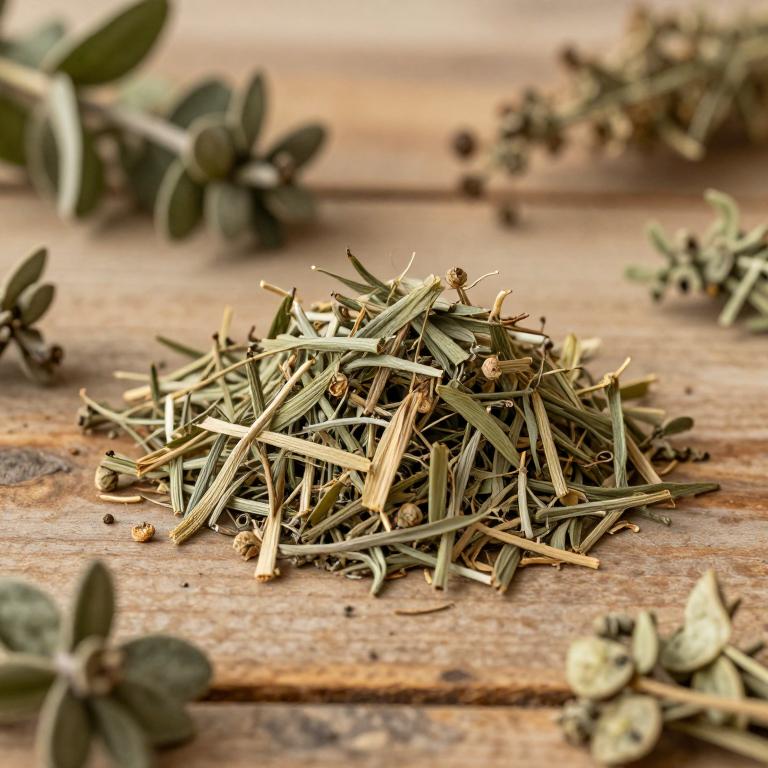
Names and Synonyms
Common Names
- giant Tangier fennel
- Tangier Fennel
Scientific Names
Accepted name
Ferula tingitanaSynonyms
- Agasulis tingitana
- Ferula sancta
- Ferula bolivari
Regional and Traditional Names
German:
- Tanger-Steckenkraut
French:
- Férule de Tanger
- Agasulis tingitana
- Ferula bolivari
- Ferula sancta
Sources: Wikidata, Catalogue of Life
Taxonomical Classification
This plant belongs to the kingdom Plantae within the phylum Streptophyta and the class Equisetopsida. It is further classified under the subclass Magnoliidae and the order Apiales, falling into the family Apiaceae. Specifically, it is categorized under the genus Ferula.
| Rank | Classification |
|---|---|
| Kingdom | Plantae |
| Phylum | Streptophyta |
| Class | Equisetopsida |
| Subclass | Magnoliidae |
| Order | Apiales |
| Family | Apiaceae |
| Genus | Ferula |
Sources: The World Checklist of Vascular Plants (WCVP)
Distribution
This plant is primarily distributed across specific regions in Southwestern Europe and Northern Africa. In the European continent, its presence is documented in both Portugal and Spain. Moving across the Mediterranean, the species is also well-established within Northern Africa. Specifically, it can be found growing in the territories of Algeria and Libya. Finally, its geographical range extends to include the country of Morocco.
| Region | Area |
|---|---|
| Southwestern Europe | Portugal |
| Southwestern Europe | Spain |
| Northern Africa | Algeria |
| Northern Africa | Libya |
| Northern Africa | Morocco |
| Northern Africa | Tunisia |
| Western Asia | East Aegean Is. |
| Western Asia | Lebanon-Syria |
| Western Asia | Palestine |
| Western Asia | Türkiye |
Sources: The World Checklist of Vascular Plants (WCVP)
Botanical Identification
Life history
The life history of Ferula tingitana is characterized by its classification as a perennial plant, allowing it to persist through multiple growing seasons. As a hemicryptophyte, its perennating buds are located at or just below the soil surface, protected by leaf litter or the substrate, which helps the species survive unfavorable environmental conditions. This life form, categorized under the hemicryptophyte group, ensures that the plant can effectively regenerate its aerial structures annually from its subterranean components.
- Life form :
- hemicryptophyte
- Lifecycle :
- perennial
Morphology
The morphology of Ferula tingitana is characterized by its growth form as a non-woody herb, exhibiting a structure that is entirely non-woodiness in its development. As a terrestrial organism, it does not occupy aquatic or semiaquatic habitats, nor does it function as an epiphyte, maintaining a strictly terrestrial existence. The plant is a self-supporting species, lacking any climber or liana characteristics, and it operates as an independent organism rather than a parasite, requiring no host for its survival.
- Aquatic :
- terrestrial
- Climber :
- self-supporting
- Epiphyte :
- terrestrial
- Growth form :
- herb
- Parasite :
- independent
- Woodiness :
- non-woody
Reproduction
The reproduction of Ferula tingitana is characterized by the production of seeds that exhibit a highly uniform physical profile. Based on botanical data, the seed mass is remarkably consistent, with a recorded mean, maximum, and minimum value all strictly fixed at 0.01405 g. This lack of variance in seed mass suggests a highly standardized reproductive output, where each seed produced by the plant maintains a precise weight of 0.01405 g, ensuring a uniform distribution of resources for potential offspring.
- Seed mass mean:
- 0.01405 g
Sources: Global Inventory of Floras and Traits (GIFT)
Plant Parts
Ferula tingitana has 1 reported plant parts identified across 1 scientific publications and several other databases that are studied for medicinal purposes. The most consistently reported plant part include root.
| Plant part | Supporting sources | Consensus |
|---|---|---|
| Root | 1 supporting sources | ★☆☆☆☆ |
Root
- Journal of natural products
Chemicals
Ferula tingitana has 4 reported phytochemicals identified across 1 scientific publications and several other databases. The most consistently reported chemicals include 1,3,5-Trimethylbenzene, Acetyltingitanol, Germacrene D, phenylpropanoid.
| Chemical | Supporting sources | Consensus |
|---|---|---|
| 1,3,5-Trimethylbenzene | 1 supporting sources | ★☆☆☆☆ |
| Acetyltingitanol | 1 supporting sources | ★☆☆☆☆ |
| Germacrene D | 1 supporting sources | ★☆☆☆☆ |
| phenylpropanoid | 1 supporting sources | ★☆☆☆☆ |
1,3,5-Trimethylbenzene
- Protoplasma
Acetyltingitanol
- Journal of natural products
Germacrene D
- Protoplasma
phenylpropanoid
- Journal of natural products
Activities
Ferula tingitana has 5 reported activities identified across 1 scientific publications and several other databases. The most consistently reported activities include Anticholinesterase, Antidiabetic, Antimicrobial, Antioxidant, Genotoxic.
| Activity | Supporting sources | Consensus |
|---|---|---|
| Anticholinesterase | 1 supporting sources | ★☆☆☆☆ |
| Antidiabetic | 1 supporting sources | ★☆☆☆☆ |
| Antimicrobial | 1 supporting sources | ★☆☆☆☆ |
| Antioxidant | 1 supporting sources | ★☆☆☆☆ |
| Genotoxic | 1 supporting sources | ★☆☆☆☆ |
Anticholinesterase
- Protoplasma
Antidiabetic
- Protoplasma
Antimicrobial
- Protoplasma
Antioxidant
- Protoplasma
Genotoxic
- Protoplasma
Conditions
Ferula tingitana has 4 reported investigations on conditions identified across 1 scientific publications and several other databases. The most consistently reported conditions include E. coli, anticholinesterase, antidiabetic, antioxidant.
| Condition | Supporting sources | Consensus |
|---|---|---|
| E. coli | 1 supporting sources | ★☆☆☆☆ |
| Anticholinesterase | 1 supporting sources | ★☆☆☆☆ |
| Antidiabetic | 1 supporting sources | ★☆☆☆☆ |
| Antioxidant | 1 supporting sources | ★☆☆☆☆ |
E. coli
- Protoplasma
Anticholinesterase
- Protoplasma
Antidiabetic
- Protoplasma
Antioxidant
- Protoplasma
Preparations
Ferula tingitana has 1 reported preparations identified across 1 scientific publications and several other databases. The most consistently reported preparations include petroleum ether extract of the roots.
| Preparation | Supporting sources | Consensus |
|---|---|---|
| Petroleum ether extract of the roots | 1 supporting sources | ★☆☆☆☆ |
Petroleum ether extract of the roots
- Journal of natural products