Ferula tadshikorum
Ferula tadshikorum · Accepted scientific name
Scientific literature: Very Sparse (11 studies) · ★☆☆☆☆
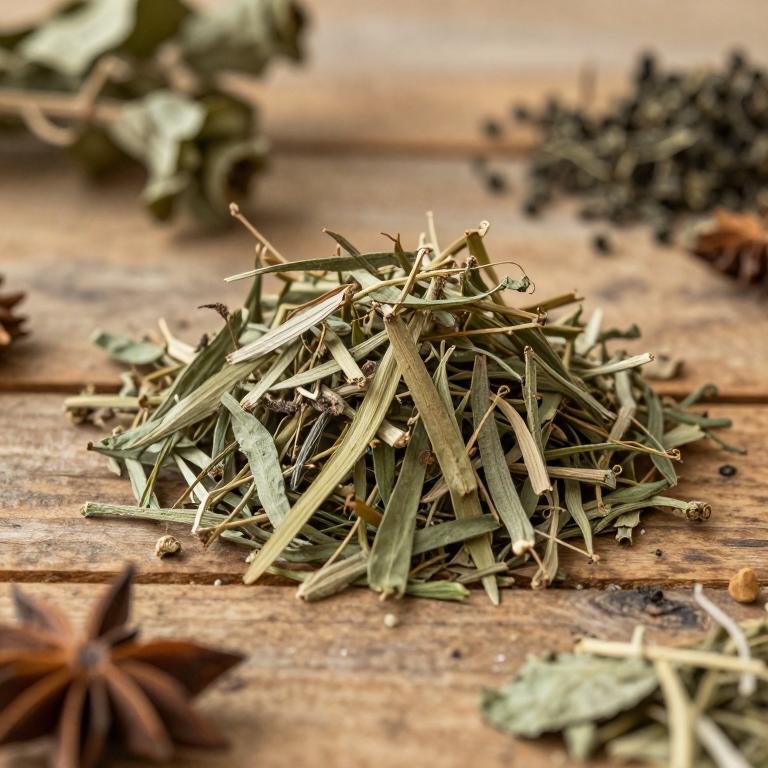
, scientifically known as Ferula tadshikorum, is a potent medicinal herb belonging to the Apiaceae family. Renowned for its diverse therapeutic properties, this plant is primarily utilized in traditional medicine to treat various ailments. Its bioactive compounds offer significant pharmacological potential, particularly in managing inflammation and supporting overall wellness.
- Family
- Apiaceae
- Native range
- Asia-Temperate
- Parts used
- Not available
- Common names
- Not available
- Scientific synonyms
- Not available
Names and Synonyms
Scientific Names
Accepted name
Ferula tadshikorumSources: Wikidata, Catalogue of Life
Taxonomical Classification
This plant belongs to the kingdom Plantae and is classified within the phylum Streptophyta and the class Equisetopsida. As a member of the subclass Magnoliidae and the order Apiales, it is further nested within the family Apiaceae. Ultimately, its taxonomic identity is defined by its placement in the genus Ferula.
| Rank | Classification |
|---|---|
| Kingdom | Plantae |
| Phylum | Streptophyta |
| Class | Equisetopsida |
| Subclass | Magnoliidae |
| Order | Apiales |
| Family | Apiaceae |
| Genus | Ferula |
Sources: The World Checklist of Vascular Plants (WCVP)
Distribution
This plant is native to the specific landscapes of Central Asia. Its geographical range is primarily concentrated within several key nations of this region. Specifically, it can be found growing in the territories of Kazakhstan. Additionally, the species is distributed across the terrain of Turkmenistan. Finally, it is also documented as part of the natural flora in Tajikistan.
| Region | Area |
|---|---|
| Central Asia | Kazakhstan |
| Central Asia | Turkmenistan |
| Central Asia | Tadzhikistan |
Sources: The World Checklist of Vascular Plants (WCVP)
Chemicals
Ferula tadshikorum has 4 reported phytochemicals identified across 0 scientific publications and several other databases. The most consistently reported chemicals include CINNAMIC ACID, kaempferol, p-coumaric acid, quercetin.
| Chemical | Supporting sources | Consensus |
|---|---|---|
| CINNAMIC ACID | 1 supporting sources | ★☆☆☆☆ |
| kaempferol | 1 supporting sources | ★☆☆☆☆ |
| p-coumaric acid | 1 supporting sources | ★☆☆☆☆ |
| quercetin | 1 supporting sources | ★☆☆☆☆ |
CINNAMIC ACID
- Iranian journal of pharmaceutical research : IJPR
kaempferol
- Iranian journal of pharmaceutical research : IJPR
p-coumaric acid
- Iranian journal of pharmaceutical research : IJPR
quercetin
- Iranian journal of pharmaceutical research : IJPR
Preparations
Ferula tadshikorum has 3 reported preparations identified across 0 scientific publications and several other databases. The most consistently reported preparations include ethanol extract, hexane extract, methanol extract.
| Preparation | Supporting sources | Consensus |
|---|---|---|
| Ethanol extract | 1 supporting sources | ★☆☆☆☆ |
| Hexane extract | 1 supporting sources | ★☆☆☆☆ |
| Methanol extract | 1 supporting sources | ★☆☆☆☆ |
Ethanol extract
- Iranian journal of pharmaceutical research : IJPR
Hexane extract
- Iranian journal of pharmaceutical research : IJPR
Methanol extract
- Iranian journal of pharmaceutical research : IJPR