Ferula szowitsiana
Ferula szowitsiana · Accepted scientific name
Scientific literature: Very Sparse (34 studies) · ★☆☆☆☆
, scientifically known as Ferula szowitsiana, is a distinctive medicinal plant belonging to the Apiaceae family. Native to specific arid regions, it is valued for its complex phytochemical profile. Researchers study its bioactive compounds for potential therapeutic applications, particularly in developing natural treatments for various inflammatory and metabolic conditions.
- Family
- Apiaceae
- Native range
- Asia-Temperate
- Parts used
- Root
- Common names
- Not available
- Scientific synonyms
- Peucedanum Szowitsianum · Ferula Microloba · 3 more
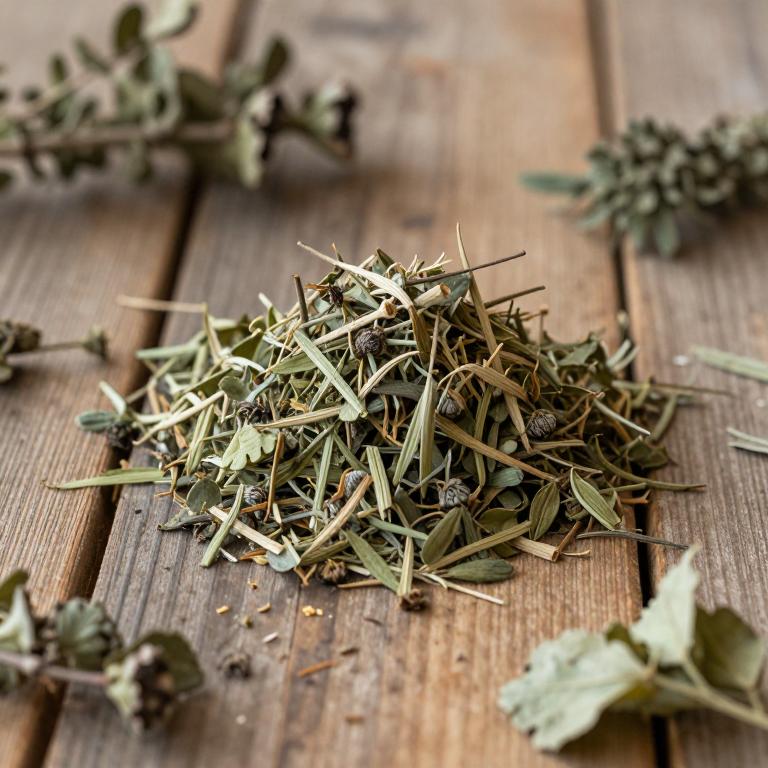
Names and Synonyms
Scientific Names
Accepted name
Ferula szowitsianaSynonyms
- Peucedanum szowitsianum
- Ferula microloba
- Ferula khorasanica
- Ferula hirtella
- Ferula collina
Sources: Catalogue of Life
Taxonomical Classification
This plant belongs to the kingdom Plantae and the phylum Streptophyta, falling under the class Equisetopsida and subclass Magnoliidae. Within the order Apiales, it is classified under the family Apiaceae. Specifically, its taxonomic designation is within the genus Ferula.
| Rank | Classification |
|---|---|
| Kingdom | Plantae |
| Phylum | Streptophyta |
| Class | Equisetopsida |
| Subclass | Magnoliidae |
| Order | Apiales |
| Family | Apiaceae |
| Genus | Ferula |
Sources: The World Checklist of Vascular Plants (WCVP)
Distribution
This plant is primarily distributed across the vast landscapes of Central Asia. Specifically, it can be found growing within the borders of Turkmenistan and Uzbekistan. Its range also extends into the Caucasus region, specifically throughout the Transcaucasus. Furthermore, the species inhabits parts of Western Asia, including the country of Afghanistan. Finally, its geographical presence is noted within the territory of Iran.
| Region | Area |
|---|---|
| Central Asia | Turkmenistan |
| Central Asia | Uzbekistan |
| Caucasus | Transcaucasus |
| Western Asia | Afghanistan |
| Western Asia | Iran |
| Western Asia | Türkiye |
Sources: The World Checklist of Vascular Plants (WCVP)
Botanical Identification
Ecology
The ecology of Ferula szowitsiana is defined by its adaptation to harsh, arid environments, specifically thriving within desert landscapes and saline places. This species occupies a specific altitudinal niche, maintaining an elevational range that begins at 700 m AMSL and extends up to a maximum of 1200 m AMSL. Its ability to persist in saline soils suggests specialized physiological mechanisms for managing osmotic stress, allowing it to colonize environments that are often inhospitable to less specialized flora.
- Elevational range max:
- 1200 m AMSL
- Elevational range min:
- 700 m AMSL
- Habitat :
- desert, saline places
Life history
The life history of Ferula szowitsiana is characterized by a perennial lifecycle, allowing the plant to persist through multiple growing seasons rather than completing its cycle in a single year. Morphologically, it is classified under the life form of a hemicryptophyte, a strategy where the perennating buds are located at or just below the soil surface, typically protected by leaf litter or organic debris. This hemicryptophytic habit, combined with its long-lived perennial nature, enables the species to withstand seasonal environmental fluctuations and maintain stability within its specific ecological niche.
- Life form :
- hemicryptophyte
- Lifecycle :
- perennial
Morphology
The morphology of Ferula szowitsiana is characterized by a non-woody, herbaceous growth form. This plant is an independent species, functioning without any parasitic relationship to other organisms. In terms of its stature, it maintains a relatively consistent and compact size, with a plant height that reaches a maximum of 0.5 m and a minimum height of 0.5 m.
- Growth form :
- herb
- Parasite :
- independent
- Plant height min:
- 0.5 m
- Woodiness :
- non-woody
Reproduction
The reproduction of Ferula szowitsiana is characterized by a specific phenological cycle and specialized seed dissemination methods. The flowering period for this species typically begins in April and concludes in May, although the timing can be variable depending on environmental conditions. Following the pollination phase, the plant utilizes an anemochorous dispersal syndrome, meaning its seeds are primarily dispersed by the action of the wind to colonize new areas.
- Dispersal syndrome :
- anemochorous
- Flowering time :
- Apr
- Flowering time :
- May
Sources: Global Inventory of Floras and Traits (GIFT)
Plant Parts
Ferula szowitsiana has 1 reported plant parts identified across 4 scientific publications and several other databases that are studied for medicinal purposes. The most consistently reported plant part include root.
| Plant part | Supporting sources | Consensus |
|---|---|---|
| Root | 4 supporting sources | ★★☆☆☆ |
Root
- Drug and chemical toxicology
- Nutrition and cancer
- Research in pharmaceutical sciences
- Biological & pharmaceutical bulletin
Chemicals
Ferula szowitsiana has 5 reported phytochemicals identified across 4 scientific publications and several other databases. The most consistently reported chemicals include Farnesiferol C, Auraptene, Galbanic acid, Microlobin, methyl galbanate.
| Chemical | Supporting sources | Consensus |
|---|---|---|
| Farnesiferol C | 2 supporting sources | ★☆☆☆☆ |
| Auraptene | 1 supporting sources | ★☆☆☆☆ |
| Galbanic acid | 1 supporting sources | ★☆☆☆☆ |
| Microlobin | 1 supporting sources | ★☆☆☆☆ |
| methyl galbanate | 1 supporting sources | ★☆☆☆☆ |
Farnesiferol C
- Journal of Asian natural products research
- Drug research
Auraptene
- Nutrition and cancer
Galbanic acid
- Biological & pharmaceutical bulletin
Microlobin
- Drug research
methyl galbanate
- Journal of immunotoxicology
Activities
Ferula szowitsiana has 8 reported activities identified across 4 scientific publications and several other databases. The most consistently reported activities include Antibacterial, Antimutagenic, Antioxidant, Antitumor, Antiviral.
| Activity | Supporting sources | Consensus |
|---|---|---|
| Antibacterial | 1 supporting sources | ★☆☆☆☆ |
| Antimutagenic | 1 supporting sources | ★☆☆☆☆ |
| Antioxidant | 1 supporting sources | ★☆☆☆☆ |
| Antitumor | 1 supporting sources | ★☆☆☆☆ |
| Antiviral | 1 supporting sources | ★☆☆☆☆ |
| Apoptotic | 1 supporting sources | ★☆☆☆☆ |
| Cytotoxic | 1 supporting sources | ★☆☆☆☆ |
| Neuroprotective | 1 supporting sources | ★☆☆☆☆ |
Antibacterial
- Nutrition and cancer
Antimutagenic
- Journal of Asian natural products research
Antioxidant
- Nutrition and cancer
Antitumor
- Journal of Asian natural products research
Antiviral
- Journal of Asian natural products research
Apoptotic
- Journal of Asian natural products research
Cytotoxic
- Journal of Asian natural products research
Neuroprotective
- Journal of Asian natural products research
Conditions
Ferula szowitsiana has 11 reported investigations on conditions identified across 4 scientific publications and several other databases. The most consistently reported conditions include Staphylococcus aureus, asthma, cancers, Clostridium perfringens, Escherichia coli.
| Condition | Supporting sources | Consensus |
|---|---|---|
| Staphylococcus aureus | 2 supporting sources | ★☆☆☆☆ |
| Asthma | 2 supporting sources | ★☆☆☆☆ |
| Cancers | 2 supporting sources | ★☆☆☆☆ |
| Clostridium perfringens | 1 supporting sources | ★☆☆☆☆ |
| Escherichia coli | 1 supporting sources | ★☆☆☆☆ |
| Salmonella typhimurium | 1 supporting sources | ★☆☆☆☆ |
| Cancer | 1 supporting sources | ★☆☆☆☆ |
| Inflammation | 1 supporting sources | ★☆☆☆☆ |
| Melanogenesis | 1 supporting sources | ★☆☆☆☆ |
| Multiple sclerosis | 1 supporting sources | ★☆☆☆☆ |
Staphylococcus aureus
- Nutrition and cancer
- Biological & pharmaceutical bulletin
Asthma
- Drug and chemical toxicology
- Cytokine
Cancers
- Drug and chemical toxicology
- Cytokine
Clostridium perfringens
- Nutrition and cancer
Escherichia coli
- Nutrition and cancer
Salmonella typhimurium
- Nutrition and cancer
Cancer
- Research in pharmaceutical sciences
Inflammation
- Drug and chemical toxicology
Melanogenesis
- Nutrition and cancer
Multiple sclerosis
- Drug and chemical toxicology
Preparations
Ferula szowitsiana has 3 reported preparations identified across 4 scientific publications and several other databases. The most consistently reported preparations include extract, methanolic extract, root.
| Preparation | Supporting sources | Consensus |
|---|---|---|
| Extract | 1 supporting sources | ★☆☆☆☆ |
| Methanolic extract | 1 supporting sources | ★☆☆☆☆ |
| Root | 1 supporting sources | ★☆☆☆☆ |
Extract
- Cytokine
Methanolic extract
- Cytokine
Root
- Nutrition and cancer