Ferula sinaica
Ferula sinaica · Accepted scientific name
Scientific literature: Very Sparse (5 studies) · ★☆☆☆☆
Ferula sinaica, scientifically known as Ferula sinaica, is a perennial herb belonging to the Apiaceae family, native to the Middle East and North Africa. Renowned in traditional medicine, its roots and resins are utilized for their potent anti-inflammatory, analgesic, and antimicrobial properties, offering significant pharmacological potential for modern healing.
- Family
- Apiaceae
- Native range
- Asia-Temperate
- Parts used
- Leaf
- Common names
- Not available
- Scientific synonyms
- Not available
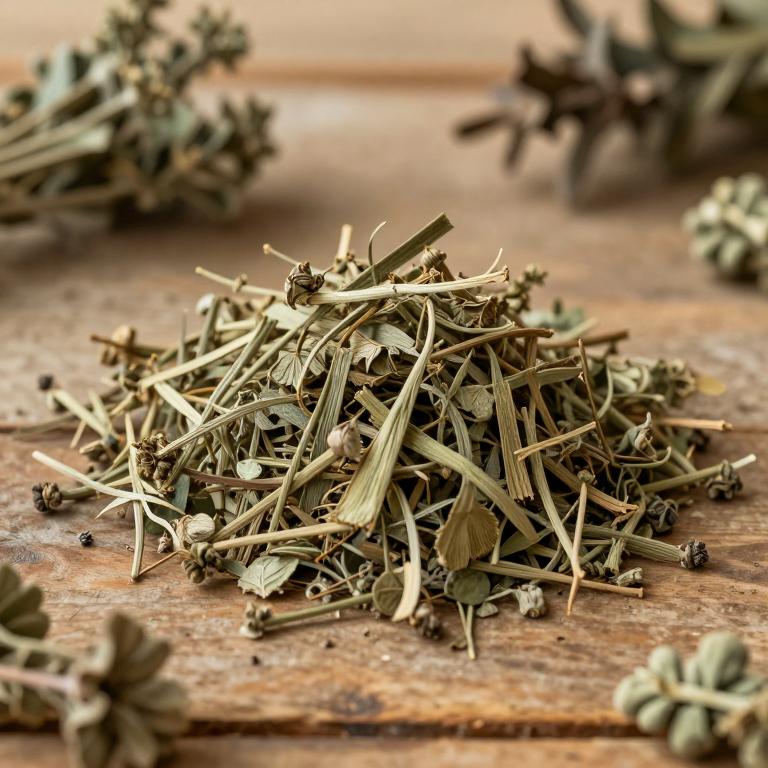
Names and Synonyms
Scientific Names
Accepted name
Ferula sinaicaSources: Wikidata, Catalogue of Life
Taxonomical Classification
This plant belongs to the kingdom Plantae and is classified under the phylum Streptophyta and the class Equisetopsida. Within the subclass Magnoliidae, it is organized under the order Apiales and the family Apiaceae. It is specifically identified by the genus Ferula, with its species name being sinaica.
| Rank | Classification |
|---|---|
| Kingdom | Plantae |
| Phylum | Streptophyta |
| Class | Equisetopsida |
| Subclass | Magnoliidae |
| Order | Apiales |
| Family | Apiaceae |
| Genus | Ferula |
Sources: The World Checklist of Vascular Plants (WCVP)
Distribution
This plant exhibits a specific geographical distribution across several key regions in the Middle East. Within Western Asia, it can be found growing in the territory of Palestine. The species is also documented throughout the Sinai region of Western Asia. Furthermore, its range extends into the Arabian Peninsula, specifically within Saudi Arabia. These locations highlight the plant's presence in both desert and arid Mediterranean environments.
| Region | Area |
|---|---|
| Western Asia | Palestine |
| Western Asia | Sinai |
| Arabian Peninsula | Saudi Arabia |
Sources: The World Checklist of Vascular Plants (WCVP)
Botanical Identification
Life history
The life history of Ferula sinaica is characterized by its status as a perennial plant, allowing it to establish a persistent presence within its natural habitat. As a perennial species, it does not complete its life cycle in a single growing season but instead undergoes multiple cycles of growth, flowering, and senescence over several years. This long-term survival strategy enables the plant to build substantial underground structures, such as taproots, which facilitate nutrient storage and resilience against environmental fluctuations. Throughout its lifespan, the plant transitions through various developmental stages, eventually reaching maturity to produce reproductive structures that ensure the continuity of the species across successive generations.
- Lifecycle :
- perennial
Morphology
The morphology of Ferula sinaica is characterized by a robust, perennial growth habit, typically manifesting as a large, herbaceous plant with a thick, fleshy taproot that serves as a significant storage organ. The plant is fundamentally terrestrial in its habitat, functioning as an independent organism that does not rely on a host for nutrients, thus classified as an independent non-parasite. Its structural development includes a tall, erect, and often branched stem that can reach considerable heights, supporting a complex arrangement of deeply pinnatisect or bipinnatifid leaves. These leaves are characterized by their large size and finely divided segments, which optimize surface area for photosynthesis. The inflorescence is typically a large, compound umbel consisting of numerous small flowers arranged in multiple rays, which are often yellowish or greenish in hue. The reproductive structures include pentamerous flowers with prominent stamens and a central pistil, facilitating pollination within its arid or semi-arid environments.
- Aquatic :
- terrestrial
- Parasite :
- independent
Sources: Global Inventory of Floras and Traits (GIFT)
Plant Parts
Ferula sinaica has 1 reported plant parts identified across 2 scientific publications and several other databases that are studied for medicinal purposes. The most consistently reported plant part include leaf.
| Plant part | Supporting sources | Consensus |
|---|---|---|
| Leaf | 2 supporting sources | ★☆☆☆☆ |
Leaf
- Journal of natural products
- Phytochemistry
Chemicals
Ferula sinaica has 3 reported phytochemicals identified across 2 scientific publications and several other databases. The most consistently reported chemicals include Carotane, Eudesmanolide, Sesquiterpenes.
| Chemical | Supporting sources | Consensus |
|---|---|---|
| Carotane | 1 supporting sources | ★☆☆☆☆ |
| Eudesmanolide | 1 supporting sources | ★☆☆☆☆ |
| Sesquiterpenes | 1 supporting sources | ★☆☆☆☆ |
Carotane
- Phytochemistry
Eudesmanolide
- Phytochemistry
Sesquiterpenes
- Journal of natural products
Preparations
Ferula sinaica has 1 reported preparations identified across 2 scientific publications and several other databases. The most consistently reported preparations include CH2Cl2 extract.
| Preparation | Supporting sources | Consensus |
|---|---|---|
| Ch2cl2 extract | 1 supporting sources | ★☆☆☆☆ |
Ch2cl2 extract
- Journal of natural products