Ferula pallida
Ferula pallida · Accepted scientific name
Scientific literature: Very Sparse (4 studies) · ★☆☆☆☆
Ferula pallida, scientifically known as Ferula pallida, is a perennial herb belonging to the Apiaceae family. Native to Mediterranean regions, this plant is highly valued in traditional medicine for its therapeutic properties. It contains bioactive compounds used to treat various ailments, offering significant potential for modern pharmacological research.
- Family
- Apiaceae
- Native range
- Asia-Temperate
- Parts used
- Root
- Common names
- Not available
- Scientific synonyms
- Not available
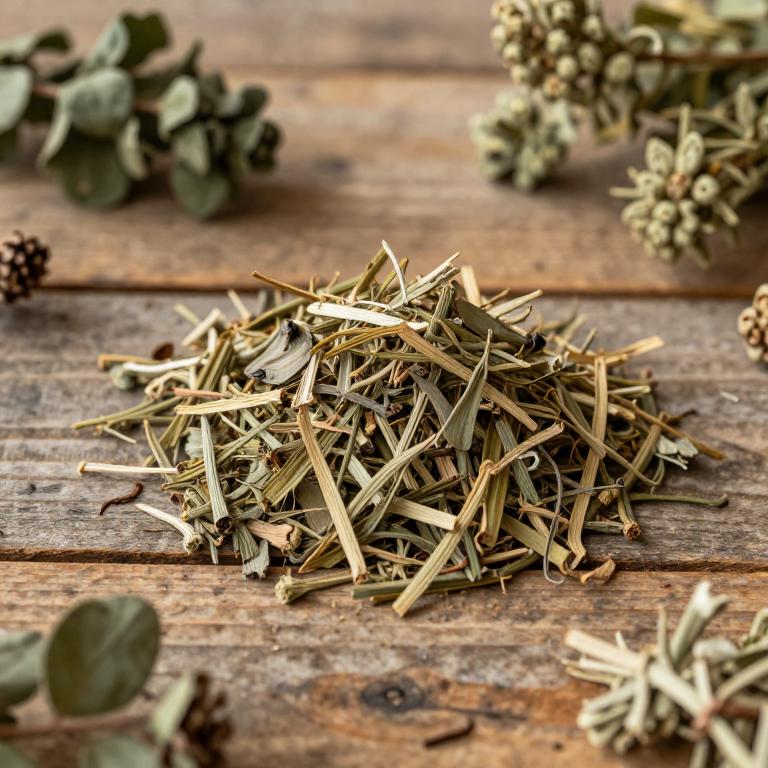
Names and Synonyms
Scientific Names
Accepted name
Ferula pallidaSources: Wikidata
Taxonomical Classification
This plant belongs to the kingdom Plantae within the phylum Streptophyta and the class Equisetopsida. Under the subclass Magnoliidae, it is classified in the order Apiales and the family Apiaceae. Finally, it is identified by the genus Ferula, specifically as the species Ferula pallida.
| Rank | Classification |
|---|---|
| Kingdom | Plantae |
| Phylum | Streptophyta |
| Class | Equisetopsida |
| Subclass | Magnoliidae |
| Order | Apiales |
| Family | Apiaceae |
| Genus | Ferula |
Sources: The World Checklist of Vascular Plants (WCVP)
Distribution
This plant is native to the specific landscapes of Central Asia. Its natural habitat is primarily concentrated within the borders of Kazakhstan. Additionally, the species can be found growing across the terrain of Kirgizstan. The geographical range also extends into the territories of Uzbekistan. Together, these three countries represent the core distribution area for Ferula pallida.
| Region | Area |
|---|---|
| Central Asia | Kazakhstan |
| Central Asia | Kirgizstan |
| Central Asia | Uzbekistan |
Sources: The World Checklist of Vascular Plants (WCVP)
Botanical Identification
Ecology
The ecology of Ferula pallida is characterized by its adaptation to rugged and high-altitude environments, where it primarily thrives within mountains, shrubberies, and stony places. This plant is strategically situated in terrains that often feature well-draining, rocky substrates, allowing it to establish itself in niches where moisture levels may fluctuate. By colonizing these stony and shrub-dominated landscapes, it occupies specific ecological zones that offer both the structural protection of shrubby vegetation and the mineral-rich conditions of montane slopes.
- Habitat :
- mountains, shrubberies, stony places
Life history
The life history of Ferula pallida is characterized by its status as a perennial plant, allowing it to persist in its environment through multiple growing seasons. As a long-lived species, it typically undergoes a developmental cycle that involves establishing a robust root system to support its growth and eventual reproductive phases. Its perennial nature ensures that the plant can withstand seasonal fluctuations, often re-emerging from its perennial structures to complete its life cycle through successive years.
- Lifecycle :
- perennial
Morphology
The morphology of Ferula pallida is characterized by a growth form classified as a herb, exhibiting a non-woody structure throughout its development. The plant reaches a maximum height of approximately 1 m, presenting a structural habit typical of herbaceous species within its genus.
- Growth form :
- herb
- Plant height min:
- 1 m
- Woodiness :
- non-woody
Reproduction
The reproduction of Ferula pallida is closely tied to its seasonal phenology, specifically regarding its reproductive flowering stage. The plant follows a precise temporal window for its flowering cycle, which is characterized by a specific onset and conclusion within the calendar year. The flowering period begins in June, marking the commencement of its reproductive efforts, and concludes within the same month of June. This concentrated flowering duration suggests a highly synchronized reproductive strategy, where the transition from bud to bloom and the eventual senescence of the flowers occur rapidly within this mid-year timeframe.
- Flowering time :
- Jun
Sources: Global Inventory of Floras and Traits (GIFT)
Plant Parts
Ferula pallida has 1 reported plant parts identified across 1 scientific publications and several other databases that are studied for medicinal purposes. The most consistently reported plant part include root.
| Plant part | Supporting sources | Consensus |
|---|---|---|
| Root | 1 supporting sources | ★☆☆☆☆ |
Root
- Journal of natural products
Chemicals
Ferula pallida has 2 reported phytochemicals identified across 1 scientific publications and several other databases. The most consistently reported chemicals include Conferol, Feselol.
| Chemical | Supporting sources | Consensus |
|---|---|---|
| Conferol | 1 supporting sources | ★☆☆☆☆ |
| Feselol | 1 supporting sources | ★☆☆☆☆ |
Conferol
- Journal of natural products
Feselol
- Journal of natural products
Preparations
Ferula pallida has 2 reported preparations identified across 1 scientific publications and several other databases. The most consistently reported preparations include EtOAc extracts of the roots, roots.
| Preparation | Supporting sources | Consensus |
|---|---|---|
| Etoac extracts of the roots | 1 supporting sources | ★☆☆☆☆ |
| Roots | 1 supporting sources | ★☆☆☆☆ |
Etoac extracts of the roots
- Journal of natural products
Roots
- Journal of natural products